Ronda's Baños Árabes: Nasrid Hammam and Ruins
A Medieval Gateway to the Medina
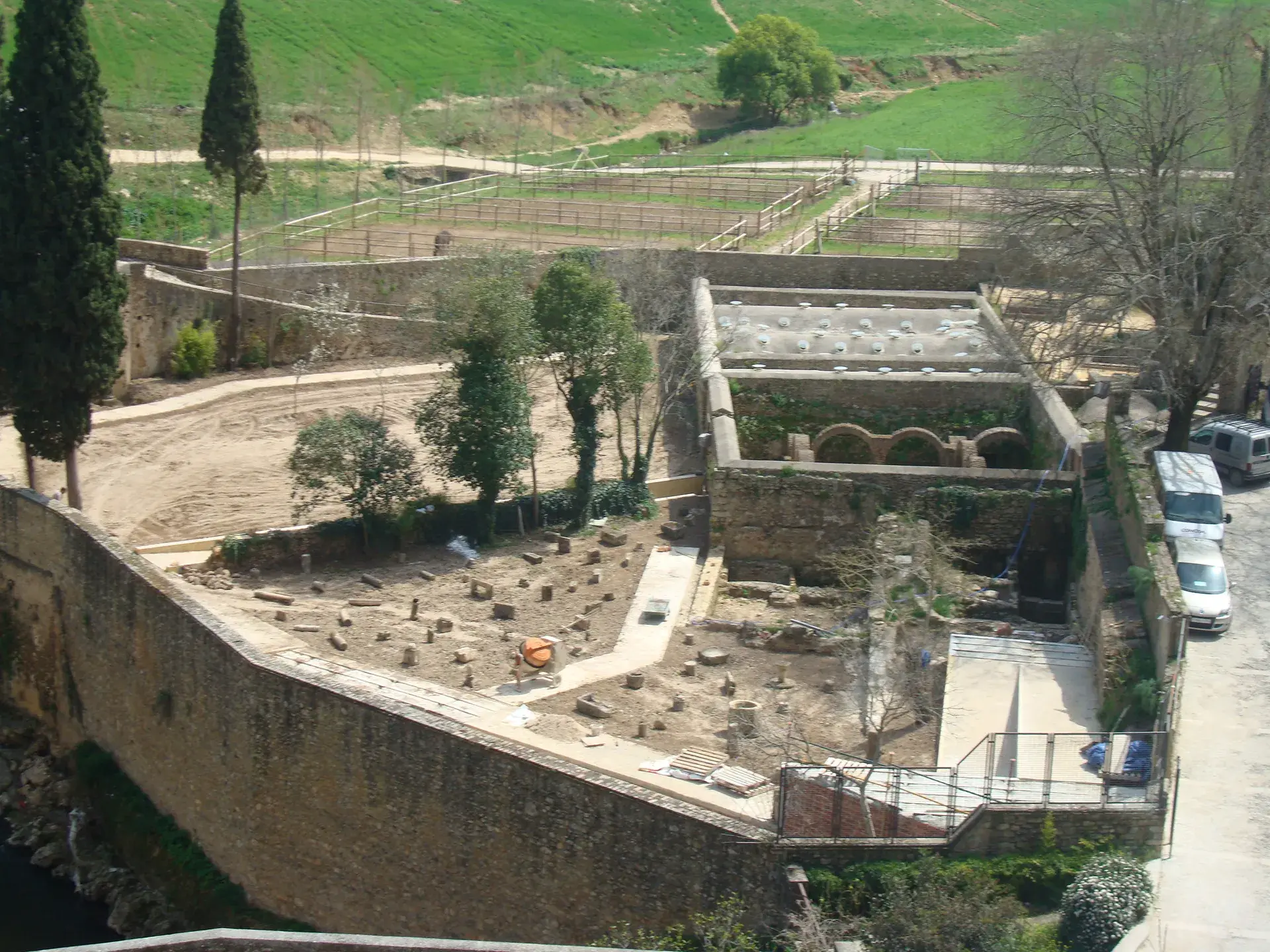
Situated at the base of the El Tajo gorge in the Barrio de San Miguel, the Baños Árabes (Arab Baths) stand near the confluence of the Guadalevín River and the Arroyo de las Culebras. Dating to the 13th and 14th centuries during the Nasrid period, this thermal complex served both physical and ritual functions. In medieval Islamic Ronda, travelers arriving from long journeys were required to wash and perform ritual cleansing at the baths before ascending through the city gates into the fortified medina above.
Positioned in what was historically known as the lower suburb (Arrabal Bajo) near an adjacent mosque, the baths formed a civic threshold that combined hygiene, religion, and urban defense.
Hammam Architecture and Star Skylights
The complex follows the traditional three-chamber layout of the Islamic hammam, which adapted earlier Roman thermal bath designs. The layout progresses through three barrel-vaulted brick spaces: the cold room (al-bayt al-barid), the warm room (al-bayt al-wastani), and the hot room (al-bayt al-sajun), which sat directly adjacent to the underfloor hypocaust and furnace (al-furn).
The warm room is the largest of the chambers, divided into three naves by horseshoe arches supported on brick and stone columns. Overhead, the brick vaults are punctured by rows of eight-pointed star openings (claraboyas). These cutouts served a dual purpose: they directed beams of natural light onto the flagstone and brick flooring below and acted as functional vents that allowed excess steam to escape, preventing scalding condensation from dripping down onto bathers.
Hydraulic Engineering and the Noria Tower
A dependable water source was essential for the operation of the bathhouse. Engineers utilized the nearby Arroyo de las Culebras and the Guadalevín River by constructing a stone intake tower equipped with an animal-powered waterwheel (noria).
Inside the tower, a mule or donkey walked circular laps around an elevated ramp to rotate the wheel mechanism. Terracotta buckets (canjilones) attached to the wheel scooped water from the river level and lifted it to the top of the tower, discharging it into an aqueduct channel that fed directly into the thermal complex.
Abandonment, Burial, and Rediscovery
Following the Christian conquest of Ronda in 1485, public bathhouses fell into disuse due to religious disapproval. The facility was abandoned, and recurrent floods from the Guadalevín River eventually buried the lower section of the gorge under deep layers of river silt.
This destructive flooding ironically preserved the monument. The thick layers of sediment encased the brick vaults, columns, and arches, shielding them from stone quarrying and urban demolition over several centuries. In the early 20th century, the buried ruins were uncovered during gardening works on the property of the Duchess of Parcent. The site was officially registered as a monument in 1931, purchased by the Spanish state in 1935, and subsequently restored under architect Leopoldo Torres Balbás.
The Site Today and Puente Viejo
The Baños Árabes operates as a municipal archaeological site and museum managed by the local tourism department, accessed via Calle Molino de Alarcón and Calle San Miguel. The complex allows visitors to view the excavated vaults, examine the exterior noria tower and aqueduct remnants, and watch an audiovisual presentation installed inside the hot room explaining medieval engineering and hammam customs.
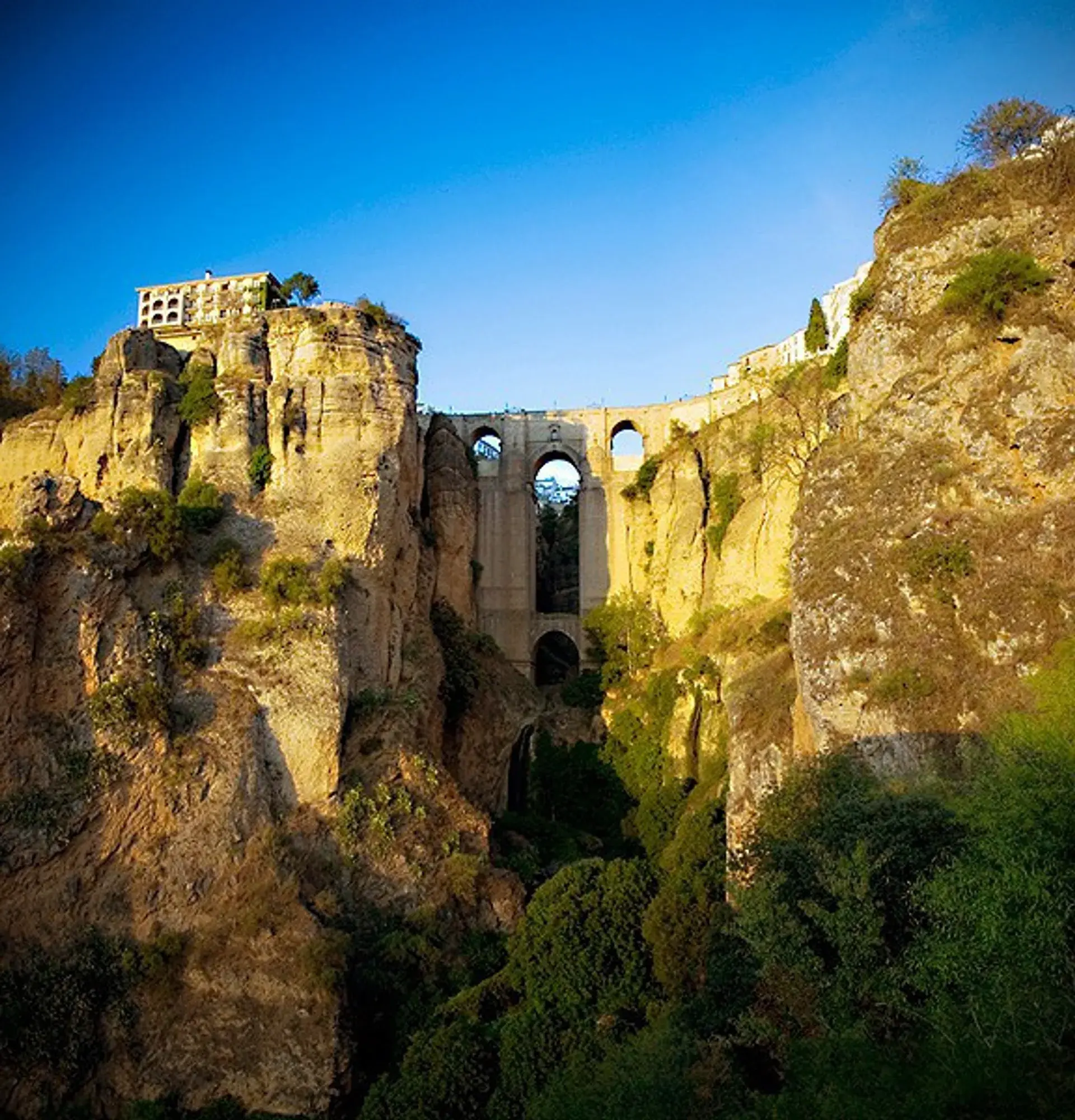
The archaeological area also connects directly to the gorge's historical crossing network. Directly beside the baths stands the single-arched Puente Árabe (often historically misnamed the Puente Romano). Towering higher up the riverbed is Puente Viejo, a stone masonry bridge completed in 1616 that spans roughly 10 meters across the riverbed and stands 31 meters high. Originally referred to as the "Puente Nuevo" until the 18th-century bridge was built further upstream, Puente Viejo now functions as a pedestrian link connecting the historic medina with the Barrio de Padre Jesús and the Jardines de Cuenca.
FAQ
How did the Baños Árabes receive water from the river?
Water was lifted from the riverbed using an animal-powered noria housed in a stone intake tower. A donkey or mule walked in circles inside the tower to turn the wheel, hoisting terracotta buckets that emptied into an aqueduct leading to the bath chambers.
Why were the Arab Baths in Ronda so well preserved?
Following their abandonment after the 1485 Christian conquest, frequent flooding from the Guadalevín River buried the complex under thick layers of silt. This sediment encased the masonry and protected the lower vaults and columns from being quarried or demolished.
What was the purpose of the star-shaped ceiling cutouts?
The eight-pointed star cutouts in the barrel vaults admitted geometric daylight and acted as functional vents, allowing hot steam to escape so scalding condensation would not gather and drip onto bathers.