Casa del Rey Moro in Ronda: History & Water Mine
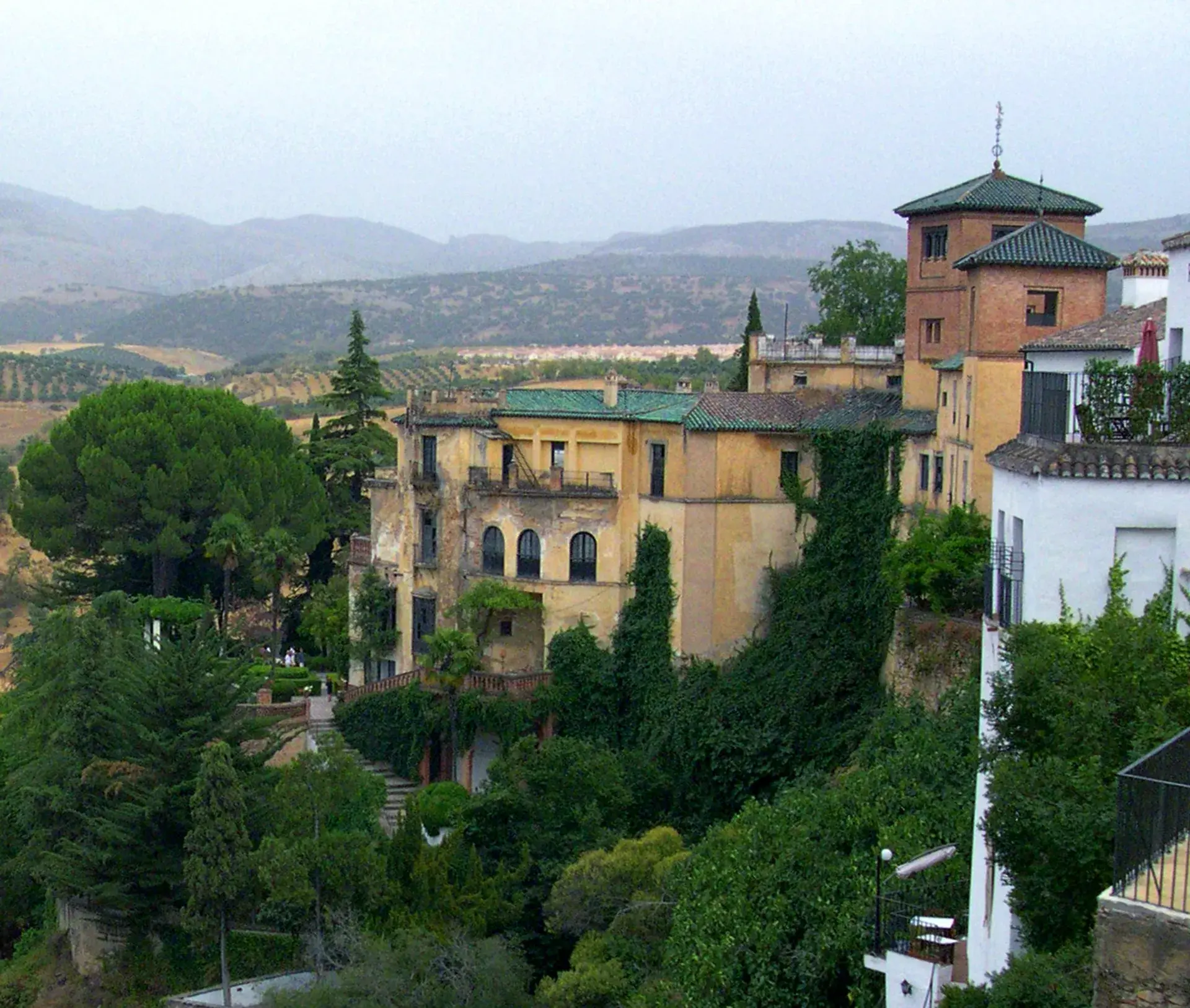
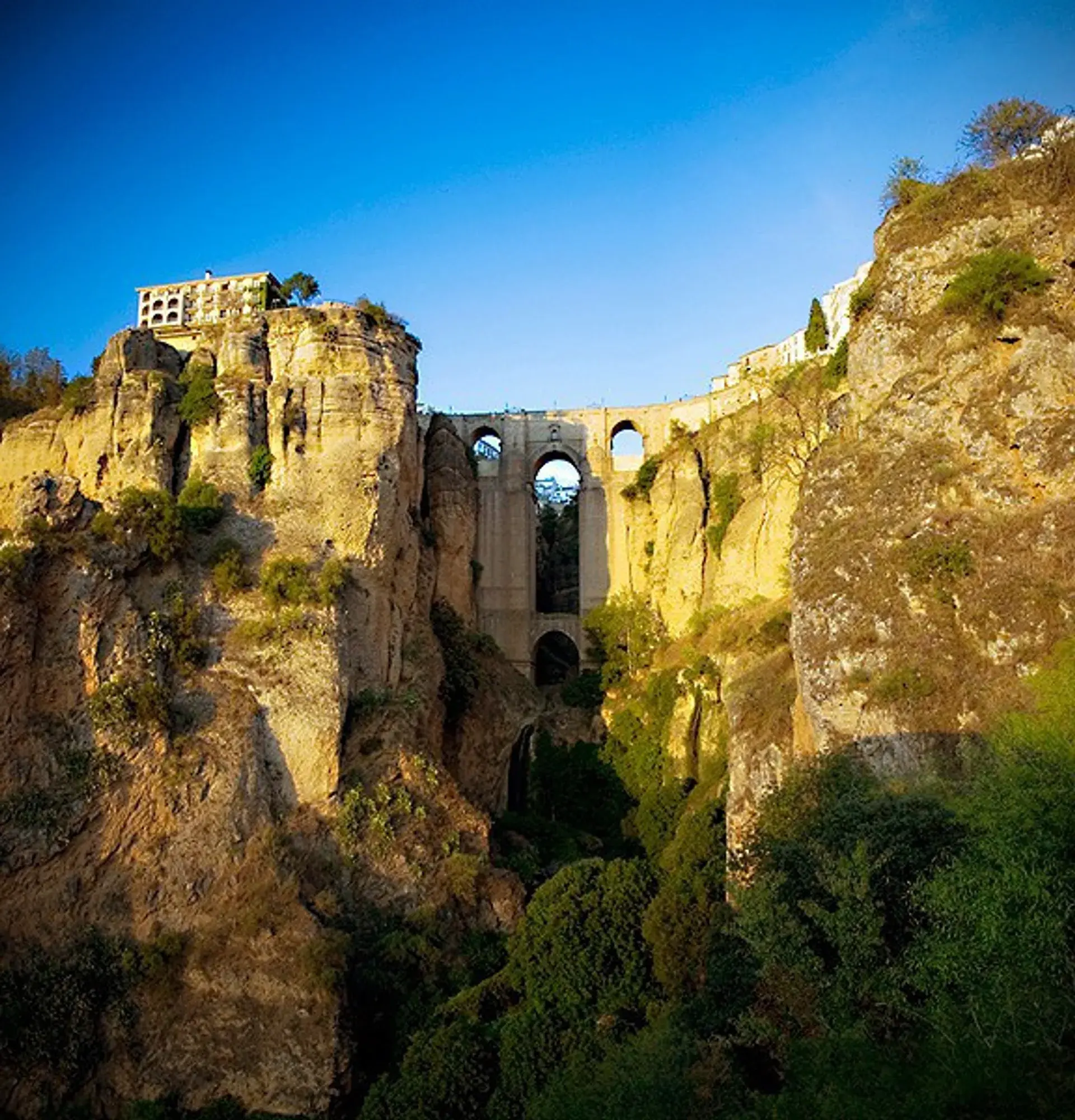
Perched on the northern cliff rim of the El Tajo gorge along Calle Cuesta de Santo Domingo, La Casa del Rey Moro is one of Ronda’s most historically layered complexes. The site forms a tripartite monument comprising an 18th-century aristocratic mansion, a terraced garden designed in 1912, and a 14th-century subterranean Islamic water mine. Designated a National Monument in 1943 and protected as a Bien de Interés Cultural, the complex occupies a strategic position in the historic district of La Ciudad, bridging the high plateau with the lower river crossings and ancient Arab Baths.
Despite its romantic name—translating to the "House of the Moorish King"—no Islamic monarch ever inhabited the property. The standing residence was built centuries after the 1485 Christian conquest of the city. A 20th-century glazed ceramic tile panel installed on the facade portrays an idealized Moorish ruler, visually reinforcing the romantic legend that captured the imagination of travelers.
The Subterranean Islamic Water Mine
Long before the residential palace existed, the sheer cliffs beneath the estate served as a critical defensive fortification. In the early 14th century, when Ronda was an independent Muslim principality ruled by Prince Abomelic, military engineers exploited a natural fissure in the rock to carve a fortified, hidden shaft descending roughly 60 vertical meters to the Guadalevín River.
Known as La Mina de Agua, this vertical passage shielded the city's water supply from besieging armies. Inside, stonecutters created vaulted galleries, an armory, and platforms for a mechanical water hoist. The grueling manual work of bringing water upward was forced upon chained Christian captives who stood on the slippery steps, passing water skins up into the fortress. This grueling labor inspired a grim Castilian proverb: "En Ronda se muere acarreando odres" ("In Ronda, you die carrying water skins").
The strategic importance of the mine ultimately decided Ronda's fate during the Reconquista. In May 1485, troops commanded by the Marquis of Cádiz under the Catholic Monarchs targeted the hidden water station. Christian forces severed the hoisting apparatus and cut off the water supply, forcing Ronda's defenders to surrender within days. This capitulation removed a major barrier to the eventual conquest of Granada.
The 1912 Forestier Gardens
In the early 20th century, Trinidad von Scholtz-Hermensdorff, the Duchess of Parcent, purchased the estate and undertook extensive revitalization efforts. She commissioned renowned French landscape architect Jean-Claude Nicolas Forestier to design a multi-tiered Mediterranean garden on the cliff edge. Completed in 1912, this was Forestier's first completed landscape project in Spain, executed just prior to his acclaimed work on Seville's Parque de María Luisa.
Forestier's design blends formal geometric French garden techniques with Hispano-Muslim landscaping traditions. Terraces feature geometric channels clad in ceramic tile, balanced by fragrant plantings of jasmine. The sunlit, scented grounds stand in stark sensory contrast to the cold, dripping atmosphere inside the rock-cut mine shaft, where echoing stone vaults lead down to the roaring river below.
Restoration and Current Access
During her ownership, the Duchess of Parcent also reinforced the mine's crumbling interior staircases and installed a small wooden jetty and riverside walkway along the Guadalevín. This allowed access to a secluded water-level grotto where she placed a statue of the Virgin Mary. The residential palace itself was remodeled in the Neo-Mudéjar style during the same period.
Today, the terraced gardens and the Islamic Water Mine are open daily to visitors. The route down the mine includes approximately 231 rock-cut stairs leading through historical chambers directly to the riverbed platform at the floor of El Tajo gorge. Due to long-term restoration initiatives, the interior of the 18th-century mansion remains closed to the public.
FAQ
Did a Moorish king live at La Casa del Rey Moro?
No. Despite the name, no Islamic monarch ever lived in the house. The current mansion was built in the 18th century, centuries after the 1485 Christian conquest of Ronda. A decorative ceramic tile panel was later added to the facade in the 20th century to reflect the popular moniker.
What is the historical significance of the Water Mine?
Carved into the cliff during the 14th century under Prince Abomelic, the mine reached 60 meters down to the Guadalevín River to supply water during sieges. In 1485, the forces of the Catholic Monarchs captured the installation and cut off the water supply, leading directly to Ronda's surrender.
Can visitors access the interior of the mansion?
The interior of the 18th-century palace remains closed to the public because of ongoing restoration work. However, the Forestier gardens and the 231-step subterranean water mine are open daily to paying visitors.