Plaza de Toros and Museo Taurino of Ronda
The Neoclassical Colonnades of Ronda's Bullring
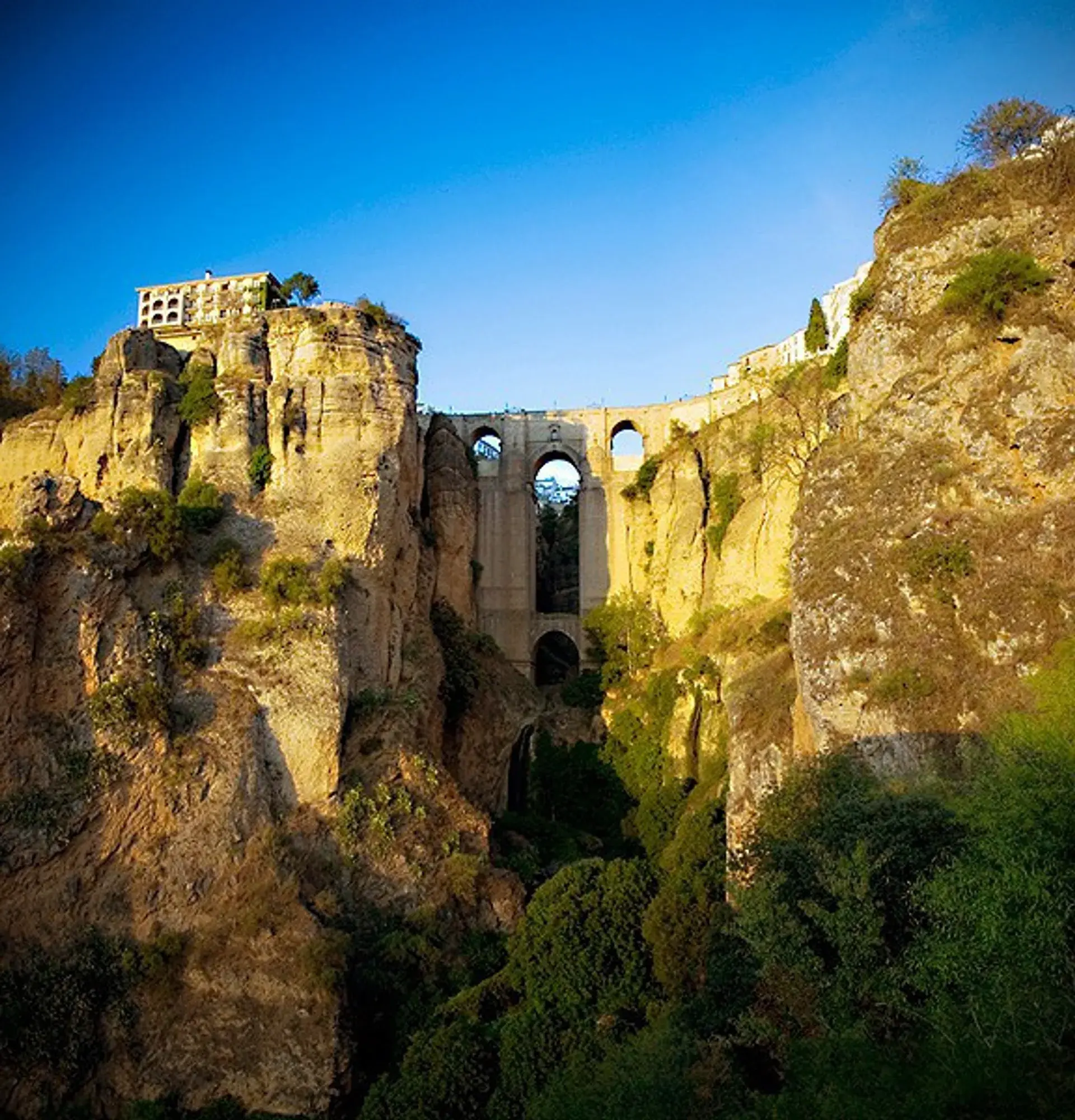
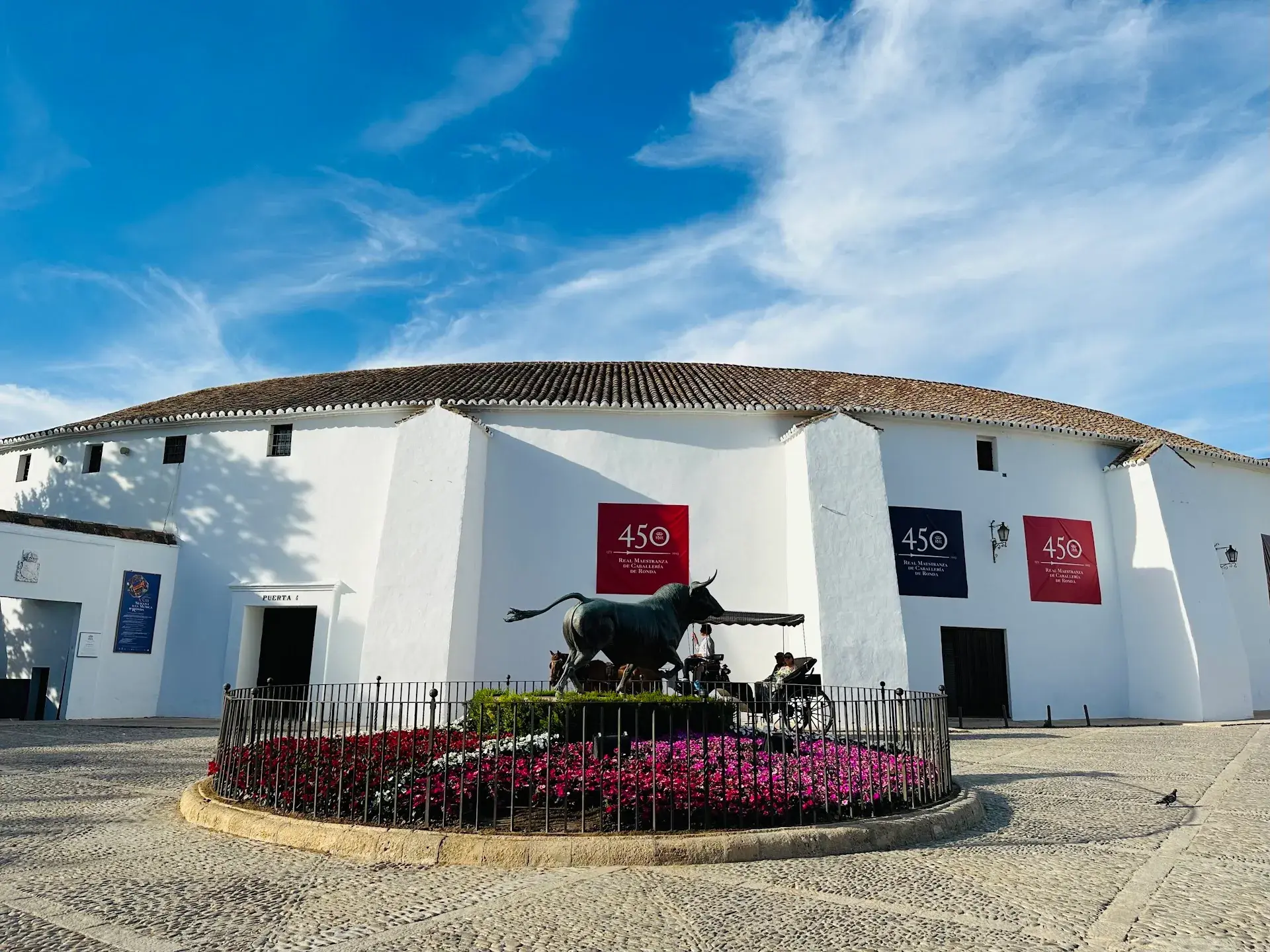
The Plaza de Toros de la Real Maestranza de Caballería de Ronda stands on Calle Virgen de la Paz in the El Mercadillo district, situated beside the clifftop gardens of Paseo de Blas Infante and just two blocks from the Puente Nuevo. Commissioned by the Real Maestranza, construction of the neoclassical complex began between 1779 and 1780 and concluded in 1785 under master architect José Martín de Aldehuela. Built almost entirely from local sandstone, the landmark was declared a Bien de Interés Cultural in 1993.
The arena features a unique architectural layout consisting of a double-tiered circular gallery supported by 136 smooth Tuscan columns that form 68 round arches. Unlike modern arenas designed with steep, open bleachers to maximize capacity, Ronda exhibits an inverse scale. The covered galleries shelter an audience of between 5,000 and 6,000 spectators beneath an Arabic-tiled roof, while surrounding a central sand ring (ruedo) measuring between 60 and 66 meters in diameter, making it one of the widest fighting circles in Spain. The enclosed tiers of ashlar masonry and timber eaves create a distinct acoustic environment that reflects footsteps and spoken voices across the open sand.
Origins of the Real Maestranza and Foot Bullfighting
The arena's origins trace to the Real Maestranza de Caballería de Ronda, an equestrian noble order founded in 1572–1573 by King Philip II to train knights for regional defense. Bull encounters initially began as equestrian training exercises before evolving into foot-based bullfighting (toreo a pie). The arena held a soft opening in May 1784, but a partial stand collapse forced its temporary closure and repair. The official grand inauguration followed in May 1785, featuring famed matadors Pedro Romero of Ronda and Pepe-Hillo of Seville.
The site became a foundational center for modern bullfighting through the Romero dynasty. Francisco Romero pioneered the modern muleta (red cloth), while his grandson Pedro Romero established the measured, formal escuela rondeña style. Local historical tradition holds that Pedro Romero dispatched over 5,500 bulls across a three-decade career without sustaining a single serious wound. In addition to its cultural role, the complex was commandeered for military logistics during the Peninsular War and served military and detention functions around 1939 during the Spanish Civil War era.
The Museo Taurino and Equestrian Collections
The complex functions year-round as a museum center and the active headquarters of the Escuela de Equitación de la Real Maestranza de Caballería de Ronda, one of the oldest formal riding schools in Spain. The site houses the Museo Taurino, founded in 1984, alongside the Royal Harness Collection (Real Guarnicionería de la Casa de Orleans), antique weapons displays, and the institutional archives of the equestrian order.
Regular seasonal bullfighting has ceased at the venue. Live events are held almost exclusively once per year during early September's Feria de Pedro Romero, which features the Corrida Goyesca. This annual event was inaugurated in 1954 by matador Antonio Ordóñez—whose family continued Ronda's bullfighting lineage through the 20th century—to celebrate the bicentenary of Pedro Romero's birth, featuring period dress inspired by the etchings of Francisco de Goya.
Literary and Artistic Connections
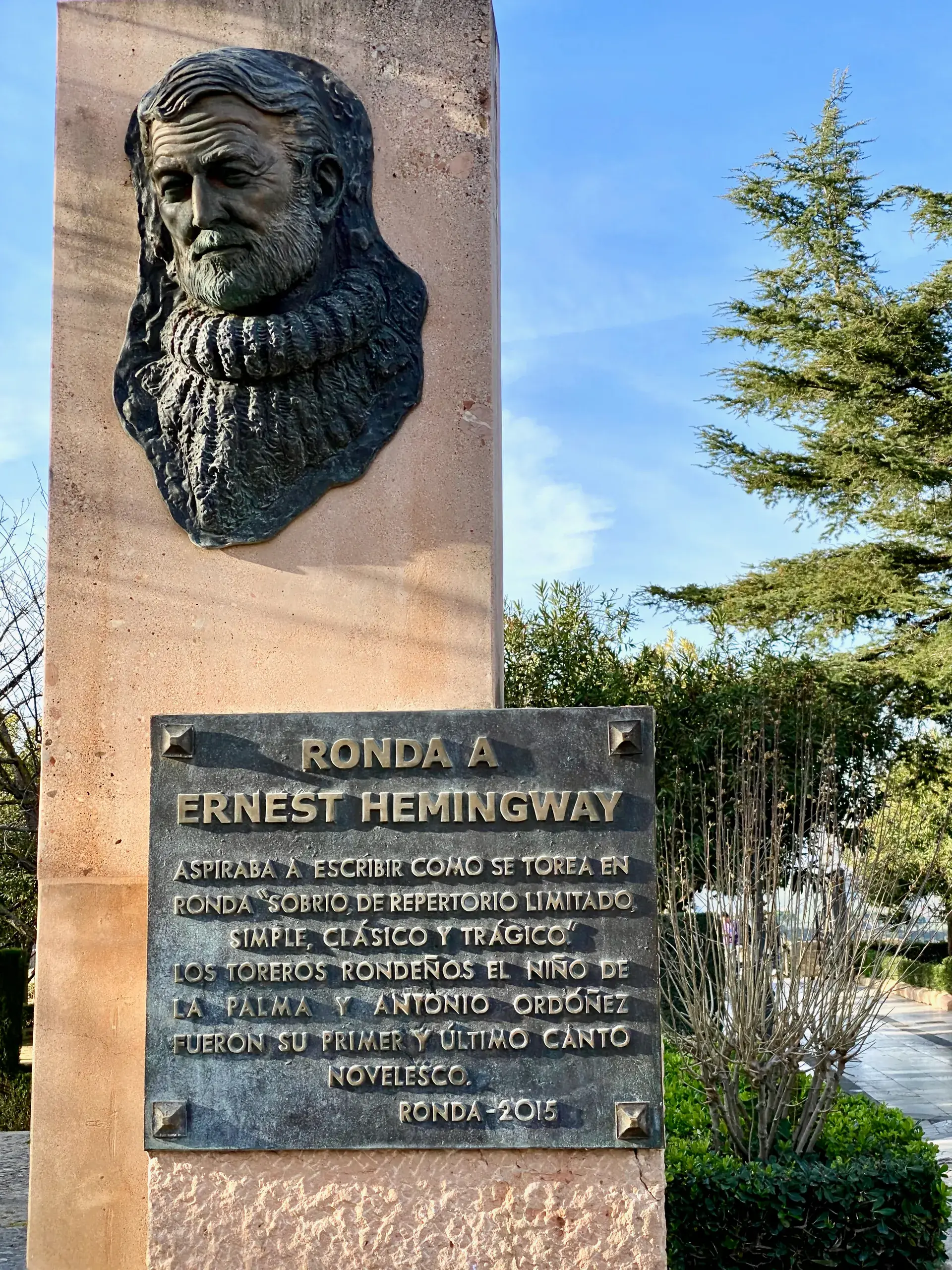
During the mid-20th century, the arena attracted prominent international visitors, notably American author Ernest Hemingway and filmmaker Orson Welles, both drawn to Ronda through their friendship with Antonio Ordóñez. Statues honoring both figures stand outside near the arena perimeter. Welles formed a deep attachment to the town, and following his death, his ashes were interred in 1987 on the Ordóñez family's rural estate, El Recreo de San Cayetano, on the outskirts of Ronda.
FAQ
When was the Plaza de Toros de Ronda constructed?
Construction began in 1779–1780 and finished in 1785 under architect José Martín de Aldehuela.
What exhibitions are inside the Museo Taurino complex?
The complex includes the Museo Taurino (opened in 1984), the Royal Harness Collection of the House of Orleans, historical arms collections, and the archives of the Real Maestranza.
Are bullfights regularly scheduled in the arena?
No, regular seasonal bullfighting is no longer held here. Live fights are restricted almost exclusively to the annual Corrida Goyesca held each September during the Feria de Pedro Romero.
What is the connection between Orson Welles and Ronda's bullring?
Orson Welles was a frequent visitor to the arena in the 1950s through his friendship with matador Antonio Ordóñez. By Welles's request, his ashes were interred in 1987 at the Ordóñez family estate outside Ronda.
Discover Ronda like never before
Dive into Ronda hidden stories and secret spots with Ciceru interactive tours.
Explore tour
Audioguide
Quizzes
Maps
Solo
Couples
Groups & families

© Photo by artU via Google Maps · Google Places