Balcó del Mediterrani: Tarragona's Coastal Balcony
A Cliffside Gateway to the Sea
Perched at the southeastern terminus of the Rambla Nova in Tarragona, Spain, the Balcó del Mediterrani stands as one of the city's most recognizable observation platforms. The site rests on a cliff roughly 23 meters high, elevating visitors about 40 meters above sea level. Officially designated as a Cultural Asset of Local Interest (Bé Cultural d'Interès Local), this public promenade provides an open, year-round lookout over the Mediterranean coastline.
19th-Century Expansion and the Iconic Railing
Before the formal construction of the terrace, the area was bounded by a simple stone wall along the Passeig de les Palmeres, separating the cliff edge from the agricultural land and shoreline below. The viewpoint took shape during Tarragona's late-19th-century urban expansion, which extended the Rambla Nova outward to meet the sea.
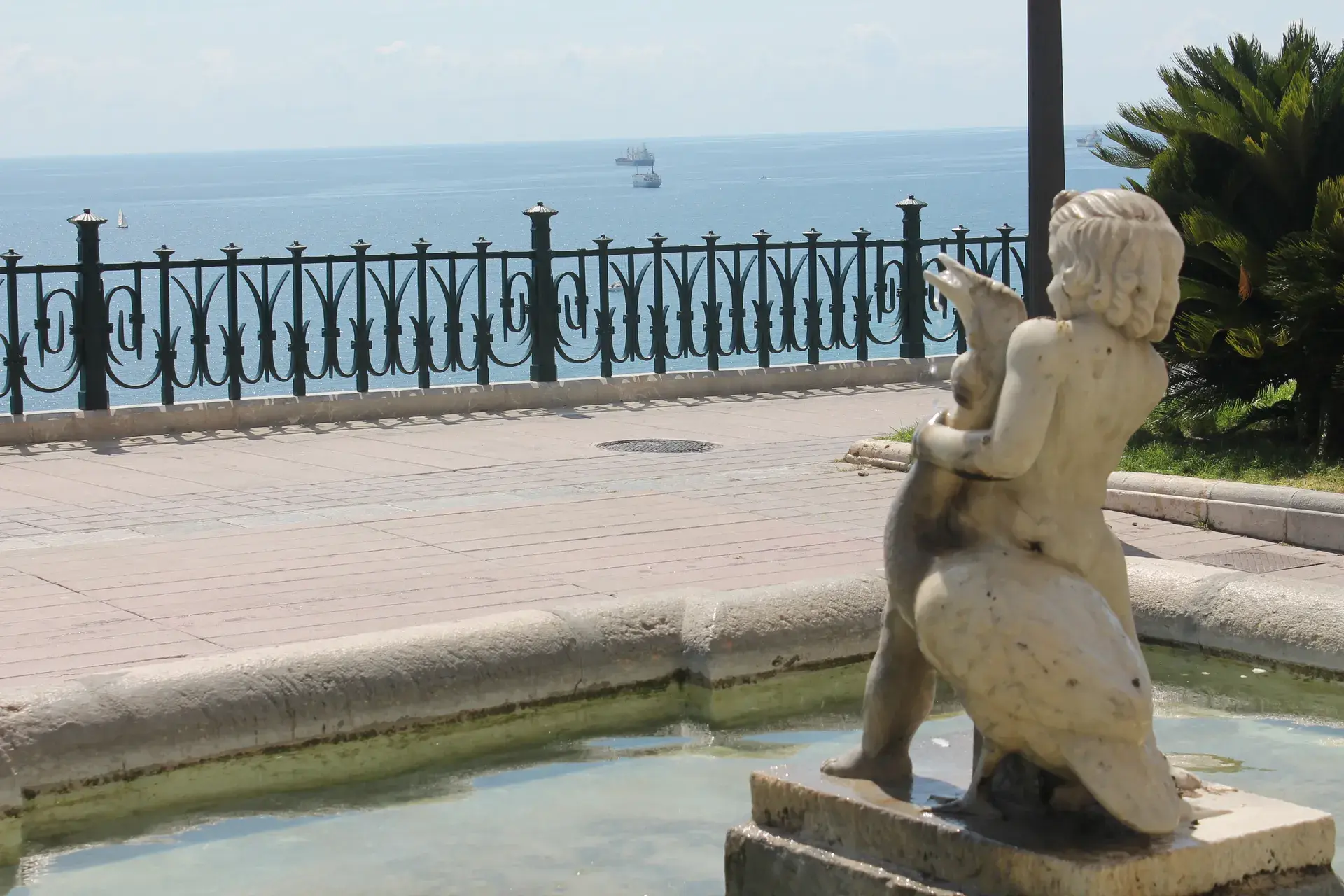
The viewpoint's standout architectural feature is its curved wrought-iron railing (barana). Designed in 1889 by architect Ramon Salas i Ricomà and forged by craftsman Joan Miquel Guinart, the railing was installed between 1889 and 1891. Local historiography links the name "Balcó del Mediterrani" to a description coined by Emilio Castelar during an 1863 visit to the city, years before he served as President of the First Spanish Republic.
The Pons d'Icart Quarry and Coastal Panoramas
The distinctive sheer drop beneath the platform has deep historical roots. The cliffside was carved out over centuries by the Pons d'Icart stone quarry. During the 19th century, penal laborers worked the quarry intensively to extract stone for the construction of the Port of Tarragona's dikes, leaving behind the dramatic ledge seen today.
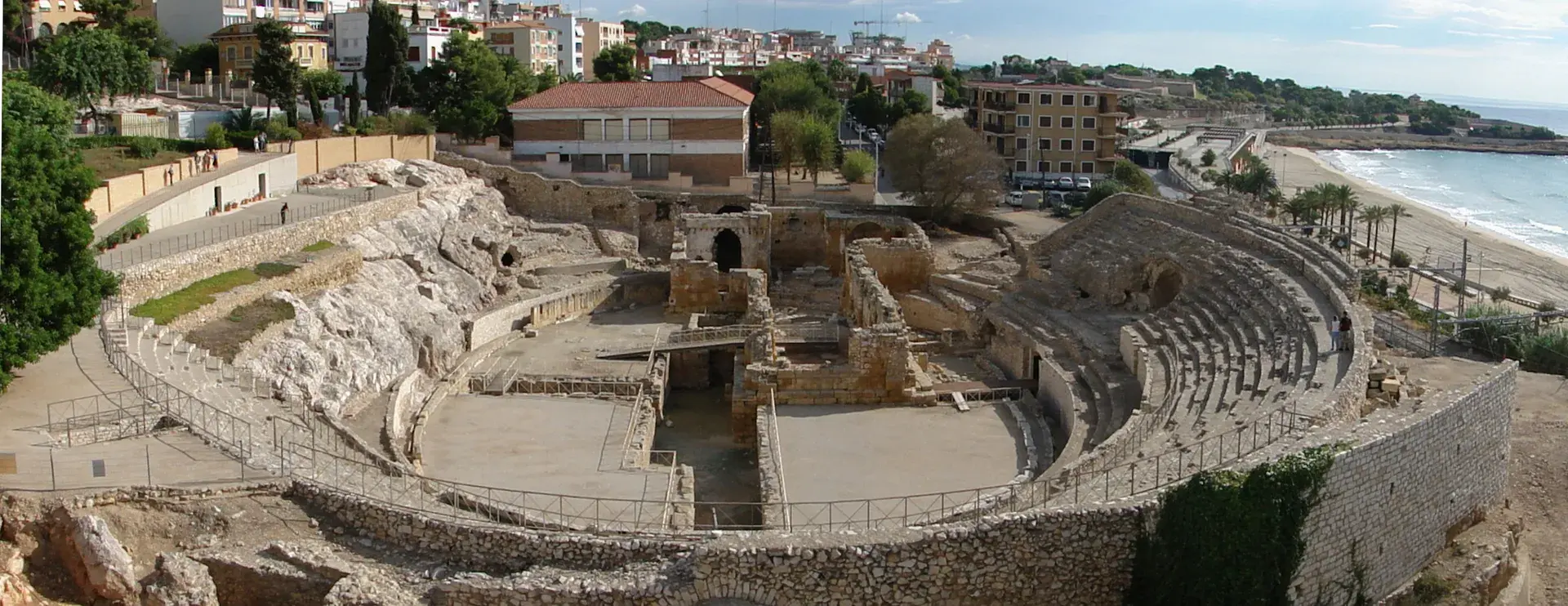
From the railing, visitors encounter expansive vistas of the Platja del Miracle, the Port of Tarragona, the coastal railway line, and the ancient Roman Amphitheatre. The sensory atmosphere is defined by the sound of waves rolling onto the beach below and the cool, weathered touch of the historic ironwork.
The Tradition of Tocar Ferro and City Heritage
The Balcó del Mediterrani serves as a hinge between two historical periods in Tarragona. It connects the 19th-century urban grid of the Rambla Nova with the ancient Roman heritage downhill toward the Passeig de les Palmeres. It sits directly behind the 1889 bronze monument dedicated to the medieval naval admiral Roger de Llúria.
Over the decades, the balcony has also fostered an entrenched local ritual known as tocar ferro (touching iron). According to this tradition, those who stroll to the end of the Rambla Nova place a hand on Salas i Ricomà’s iron railing to bring good luck, marking a symbolic completion of the walk through the city.
FAQ
What is the tradition of 'tocar ferro' at the Balcó del Mediterrani?
The local custom of 'tocar ferro' (touching iron) calls on strollers who reach the end of the Rambla Nova to touch the 1889 wrought-iron railing for good luck.
Who designed the wrought-iron railing at the Balcó del Mediterrani?
The curved iron railing was designed in 1889 by architect Ramon Salas i Ricomà, forged by Joan Miquel Guinart, and installed between 1889 and 1891.
How was the cliff beneath the Balcó del Mediterrani formed?
The sheer drop beneath the balcony was shaped partly by the Pons d'Icart quarry, where stone was extracted over centuries and heavily worked by 19th-century penal laborers to construct dikes for the port.
What landmarks are visible from the Balcó del Mediterrani?
The platform provides panoramic views of Platja del Miracle, the Port of Tarragona, the railway line, and the Roman Amphitheatre.