Circ Roma: Ancient Roman Circus of Tarragona
An Intramural Roman Racetrack
Built in the late 1st century AD during the reign of Emperor Domitian, the Roman Circus of Tarraco (Circ Roma) was constructed to host chariot races featuring two-horse (bigae) and four-horse (quadrigae) teams. At the time, Tarraco served as the administrative capital of the Roman province of Hispania Citerior. Unlike most Roman circuses, which were built outside city boundaries to accommodate their massive footprints, this arena was built intramurally within the defensive city walls, terraced directly below the Provincial Forum.
The arena measured approximately 325 metres in length and between 100 and 115 metres in width, providing enough seating to hold roughly 30,000 spectators. Functioning as a premier venue for imperial civic games and public gatherings, the circus remained active until its eventual abandonment in the 5th century AD.
Chariot Competitions and "Shipwrecks"
Chariot racing in the ancient circus was both fast and perilous. Drivers navigated tight courses that required hazardous turns around semicircular stone turning posts known as metae. Violent collisions and pileups around these turning posts were so severe that the Romans applied maritime terminology to them, referring to crashes as naufragia, meaning "shipwrecks."
Inscriptions discovered at the circus and the nearby cathedral preserve the identities of local racing heroes. Among the most prominent was Eutyches, an enslaved charioteer who achieved significant acclaim and reached the elite quadrigae class before dying of an illness at age 22, as well as his fellow competitor Fuscus.
Medieval Reoccupation and the Praetorium
Following the medieval Christian reconquest, the abandoned circus arena was assimilated into the expanding city rather than demolished. Medieval residents built houses, streets, and storage areas directly inside the stone barrel vaults and across the former racing track. Thirteenth-century municipal records refer to this densely occupied sector as lo Corral.
At the corner of the circus stood the Praetorium Tower (Torre del Pretori). Originally constructed as an interior staircase and tunnel junction linking the lower circus to the upper Provincial Forum, the tower was remodeled between the 12th and 14th centuries into a fortified palace for the monarchs of the Crown of Aragon. In later centuries, the structure served as a prison.
Modern Preservation and Urban Integration
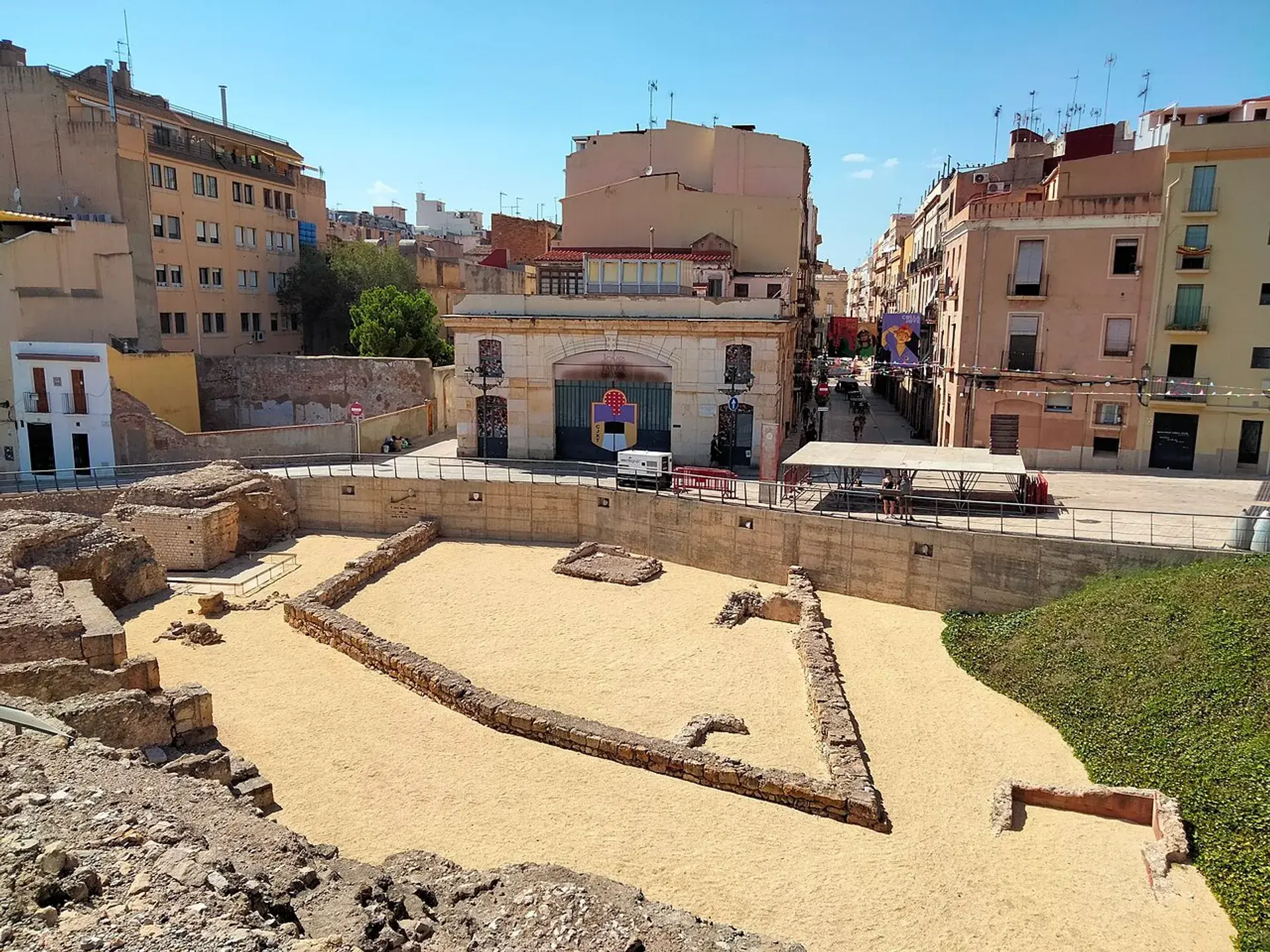
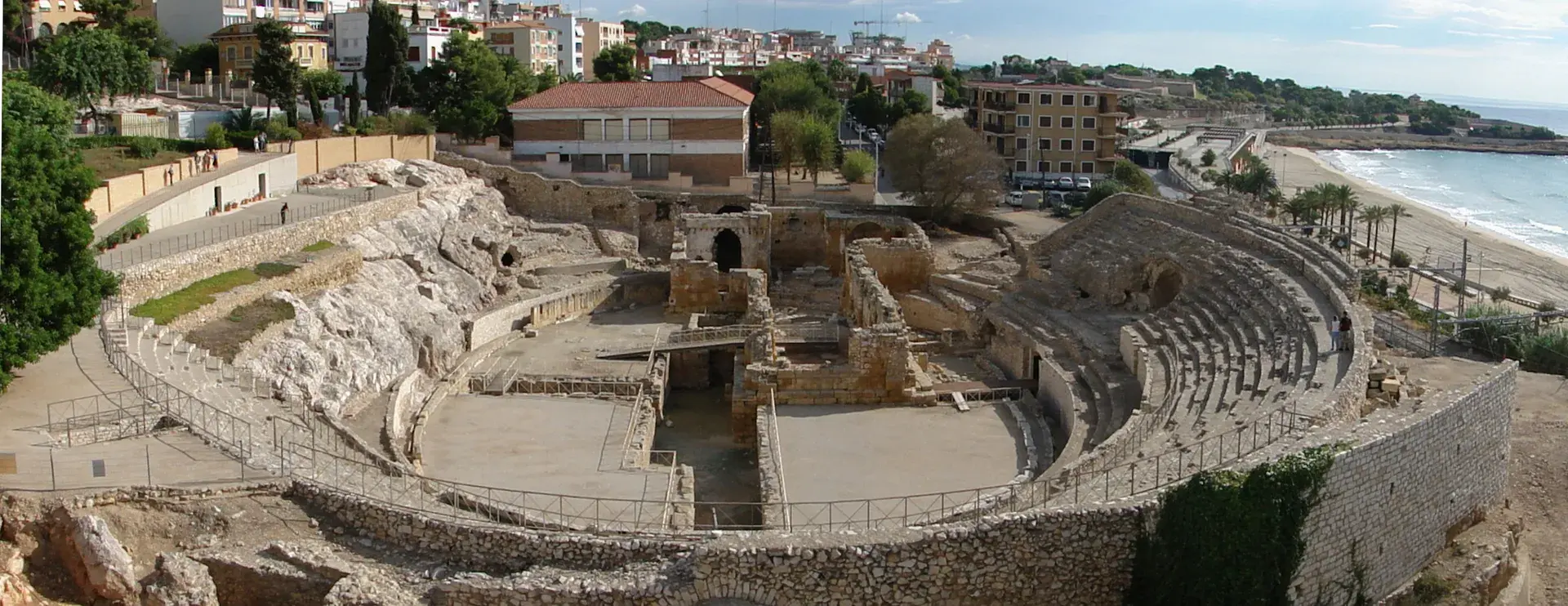
Approximately 60 percent of the circus's original perimeter remains preserved beneath or inside subsequent urban structures, making it one of the best-preserved Roman circuses in Western Europe. In 2000, it was inscribed on the UNESCO World Heritage list as a central element of the Archaeological Ensemble of Tarraco.
Managed by the Museu d’Història de Tarragona, the monument allows access to restored subterranean barrel vaults (voltes) engineered from Roman concrete and heavy masonry, exposed bleachers, and the Praetorium Tower. The adjacent vault complex also houses the 3rd-century AD Roman Sarcophagus of Hippolytus, a relief-carved marble tomb depicting the myth of Hippolytus and Phaedra that was salvaged from the sea.
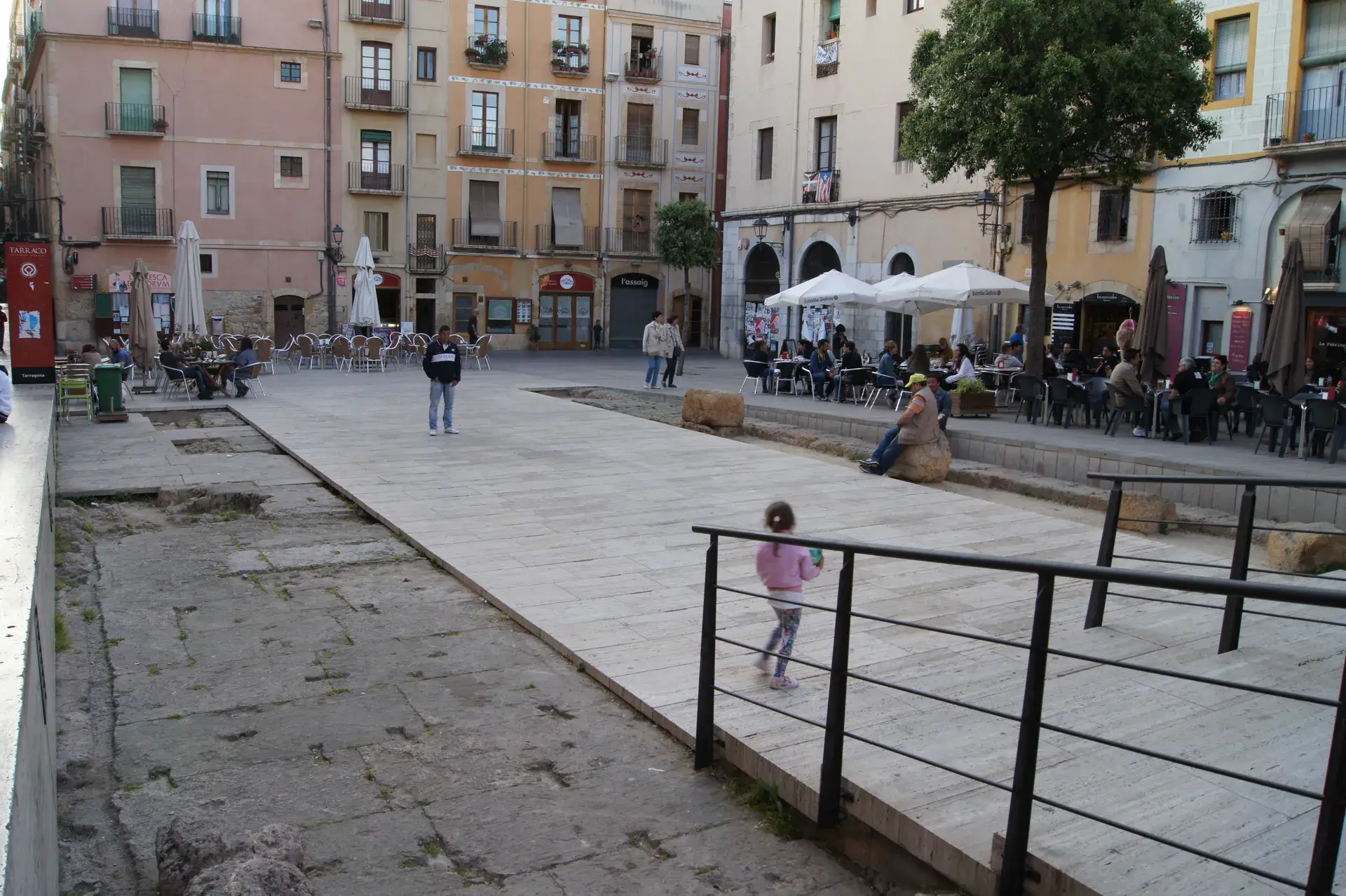
The ancient circus continues to define the urban layout of Tarragona's Part Alta. Plaça de la Font covers roughly one-fourth of the ancient racing arena in front of City Hall, while Plaça dels Sedassos incorporates tiers of Roman bleachers directly into the foundations and facades of modern apartment buildings.
FAQ
Why was the location of Circ Roma unusual for a Roman circus?
Unlike most Roman circuses, which were built outside city perimeters due to their immense size, Circ Roma was constructed intramurally within the city walls directly beneath the Provincial Forum.
What did the term "naufragia" refer to during Roman chariot races?
The term naufragia, meaning "shipwrecks," was used by the Romans to describe violent, high-speed chariot crashes that occurred around the tight turning posts (metae) of the racetrack.
How was the Praetorium Tower used over time?
Originally built as a Roman tunnel and staircase junction connecting the circus to the Provincial Forum, the tower was transformed into a royal palace for the Crown of Aragon between the 12th and 14th centuries and later used as a prison.
Where can the remnants of the circus be seen in modern Tarragona?
Preserved sections can be explored via the Museu d'Història de Tarragona, beneath modern street level in the subterranean vaults, on the surface of Plaça de la Font, and embedded in apartment facades at Plaça dels Sedassos.