Roman Amphitheater of Tarragona: History & Guide
Perched on a steep slope directly overlooking the Mediterranean Sea, the Roman Amphitheater of Tarragona (Amfiteatre de Tarraco) is one of the most distinctive public entertainment venues preserved from Roman Hispania. Built around the turn of the 2nd century CE during the reigns of Emperor Trajan or Hadrian, the elliptical monument held between 14,000 and 15,000 spectators. Today, it forms an integral part of the Archaeological Ensemble of Tarraco, designated as a UNESCO World Heritage site.
Seaside Engineering and Design
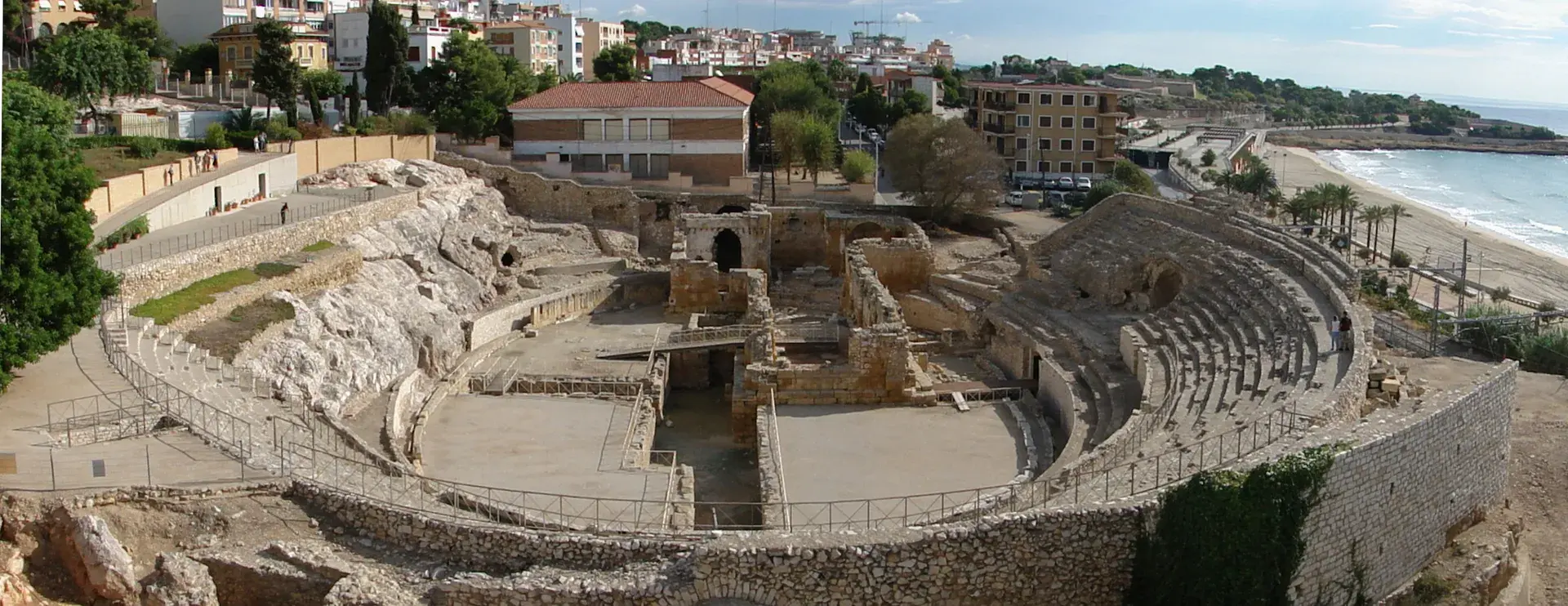
The amphitheater was constructed on the hillside outside the historic city walls, replacing an earlier Augustan-period necropolis alongside the Via Augusta. Measuring approximately 109.5 by 86.5 meters, the structure required an innovative architectural solution to manage the steep terrain leading down to El Miracle beach. Roman engineers excavated the northern seating tiers (cavea) directly out of the natural bedrock of the hill, while erecting the southern, sea-facing tiers on vaulted concrete (opus caementicium) arcades.
Its seaside location offered strategic logistical advantages. Exotic wild beasts shipped across the Mediterranean for public hunts (venationes) could be transferred directly from vessels into arena holding pits, completely avoiding the need to move dangerous animals through the city streets.
Imperial Spectacles and Longest Latin Inscription
The arena was designed to host gladiatorial contests (munera), beast hunts, and public executions. Tarraco was one of the rare provincial capitals in Roman Hispania to boast all three major Roman entertainment structures: a theater, a chariot-racing circus, and an amphitheater.
In 221 CE, during the reign of Emperor Elagabalus, the amphitheater underwent major renovations. This work was commemorated by a monumental Latin inscription carved across 52 stone blocks along the 140-meter podium rim that encircled the arena floor. This text is recognized as the longest surviving Roman Latin inscription on the Iberian Peninsula.
Christian Martyrdom and Medieval Layers
During the anti-Christian persecutions ordered by Emperor Valerian, Tarraco's arena became the site of early Christian martyrdom. On January 21, 259 CE, Bishop Fructuosus and his deacons Augurius and Eulogius were burned alive on the arena floor.
After gladiatorial games ceased in the 5th century, the site was repurposed to memorialize these executions. In the 6th century, a three-aisled Visigothic basilica and cemetery were established inside the arena. During the 12th century, the Romanesque church of Santa Maria del Miracle was constructed directly on the Visigothic foundations, using stone blocks salvaged from the Roman amphitheater. The cross-shaped footprint of this medieval church still dominates the center of the arena floor today.
Penal Presidio and Modern Recovery
In 1576, the site was converted into a Trinitarian convent, and in 1780, the Spanish state adapted it into a penal presidio. Inmates held at the prison were tasked with quarrying stone from the surrounding ruins to build the Port of Tarragona. The penal facility remained active until 1908, leaving the ancient monument heavily concealed beneath later structures.
In 1948, philanthropic funding from American William J. Bryant financed major archaeological excavations. These investigations halted urban redevelopment, uncovered the underlying Visigothic basilica, and revealed the full layout of the Roman arena.
The Archaeological Site Today
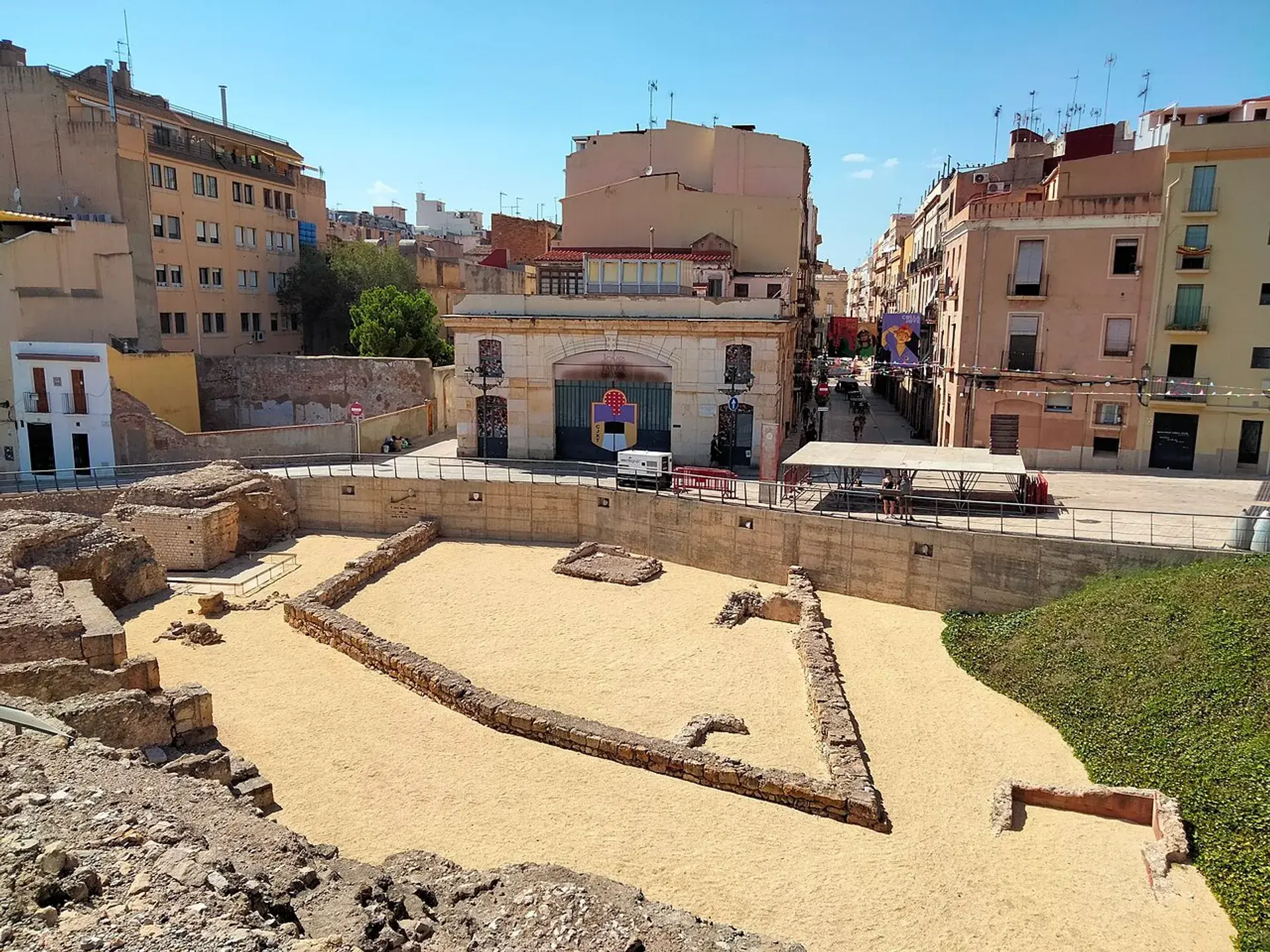
Managed by the Museu d’Història de Tarragona, the amphitheater serves as an open-air archaeological monument positioned just below the Balcó del Mediterrani and adjacent to the Roman Circus. Elevated perimeter walkways allow visitors to look down across the stone arena, observe the distinct cruciform ruins of Santa Maria del Miracle, and take in the panoramic backdrop of the Mediterranean coastline. The site also serves as a central stage for historical reenactments during Tarraco Viva, Tarragona's annual Roman cultural festival.
FAQ
Why is there a ruined church inside the Roman amphitheater?
The 12th-century Romanesque church of Santa Maria del Miracle was built inside the arena atop the foundations of a 6th-century Visigothic basilica. Both Christian structures were placed there to commemorate Bishop Fructuosus and his deacons, who were burned alive on that exact spot in 259 CE.
What practical purpose did the amphitheater's coastal position serve?
Positioning the arena on the shoreline outside the city allowed ships carrying exotic wild animals to unload them directly into the amphitheater's holding facilities without leading them through the streets of Tarraco.
What major inscription survives at the site?
A 140-meter-long Latin inscription carved across 52 stone blocks lines the arena's podium rim. Commemorating renovations made under Emperor Elagabalus in 221 CE, it is the longest surviving Roman Latin inscription on the Iberian Peninsula.