Castellers Monument: Tarragona's Human Tower in Bronze
The Anatomy of a Human Tower in Bronze
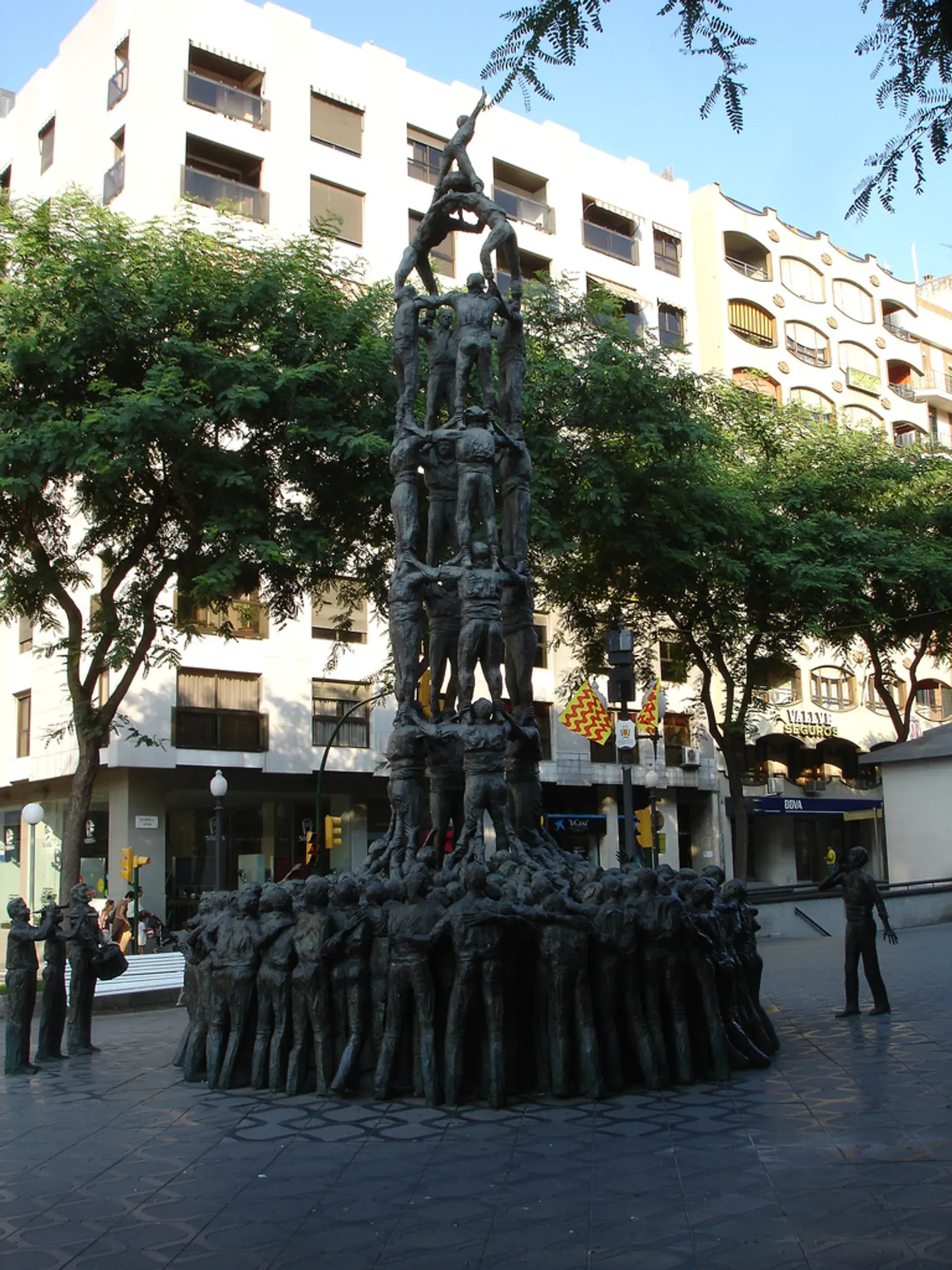
Unveiled on May 29, 1999, the Monument als Castellers is a dramatic bronze sculpture dedicated to Catalonia's traditional practice of building human towers (castells). Created by Catalan sculptor Francesc Anglès i Garcia, the artwork stands 11 meters tall, weighs approximately 12 tons, and occupies a prominent position at Rambla Nova 129 in Tarragona.
The sculpture comprises 222 life-sized figures cast entirely in bronze. Among them, 219 figures assemble into an eight-tier tower known in casteller terminology as a 4 de 8 (four people per tier across eight levels), supported by a dense base of participants. Standing nearby are three traditional musicians providing the musical accompaniment essential to a live performance. The composition freezes the climactic moment of the build: the child at the summit, known as the enxaneta, raises an arm in the traditional gesture called the aleta, signaling that the tower has reached full completion.
Anglès rendered the composition with intense physical detail. The lower tiers and the supportive crowd display visibly strained muscles and facial expressions marked by sharp concentration, contrasting with the lighter, more fluid postures of the climbers positioned higher up the column.
Famous Faces in the Foundation
A notable curiosity of the sculpture lies within the dense mass of people packed at ground level, known as the pinya. While most figures represent typical participants in traditional attire, Anglès incorporated recognizable portraits into the supportive crowd. Several historical and cultural personalities are immortalized within the bronze assembly, including painter Pablo Picasso, surrealist artist Joan Miró, cellist Pablo Casals, and former Olympic committee president Juan Antonio Samaranch.
Origins of the Casteller Tradition
The tradition of constructing human towers emerged in the province of Tarragona during the early 18th century, evolving from earlier Valencian religious dances that finished with small acrobatic pyramids. Over time, these displays developed into standalone feats of balance and teamwork organized by local teams (colles).
The practice faced severe disruption during the dictatorship of Francisco Franco (1936–1975), when regional Catalan customs and language were widely suppressed. The tradition underwent a vigorous revival in the late 20th century, culminating in civic initiatives such as the commissioning of the Tarragona monument. In 2010, UNESCO formally recognized castells as part of the Representative List of the Intangible Cultural Heritage of Humanity.
The monument embodies the long-standing four-part motto of the castellers: Força, Equilibri, Valor i Seny (Strength, Balance, Courage, and Common Sense).
A Civic Landmark on Rambla Nova
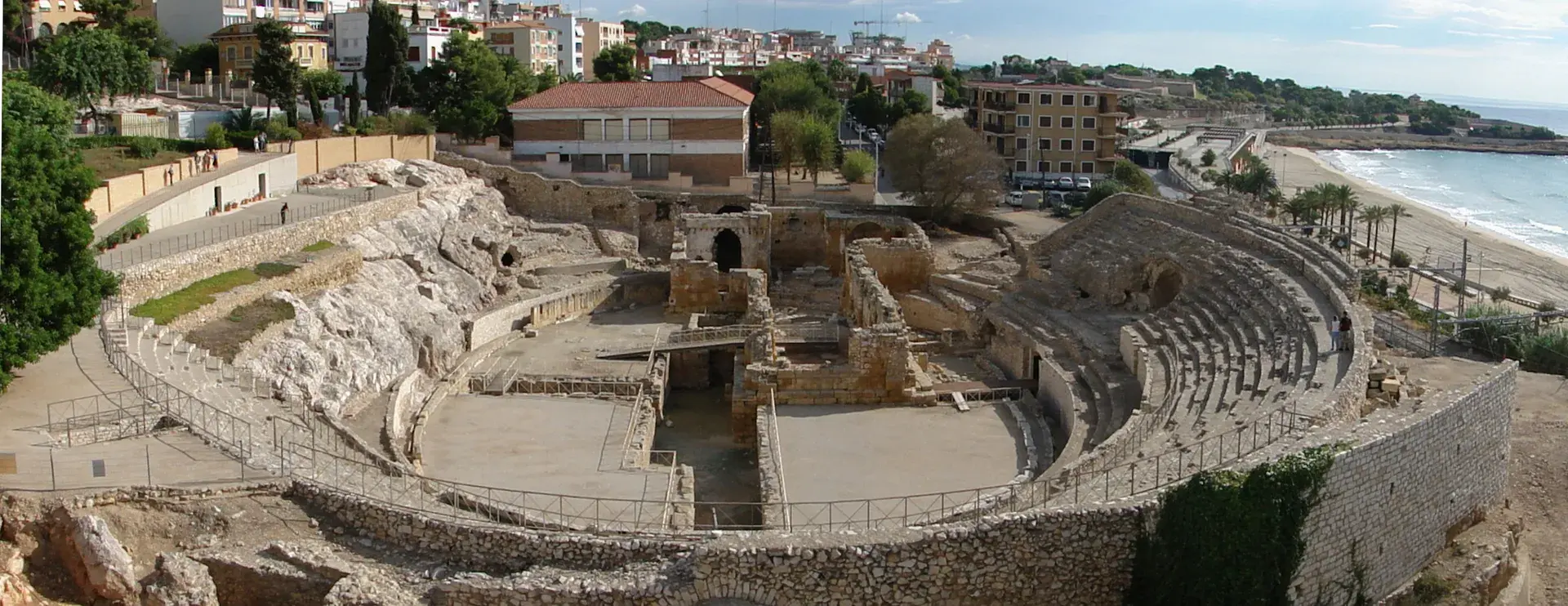
Situated along the central pedestrian boulevard of Rambla Nova, the monument anchors a classic walking route connecting Tarragona's modern commercial center with the Balcó del Mediterrani viewpoint and the ancient Roman Amphitheatre. Today, it serves as a central backdrop for cultural programming, educational school visits, and city scavenger hunts.
Tarragona's realistic figurative tribute often draws comparison to Barcelona's 2012 monument to castellers, which represents the tradition through an abstract, geometric lattice of steel wire. Tarragona remains a core epicenter of the living tradition, hosting the biennial Concurs de Castells in the city's converted bullring—the only judged human tower competition in the world.
FAQ
Who created the Monument als Castellers in Tarragona?
The monument was created by Catalan artist Francesc Anglès i Garcia and was officially inaugurated on May 29, 1999.
How many figures are included in the sculpture?
The bronze sculpture features 222 life-sized figures: 219 people making up the eight-level human tower and base, accompanied by three traditional musicians.
Which historical figures are depicted in the monument?
Sculptor Francesc Anglès modeled several faces in the supportive base crowd (pinya) after famous personalities, including Pablo Picasso, Joan Miró, Pablo Casals, and Juan Antonio Samaranch.
What specific moment does the monument depict?
It depicts the peak moment of an eight-level '4 de 8' human tower, capturing the split second when the child at the top (the enxaneta) raises an arm to signify the tower's successful completion.