Passeig Arqueològic: Tarragona's Roman Walls
The Fortifications of Ancient Tarraco
The Passeig Arqueològic occupies the northern defensive perimeter of ancient Tarraco in Tarragona's Part Alta. Inscribed as part of the UNESCO World Heritage Archaeological Ensemble of Tárraco in 2000, this landscaped corridor preserves roughly 1,100 meters of the original Roman circuit, which once spanned between 3,500 and 4,500 meters down toward the sea.
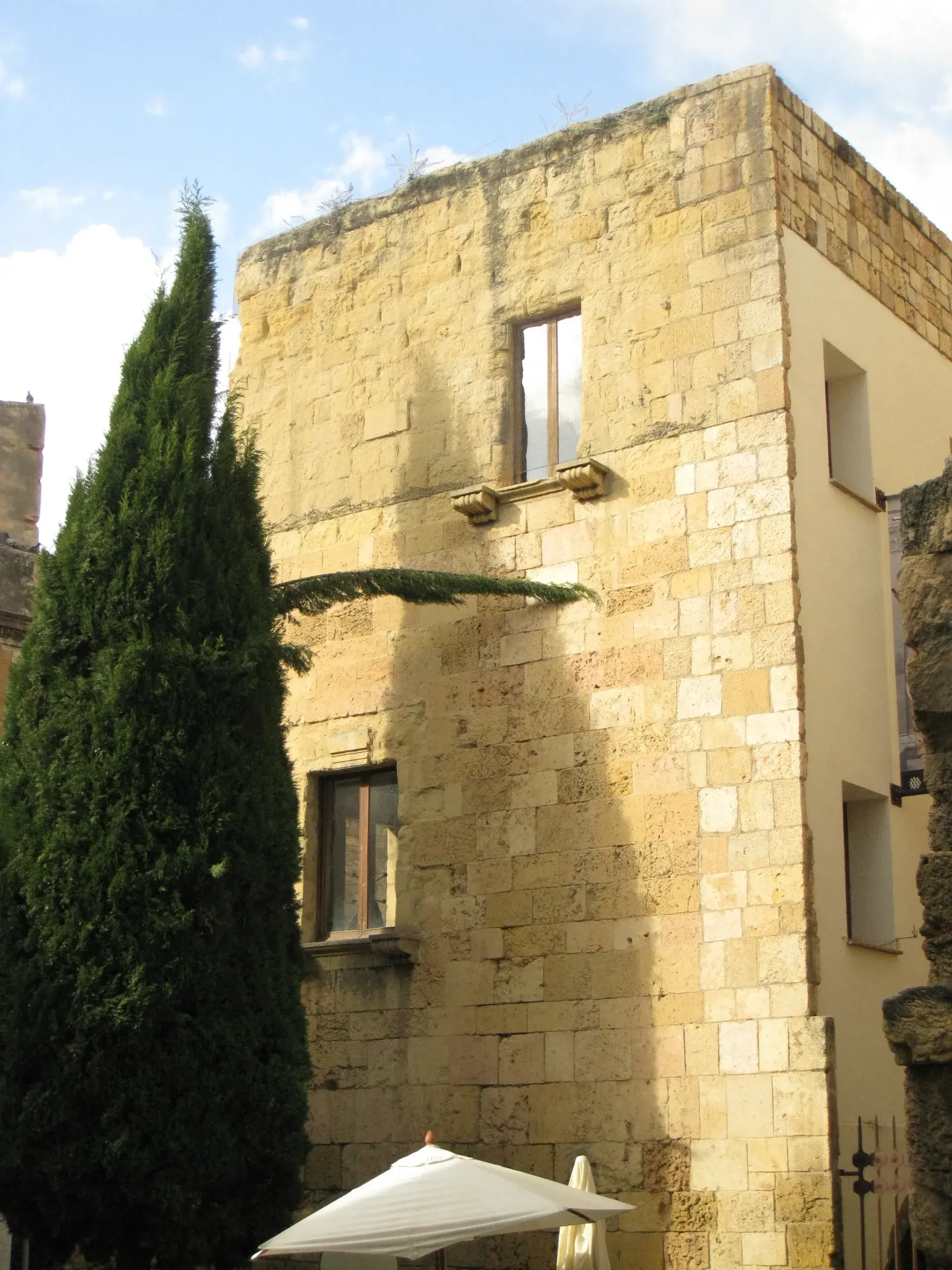
Roman military forces established a base here in 218 BCE under Gnaeus Cornelius Scipio during the Second Punic War. Between 217 and 197 BCE, the initial stone fortifications were raised using megalithic opus siliceum masonry, producing a wall measuring six meters high and four meters wide. Between 150 and 125 BCE, the Roman Republic expanded the defenses by stacking finely dressed ashlar blocks over a cyclopean stone foundation, raising the wall to a height of 12 meters and a thickness of six meters. The striking contrast between the massive, rough-hewn megalithic limestone blocks at the base and the cushioned ashlar masonry above remains directly visible along the route.
Architectural Evolution Across Centuries
The fortifications were repeatedly adapted to match evolving military tactics. During the 14th century, under the Crown of Aragon, the Roman-era Archbishop's Tower was heightened to roughly 25 meters. Centuries later, during the War of the Spanish Succession around 1709, outer zig-zagging ramparts and artillery bastions—such as the Fortí Negre—were built to defend against modern gunpowder weaponry. The corridor created between the original Roman curtain wall and these 18th-century bastions forms the space used by the walkway today.
The military zone transformed into a civic space in 1932, when urbanist and Director General of Fine Arts Ricardo de Orueta oversaw its conversion into a landscaped public promenade. The walkway is planted with cypresses, olive trees, laurel, and shaded flowerbeds, offering a calm environment sheltered by stone ramparts, as well as elevated viewpoints overlooking the Camp de Tarragona countryside and the Mediterranean coastline.
Surviving Towers and Historic Relics
Three Roman towers remain preserved along the promenade: the Cabiscol Tower, the Archbishop's Tower, and the Minerva Tower (also called Sant Magí). The eastern face of the Minerva Tower features a carved stone relief of the goddess Minerva alongside an inscription left by a northern Italian legionary. These carvings represent the oldest known Roman sculpture and Latin inscription preserved on the Iberian Peninsula.
Other historical details line the wall, including mason marks written in the Iberian language on the second-century BCE ashlar blocks, which confirm that local indigenous laborers participated in building the Roman defenses. The gardens also feature classical monuments, including a bronze replica of the Capitoline Wolf nursing Romulus and Remus, and a bronze replica of the Augustus of Prima Porta. The Augustus statue was sent in 1934 by Benito Mussolini's government, hidden away during the Spanish Civil War to prevent damage from Italian air raids, and reinstalled in 1939.
Visiting the Passeig Arqueològic
Operated as an open-air archaeological park and museum circuit by the Museu d'Història de Tarragona (MHT), the promenade can be accessed near Avinguda de Catalunya and the Portal del Roser at the northern entrance of the historic quarter. Visits follow municipal museum schedules, and entry is available through single monument tickets or combined passes that cover multiple Roman ruins across the city.
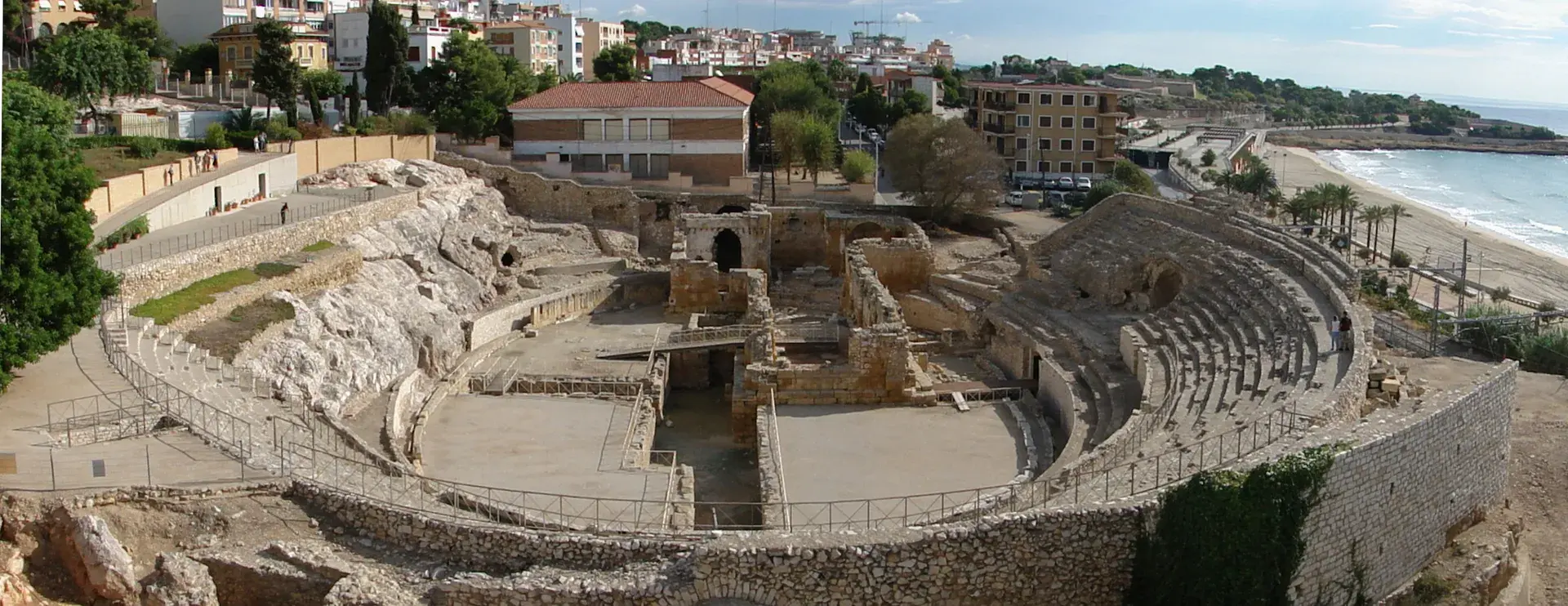
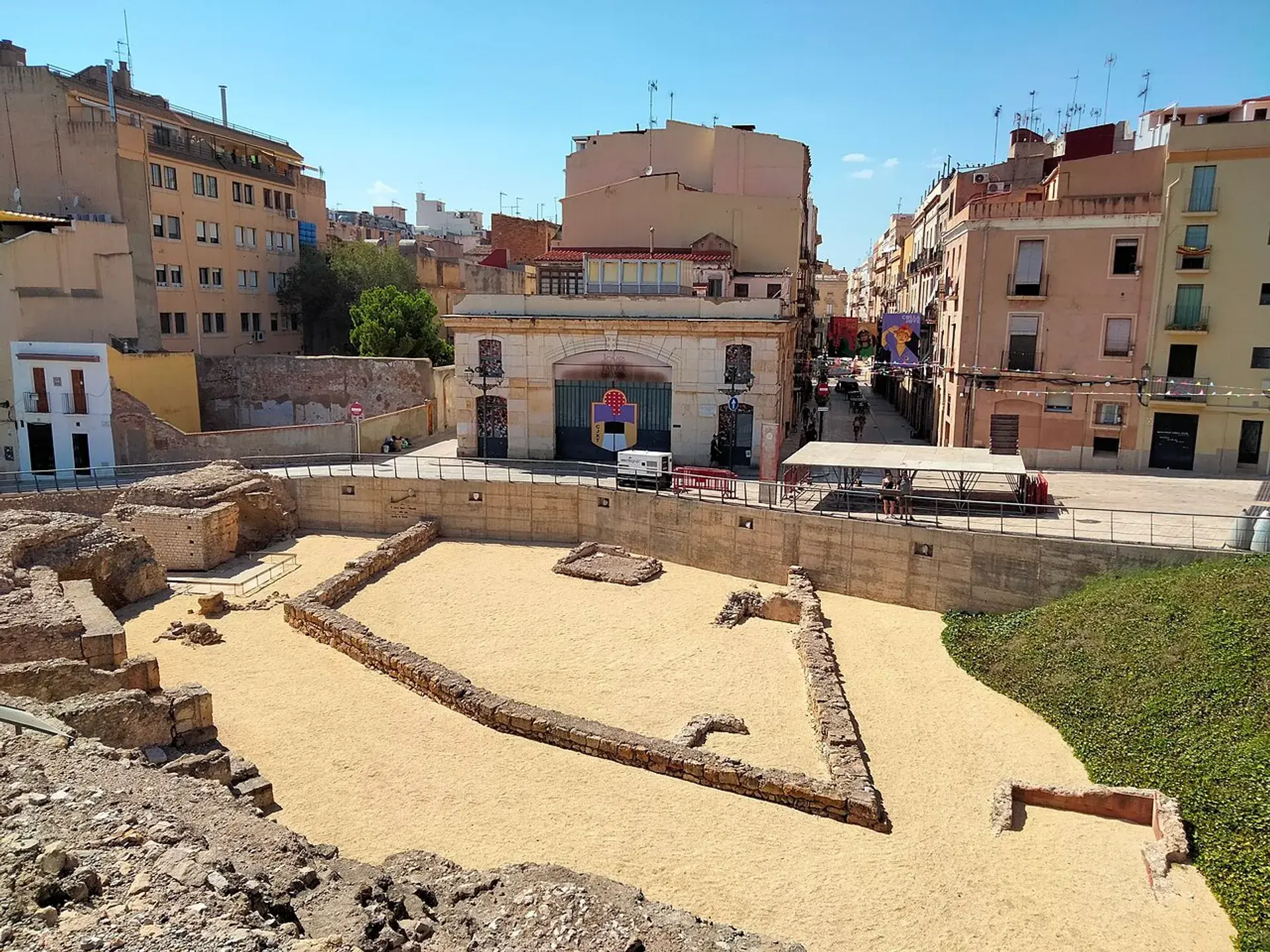
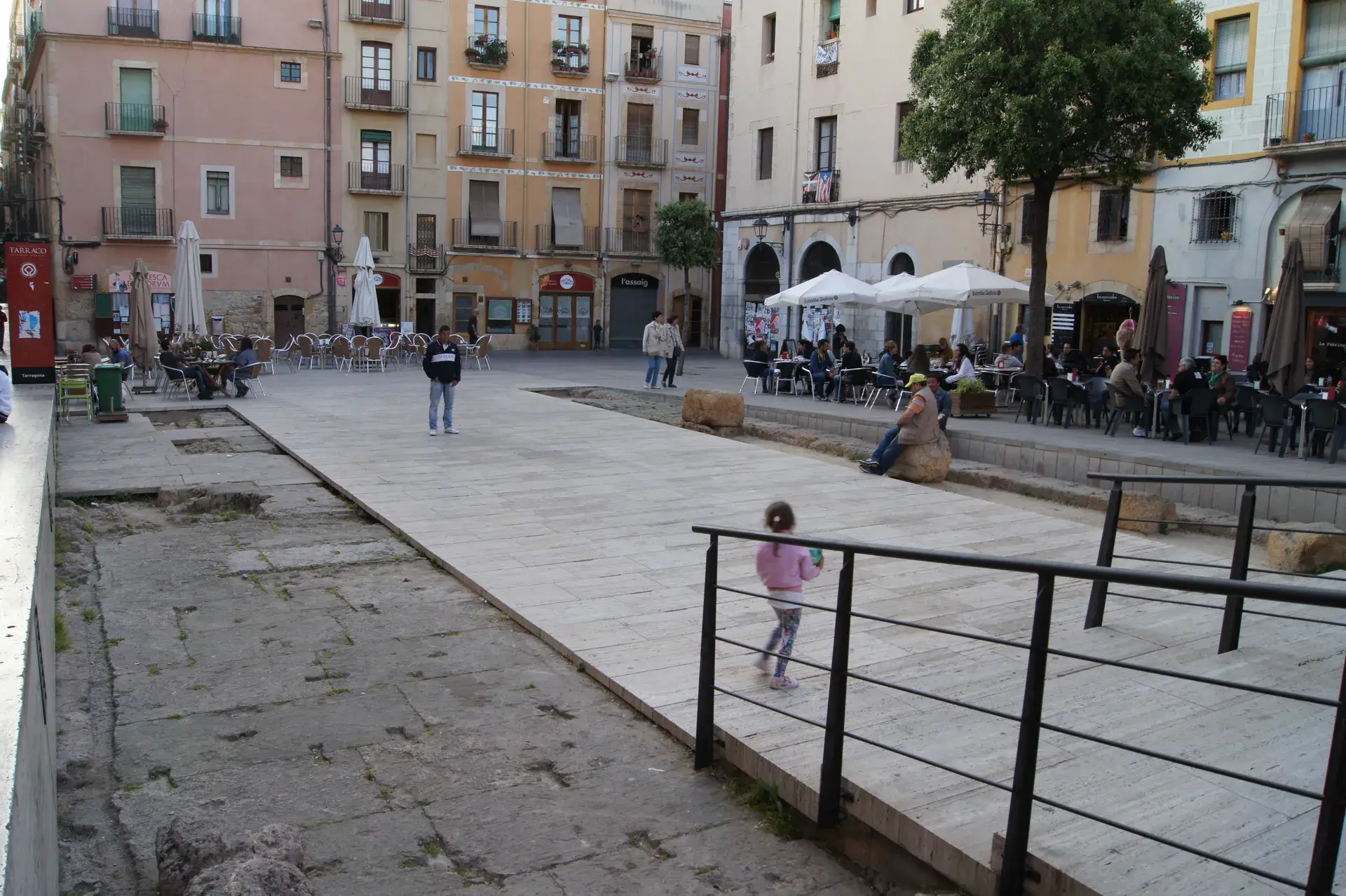
Topographically and chronologically, the site serves as the starting point for understanding Roman Tarraco. Located at the highest elevation of the Part Alta, the promenade begins an urban progression that descends through the ruins of the Provincial Forum, down to the circus, and terminates at the coastal amphitheater.
FAQ
What is the historical significance of the Minerva Tower?
The Minerva Tower preserves a carved relief head of the goddess Minerva and a dedicatory inscription by a northern Italian legionary, recognized as the oldest Roman sculpture and Latin inscription found on the Iberian Peninsula.
What evidence indicates indigenous involvement in building the Roman walls?
Several ashlar blocks dating to the second century BCE bear mason marks inscribed in the Iberian language, demonstrating that local indigenous workers helped build the Roman Republic's defensive fortifications.
Where is the entrance to the Passeig Arqueològic?
The entrance is located at the northern edge of Tarragona's historic Part Alta quarter, near Avinguda de Catalunya and the Portal del Roser.