Plaça de la Font: Tarragona's Historic Square
Plaça de la Font serves as the civic and municipal heart of Tarragona's historic Part Alta. Designated as a Cultural Asset of Local Interest (BCIL), the square acts as the primary southern gateway to the walled upper city, marking the urban transition between the medieval core and the modern lower districts extending toward Rambla Nova.
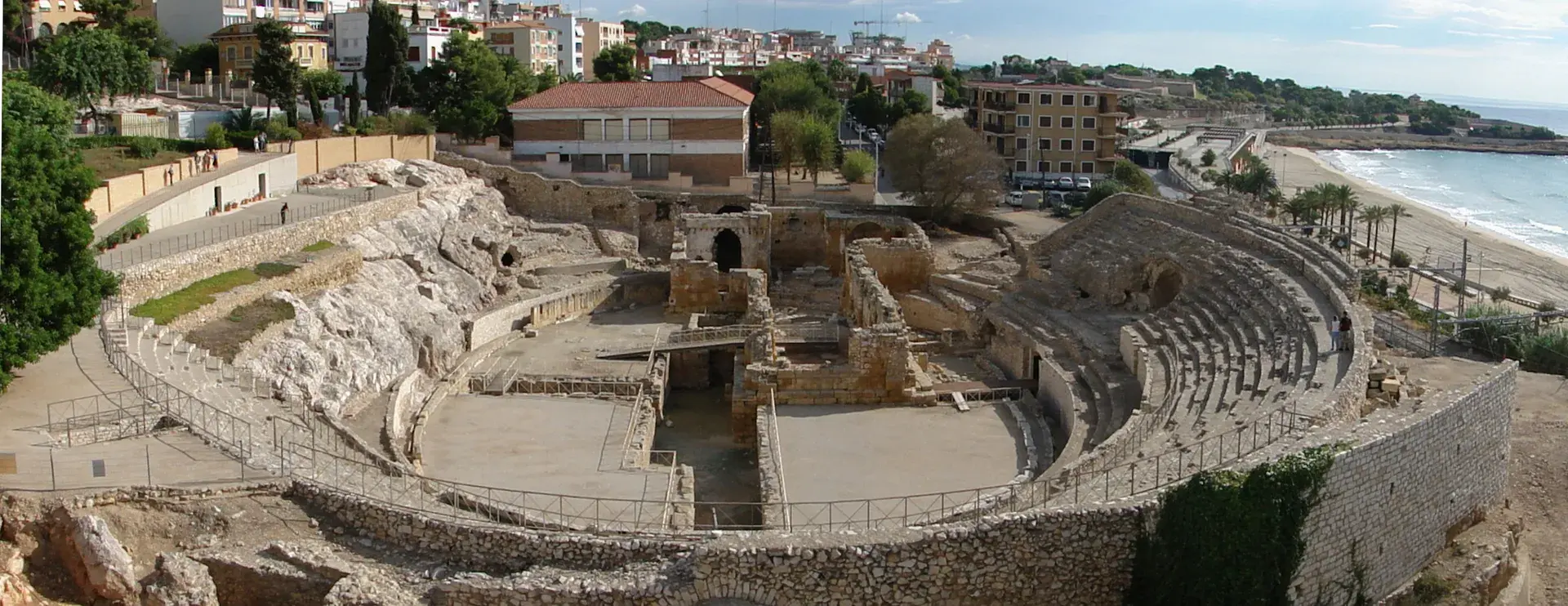
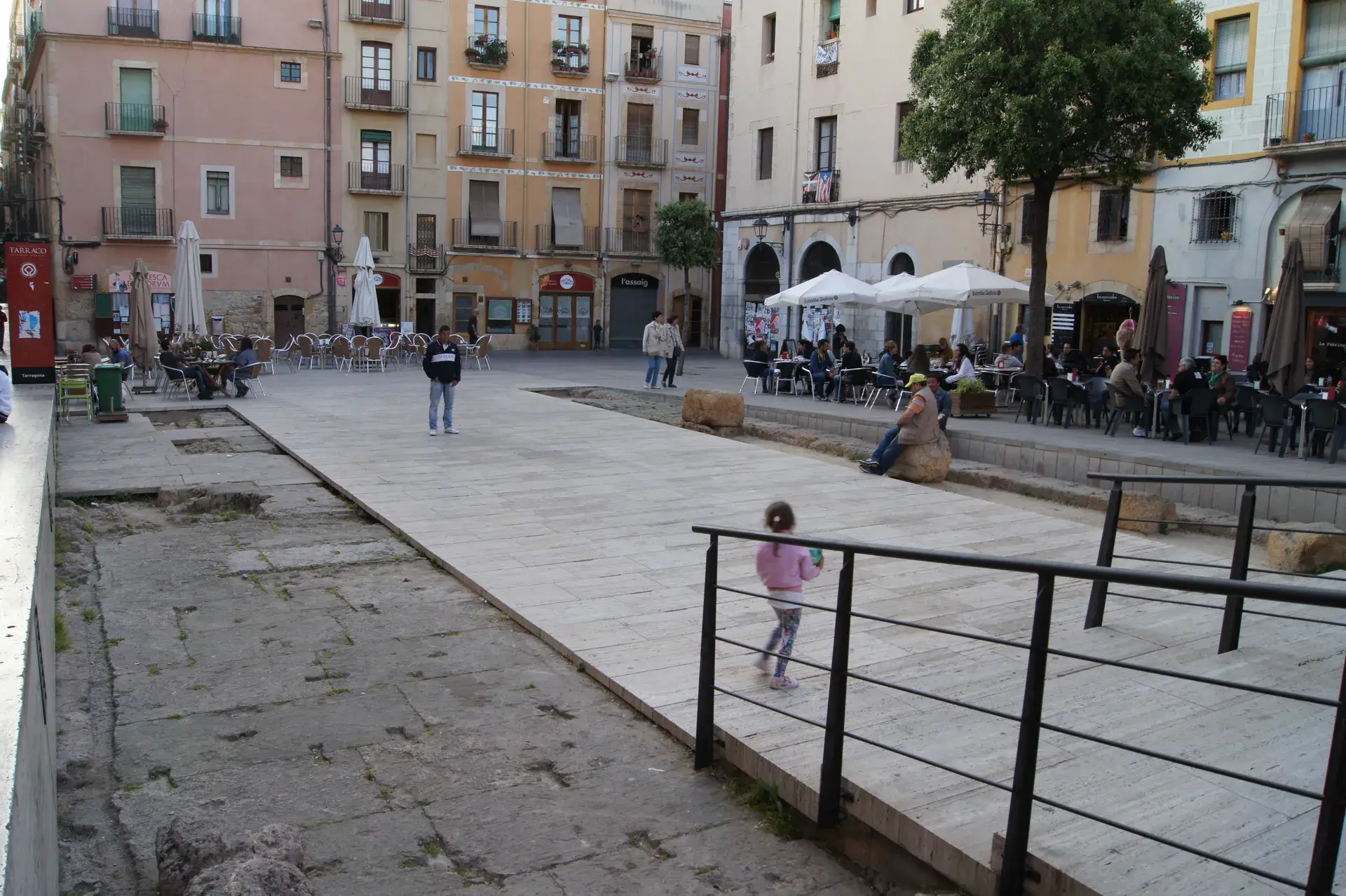
The elongated rectangular footprint of the square directly reflects the city's ancient architecture. Plaça de la Font covers approximately one quarter of the arena of Tarraco's 1st-century AD Roman Circus, occupying the ground where chariot teams once raced around the track.
Roman Origins and Evolution
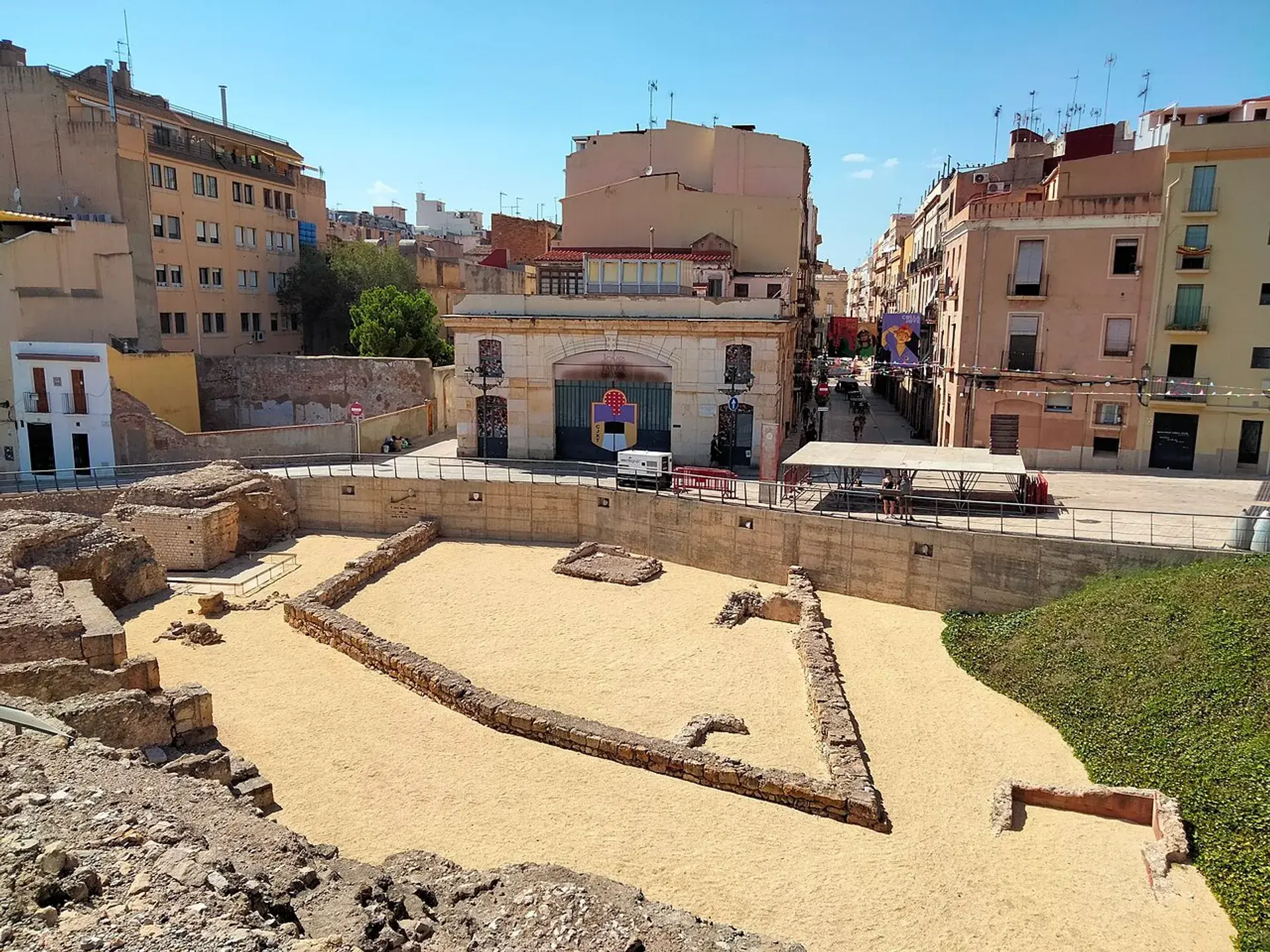
During the Roman Empire, this area served as the sand track and spina for chariot races, including two-horse bigae and four-horse quadrigae. The southwestern end of the square sits near the original position of the carceres, or starting gates. Following the decline of Roman Tarraco, the abandoned arena deteriorated and functioned as a livestock enclosure known as el Corral.
In the 14th century, the open space transformed into a venue for public events and city markets. Its modern name dates to 1363, when Archbishop Pere de Clasquerí commissioned the excavation of a 47-meter-deep well on the site, which local residents termed a font.
Religious orders also left a significant mark on the space. A Franciscan convent established here during the 13th century was transferred to the Dominican Order in the 17th century. Following the 1835 ecclesiastic disentailment, the site shifted to secular municipal control. In 1839, municipal architect Josep Oriol created the formal remodeling plan that gave the plaza its uniform neoclassical alignment. Beneath the modern perimeter, 1st-century Roman circus vaults and support walls remain embedded inside the basements of the 19th-century residences.
The Palau Municipal and the Royal Mausoleum
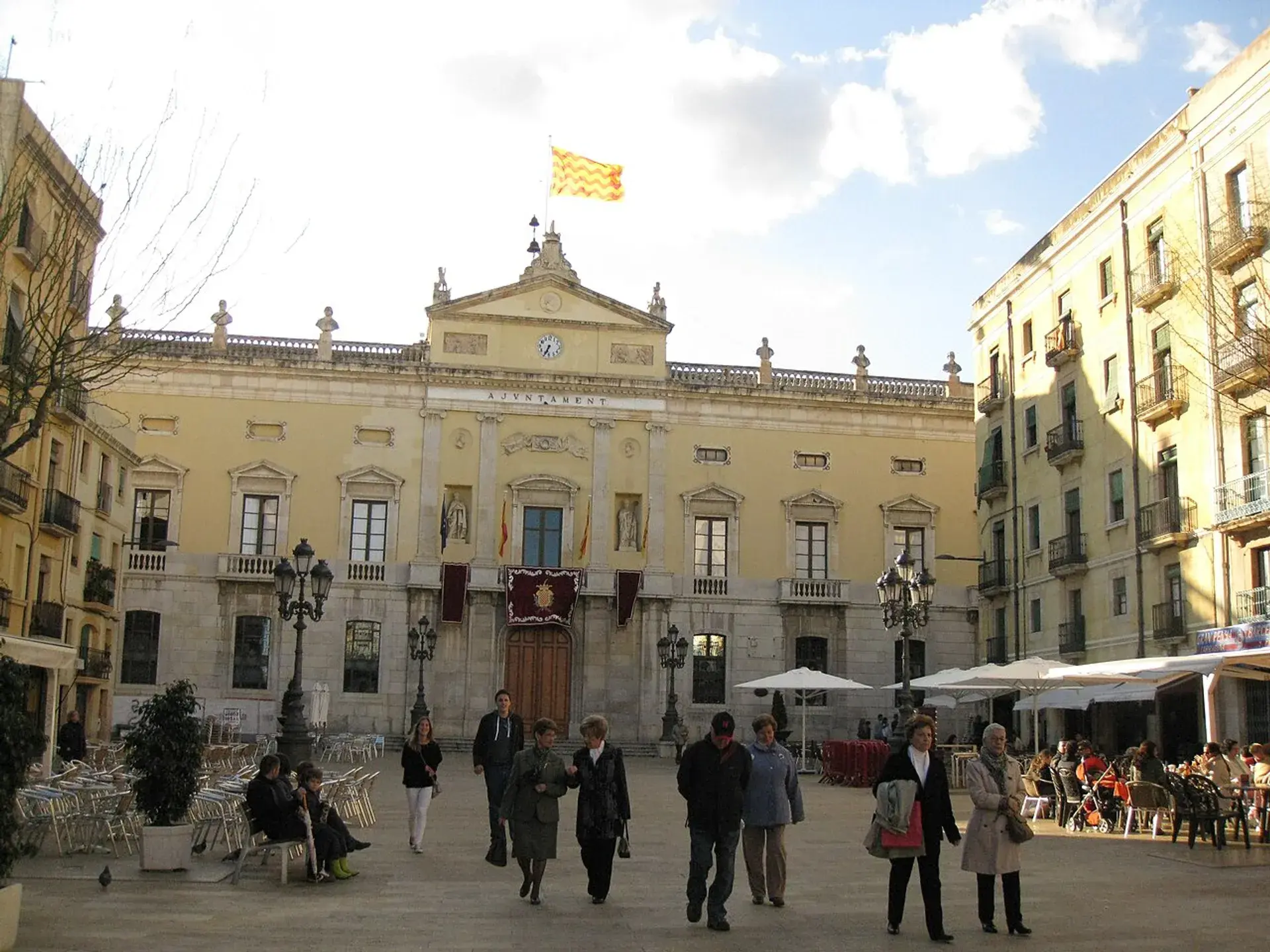
Anchoring the southwestern end of the plaza stands the Palau Municipal, Tarragona's Town Hall. Designed jointly by architects Francesc Rosell and Francesc Barba, the neoclassical civic seat was constructed between 1861 and 1865. The building features an imposing classical façade accentuated by Ionic architectural details, topped by an upper balustrade with nine busts sculpted by Bernat Verderol. These sculptures depict notable regional figures, such as surgeon Pere Virgili, poet Vicenç Garcia, and historian Lluís Pons d'Icart.
Inside an interior courtyard of the Town Hall rests the modernist mausoleum of King Jaume I of Aragon. Created by architect Lluís Domènech i Montaner, this boat-shaped cenotaph was commissioned after royal tombs at Poblet Monastery suffered desecration during 19th-century civil unrest. The royal monument was permanently installed in the Town Hall patio in 1992.
Modern Civic Life and Traditions
Today, Plaça de la Font serves as a central pedestrian thoroughfare and community hub. Rows of four-story residential façades line both sides of the square, where open-air café and restaurant terraces operate throughout the day. The unique narrow, elongated geometry inherited from the Roman track concentrates the sound of conversational chatter and tableware between the parallel buildings.
The square also rests above a subterranean public parking facility, the construction of which was marked by significant controversy regarding the preservation of buried Roman circus remains.
Culturally, the square plays a critical role in local celebrations, particularly during the Santa Tecla festival held every September 24. Plaça de la Font serves as the final stage of the Pilar Caminat, an event where human tower groups transport a four-tiered vertical column of castellers across a distance of more than 400 meters from the Cathedral steps. The tower traverses the length of the plaza, ending when the child at the summit, known as the enxaneta, is hoisted directly onto the Town Hall balcony using a traditional sash.
FAQ
Why is Plaça de la Font shaped like a long rectangle?
The square's elongated proportions trace roughly one quarter of the 1st-century AD Roman Circus arena, where chariot races once took place.
How did Plaça de la Font get its name?
The name dates back to 1363, when Archbishop Pere de Clasquerí had a 47-meter-deep well dug here, which residents referred to as a font.
What notable monument is preserved inside the Town Hall?
The inner courtyard of the Palau Municipal houses the boat-shaped modernist mausoleum of King Jaume I of Aragon, designed by architect Lluís Domènech i Montaner.
What is the Pilar Caminat in Plaça de la Font?
During the Santa Tecla festival, human tower teams form a walking four-tiered column that travels from the Cathedral to the Town Hall, where the child atop the structure is lifted to the mayor's balcony.