La Lonja de la Seda: València's Gothic Silk Exchange
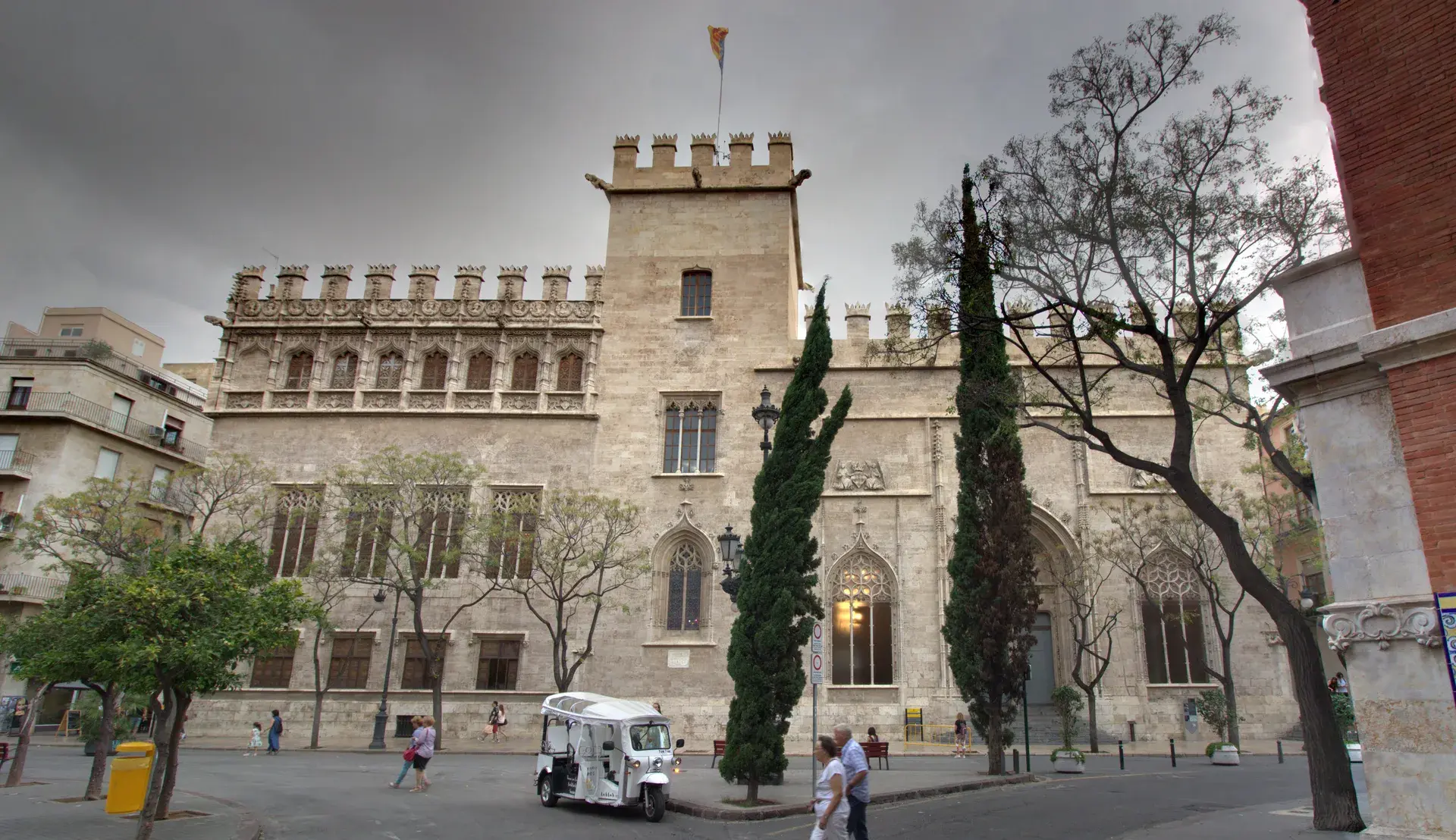
The 15th-century trading hall of La Lonja de la Seda reveals a space where merchants once struck deals beneath a forest of stone palm trees to fuel València's Golden Age. Built between 1482 and 1548, this late Valencian Gothic civil architecture complex was designed primarily by master architect Pere Compte. Today, it stands opposite the Mercat Central as València's primary physical UNESCO World Heritage Site, having earned the designation in 1996.
A Monument to València's Golden Age
Commissioned by the city council at the end of the 15th century, the exchange was built to demonstrate the economic power and commercial dominance of the city in the Mediterranean. It served as a dedicated space for the booming silk industry. Contracts signed in the hall were legally enforced by the adjacent maritime trade court. The site also housed the municipal bank, while the central tower's upper floors functioned as a debtor's prison for silk thieves and defaulting merchants.
The Trading Hall and Stone Palm Forest
The visual impact of the 17.4-metre-high Trading Hall is defined by eight twisted, helical stone columns that rise and branch into ribbed vault bays. This design creates the distinct impression of a stone palm forest towering over a polished black, white, and brown marble floor laid in six-pointed star patterns. Eleven meters up the wall, a gold-painted Latin band circles the hall. This inscription acts as a moral reminder to merchants to conduct trade without lies or usury in order to earn both earthly wealth and eternal salvation.
The Sea Consulate and Central Tower
The complex encompasses 2,000 square meters and includes the Sea Consulate wing and a central square tower. The Sea Consulate features the Golden Chamber, which showcases an intricate 15th-century gilded and polychrome wooden coffered ceiling relocated from the old City House. Inside the central tower, Pere Compte engineered an advanced stone spiral staircase completely without a central supporting column or axis.
Explicit Gargoyles and the Orange Courtyard
The building's exterior features 28 carved stone gargoyles and chimeras with highly explicit and provocative imagery, including demons and figures engaged in sexual acts. Local history attributes these explicit carvings to the site's proximity to medieval València's legal brothel district. Within the complex walls, the central courtyard provides a quiet garden planted with bitter orange trees, anchored by an eight-pointed star fountain and surrounded by Gothic stone arches.
Visiting the Monument
The complex is managed by the València City Council as an accessible municipal monument and heritage museum. It is open to the public daily, offering general admission tickets with multilingual audio guides and free entry on Sundays and public holidays.
FAQ
What was La Lonja de la Seda used for?
Built in the late 15th century, La Lonja de la Seda was a dedicated exchange space for València's booming silk industry. It served as a commercial hub where merchants traded raw silk, signed legally binding contracts, and conducted financial transfers through the municipal bank.
Why does La Lonja de la Seda have explicit gargoyles?
The building's exterior features 28 carved stone gargoyles and chimeras with provocative and explicit imagery. According to local history, these graphic sculptures reflect the site's proximity to medieval València's legal brothel district.
What are the opening hours for La Lonja de la Seda?
The monument is open Monday through Saturday from 10:00 to 19:00, and on Sundays and public holidays from 10:00 to 14:00.