Plaza de la Virgen: Historic Heart of València
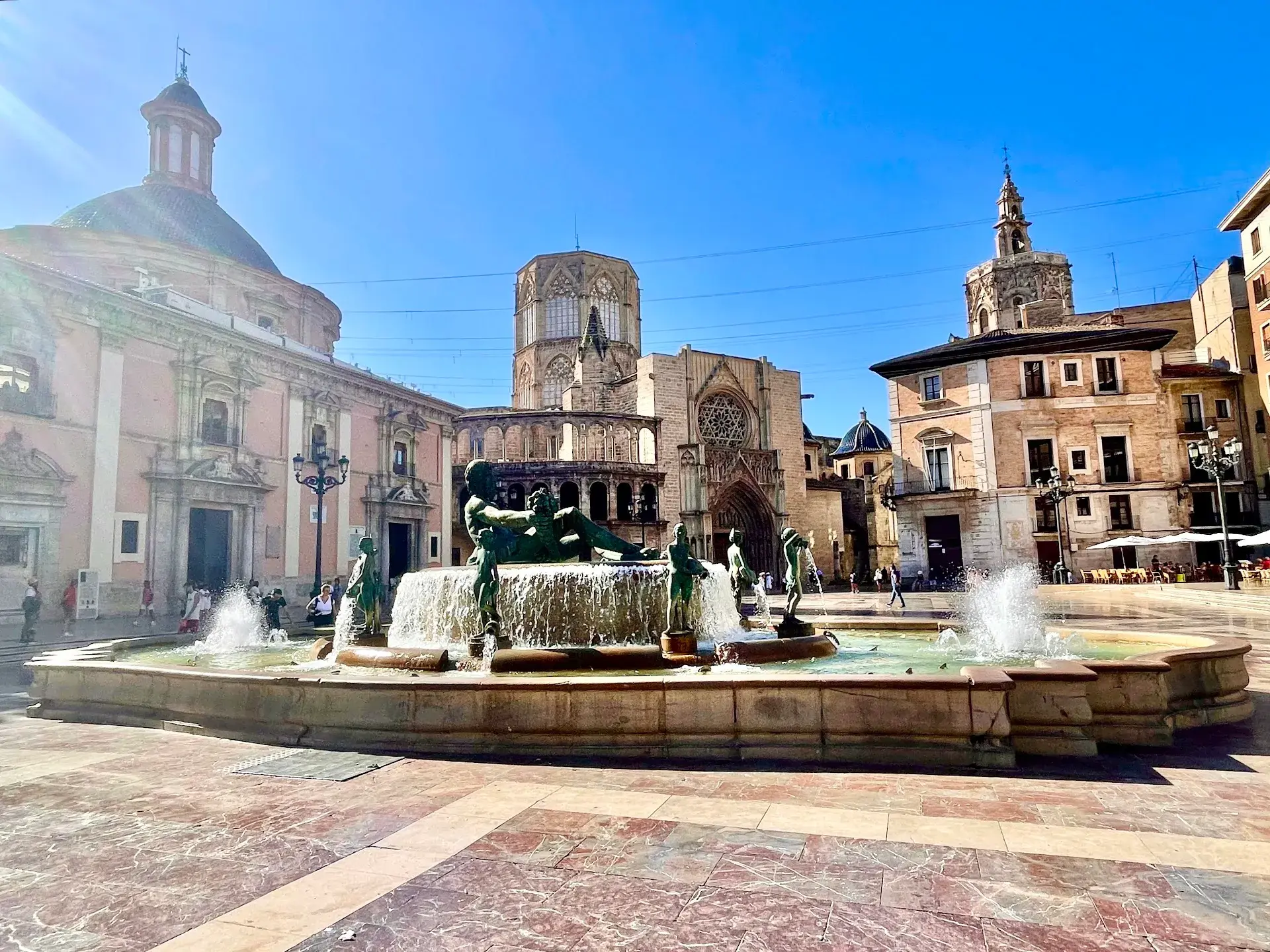
Stand in the bustling open expanse of Plaça de la Mare de Déu to admire the vibrant heart of the historic quarter framed by monumental architecture. Anchoring the Ciutat Vella neighborhood, Plaza de la Virgen occupies the exact footprint of València's ancient Roman Forum. Today, it serves as a pedestrianized gathering space linking the city's most essential landmarks and connecting the nearby Barrio del Carmen district.
A Crossroads of History and Architecture
The square has continuously served as València's civic and religious nucleus since the city was founded by Roman consul Decimus Junius Brutus in 138 BCE. Archaeological excavations in and around the plaza have revealed Roman columns, mosaic fragments, and ancient drainage infrastructure.
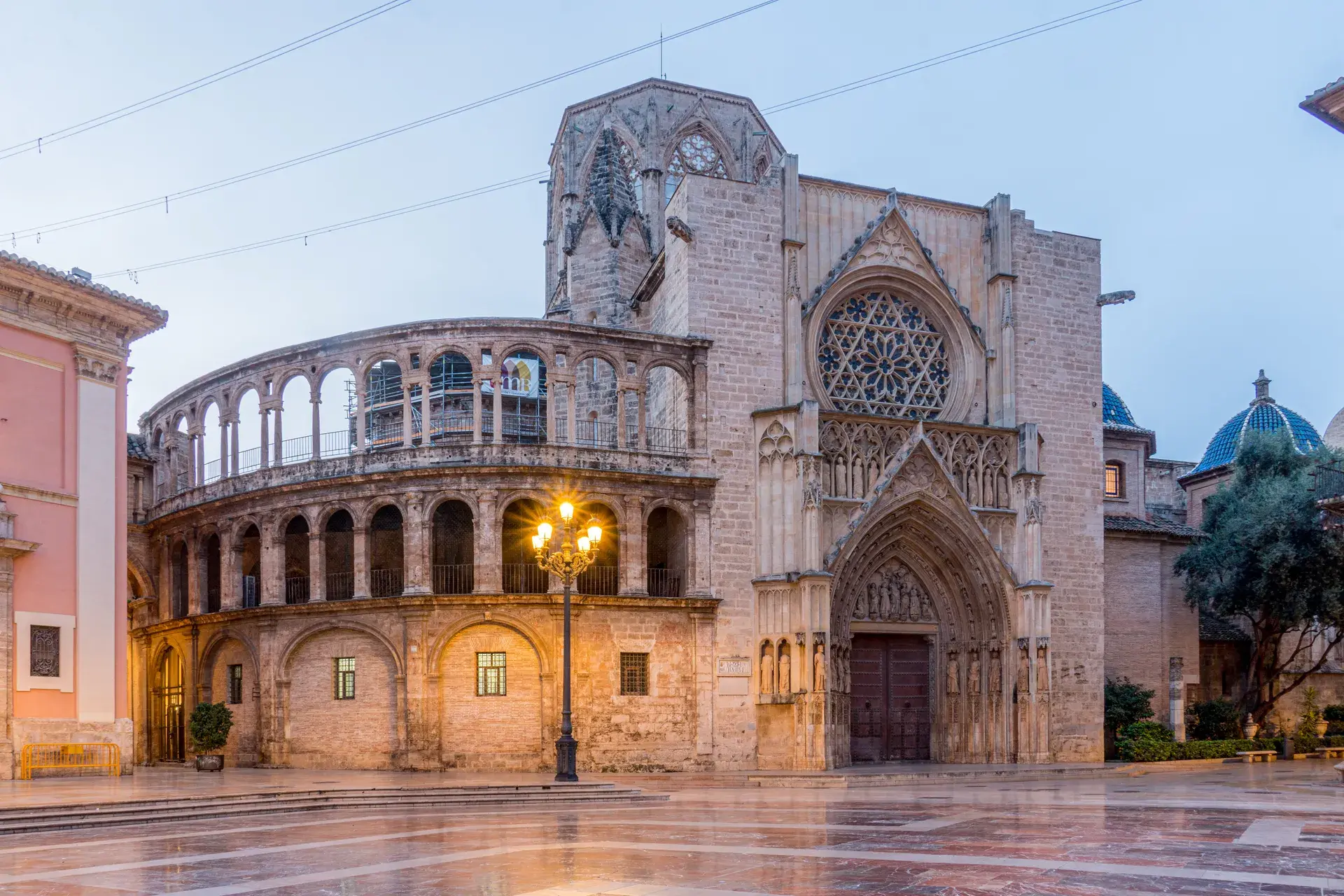
Surrounding the plaza are three major historic landmarks. The Cathedral of València, which began construction in 1262 over a former mosque, presents its impressive Gothic Apostles' Door to the square. Nearby stands the Basilica of Our Lady of the Forsaken, built between 1652 and 1667 by architect Diego Martínez Ponce de Urrana. Finally, the Palau de la Generalitat Valenciana, the seat of the regional government, borders the open expanse.
The Turia Fountain
The centerpiece of Plaza de la Virgen is the Fuente del Turia. Created by Valencian sculptor Manuel Silvestre Montesinos and installed in 1976, the bronze monument is a literal map of the region's agricultural geography.
A central reclining male figure represents the Turia River and the god Neptune. This figure is encircled by eight nude female figures pouring water from pitchers. Each female figure represents one of the eight historic irrigation canals governed by the region's traditional Water Court. The splash of running water from the fountain joins the sounds of fluttering pigeons, street musicians, and the murmur of outdoor café diners to create a lively open-air soundscape.
The Ancient Water Court and Civic Traditions
Every Thursday at noon, the square hosts the Tribunal de las Aguas (Water Court) at the Cathedral's Apostles' Door. Originating during the Islamic era in the 9th or 10th century and later formalized by King James I of Aragon, this institution features eight elected farmer delegates who resolve irrigation disputes.
Recognized as Europe's oldest surviving judicial institution and the world's oldest working democratic court, the Tribunal issues rulings entirely in oral Valencian. The proceedings require no lawyers or written filings, and decisions are final. In 2009, UNESCO inscribed the court as Intangible Cultural Heritage of Humanity.
Beyond judicial traditions, Plaza de la Virgen is the central staging site for major celebrations. It hosts the massive floral offering to the Virgin during Las Fallas, the May festival of Our Lady of the Forsaken, and the display of "Las Rocas" sculpted processional carts ahead of Corpus Christi. The 15th-century statue of the Virgin Mary venerated during these events is housed in the adjacent Basilica and is affectionately nicknamed "La Geperudeta" (the little hunchback) by locals due to her slightly forward-tilted posture.
FAQ
What is the meaning behind the fountain in Plaza de la Virgen?
The Fuente del Turia maps the region's agricultural geography. A central male figure represents the Turia River, while eight surrounding female figures pour water to represent the eight historic irrigation canals of the surrounding agricultural plain.
When does the Water Court meet at Plaza de la Virgen?
The Tribunal de las Aguas meets publicly at the Apostles' Door of the Cathedral every Thursday at 12:00 noon to resolve agricultural irrigation disputes.
Which historic buildings surround Plaza de la Virgen?
The square is bordered by three major landmarks: the Cathedral of València, the Basilica of Our Lady of the Forsaken, and the Palau de la Generalitat Valenciana.