Valencia Cathedral: Home of the Holy Grail
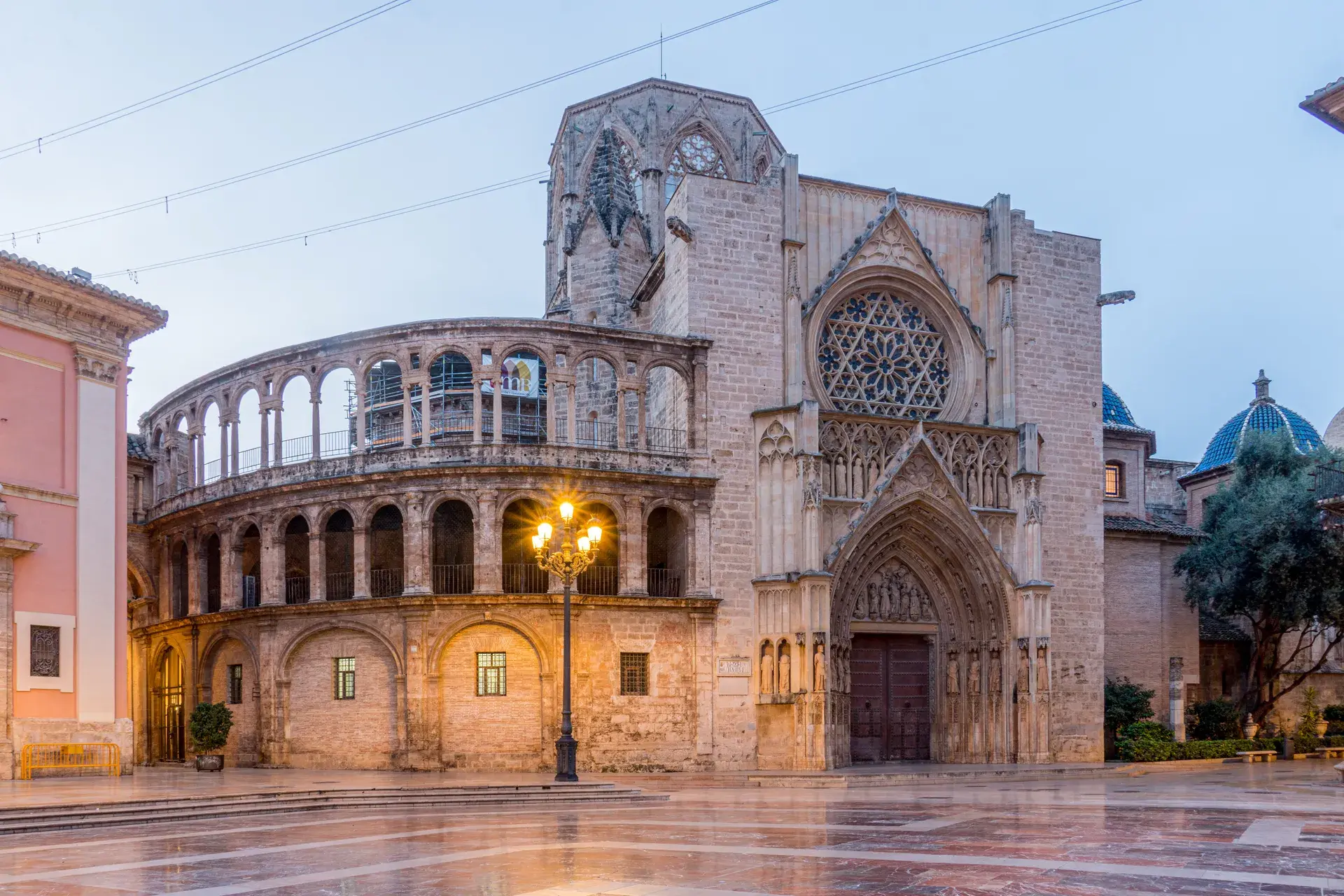
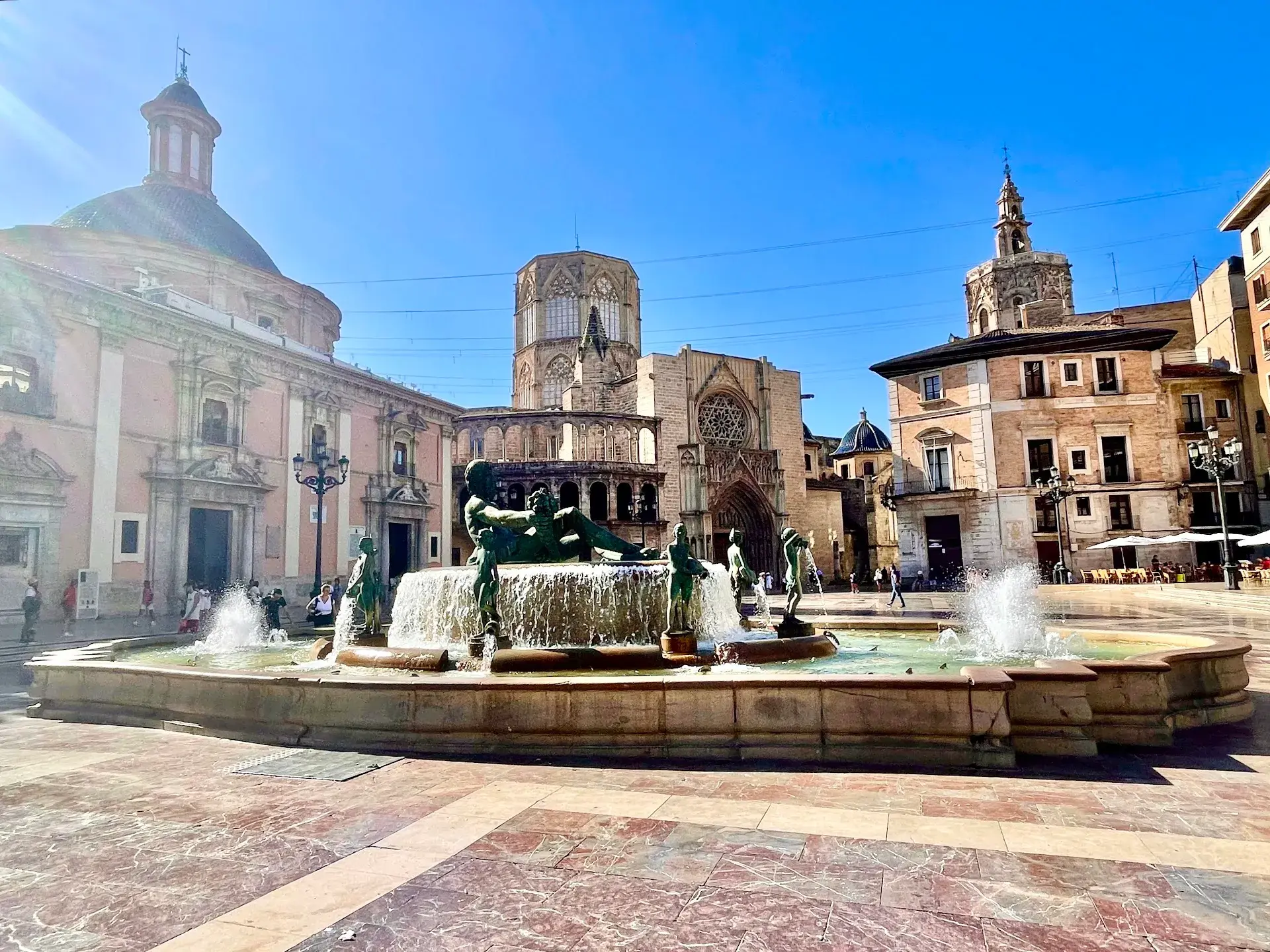
Marvel at the mainly Gothic-style facade of the Valencia Cathedral, renowned as the supposed resting place of the Holy Grail. Situated in the heart of the historic Ciutat Vella between Plaza de la Reina and Plaza de la Virgen, the Metropolitan Cathedral-Basilica of the Assumption of Our Lady of Valencia serves as a central architectural anchor for the city. Built upon centuries of layered history, it stands over the foundations of a Roman temple to Diana, a Visigothic cathedral, and the central mosque of Islamic Balansiya.
A Blend of Architectural Styles
Following King James I of Aragon’s reconquest of Valencia in 1238, the existing mosque was re-consecrated as a church. Construction on the current building began in 1262 under Bishop Andreu d'Albalat. Because it utilizes the footprint of the former Moorish mosque, the cathedral's Latin cross layout faces southeast rather than pointing strictly east toward Jerusalem, as was traditional for medieval churches.
The structure primarily features Valencian Gothic architecture, though subsequent expansions introduced a mix of Romanesque, Renaissance, Baroque, and Neoclassical elements. This evolution is visible in its three main exterior portals: the oldest Romanesque Puerta del Palau, the Gothic Puerta de los Apóstoles, and the ornate Baroque Puerta de los Hierros.
The Chapel of the Holy Chalice
The cathedral is perhaps most famous for the Chapel of the Holy Chalice. Inside the chapel, an illuminated golden altar contrasts with heavy stone archways to frame an ancient dark-reddish agate cup. Dated between the 1st century BCE and the 1st century CE, the cup sits upon a 14th-century medieval gold stand adorned with filigree handles, enamel, and semi-precious gems.
Church tradition claims this cup traveled from Jerusalem to Rome, and eventually to Spain. Documented records confirm that King Alfonso V transferred the relic to the cathedral in 1437. The artifact holds immense religious significance; Popes John Paul II and Benedict XVI both celebrated Mass using the chalice, and in 2015, Pope Francis designated a Holy Jubilee Year to honor the relic every five years.
El Miguelete Bell Tower
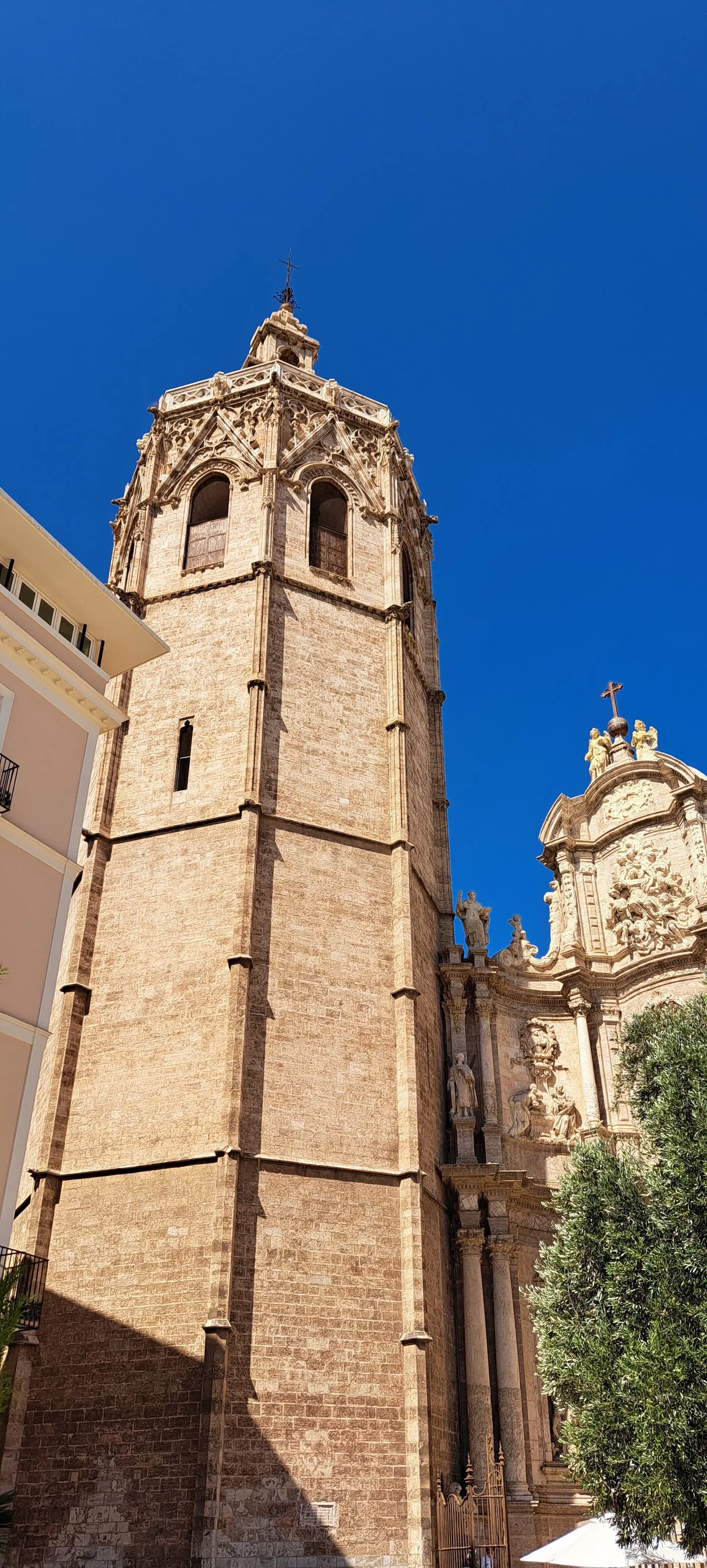
Another iconic feature is the octagonal El Miguelete bell tower, which rises above the old town. Construction on the freestanding structure began in 1381, and it was eventually connected to the cathedral's central nave in the late 15th century. The tower was designed with strict mathematical symmetry, with its height to the original terrace precisely equaling its exterior base perimeter.
The belfry houses a 7.5-tonne hour bell. A local guild maintains a centuries-old tradition of manual bell ringing, a practice inscribed on UNESCO's Intangible Cultural Heritage list. Hidden along the tower's spiral staircase is La Presó, a dark stone chamber with five-meter-thick walls once used to house individuals claiming sanctuary.
Enduring Local Traditions
The cathedral grounds host several long-standing cultural practices. Every Thursday at noon, the thousand-year-old Water Court, or Tribunal de las Aguas, meets publicly outside the Gothic Puerta de los Apóstoles. This gathering is recognized as a UNESCO Intangible Cultural Heritage event. Inside the nave, a local tradition encourages expectant mothers to walk around the cathedral's interior perimeter nine times while praying to the Virgin of Good Delivery.
Today, the site functions as an active Catholic cathedral and the seat of the Archbishop of Valencia. It remains open for paid cultural visits, granting access to the Diocesan Cathedral Museum, the main nave, the Chapel of the Holy Chalice, and the 207-step climb up the bell tower.
FAQ
What architectural styles are present in the Valencia Cathedral?
The cathedral is primarily Valencian Gothic, but it also incorporates Romanesque, Renaissance, Baroque, and Neoclassical elements across its various portals and expansions.
Is the Holy Grail inside the Valencia Cathedral?
The cathedral houses the Holy Chalice, an ancient agate cup dated between the 1st century BCE and 1st century CE. Church tradition claims it is the cup from the Last Supper, and it was brought to the cathedral by King Alfonso V in 1437.
Can visitors climb the bell tower at the Valencia Cathedral?
Yes, visitors can access the El Miguelete bell tower and climb its 207-step spiral staircase for a 360-degree view over Valencia.
Why does the Valencia Cathedral face southeast instead of east?
Unlike traditional medieval churches that face east toward Jerusalem, the Valencia Cathedral faces southeast because it was built over the foundations of an earlier Moorish mosque, utilizing its original footprint.