Torres de Serranos: València's Gothic City Gate
Stand before the imposing Gothic bulk of the Torres de Serranos, the ancient stone gates that once guarded the medieval city walls. Saved from the demolition of the city walls because it was filled with imprisoned aristocrats, this gate later became a fortress for Spain's most priceless art.
A Masterpiece of Valencian Gothic Architecture
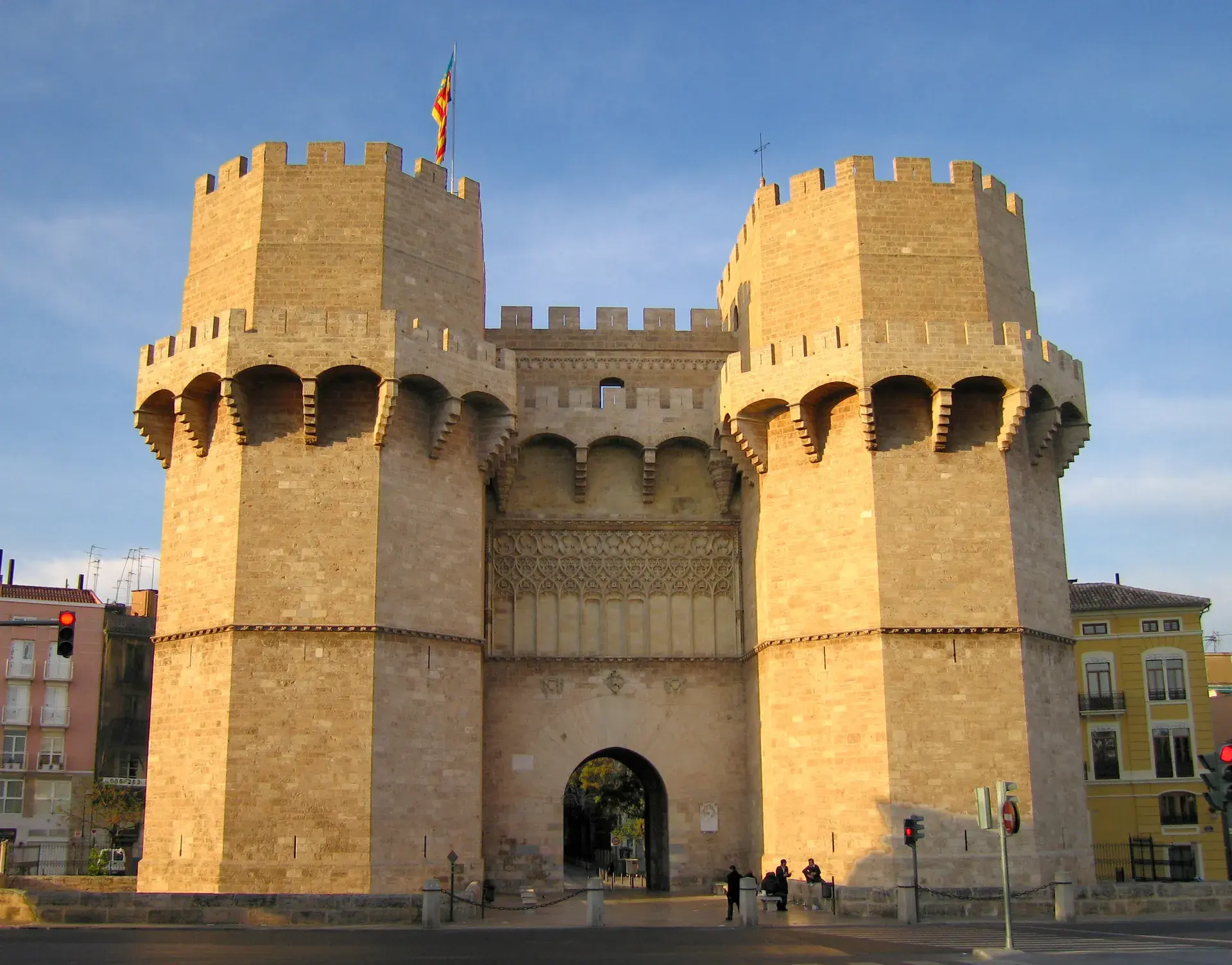
Located at Plaza de los Fueros on the northern boundary of València's Ciutat Vella, the Torres de Serranos faces the sprawling Turia Gardens. Master builder Pere Balaguer designed the structure in the Valencian Gothic style, with construction taking place between April 1392 and March 1398. The monument features twin polygonal towers that reach up to 30 meters high, flanking a central round-arched entry.
Built from thick stone masonry and clad in limestone sourced from nearby Alginet, the gates present a formidable military front. However, the rear facade reveals an open-backed structure with large arched openings and ribbed vaults facing inward toward the historical center. A grand monumental stone staircase was added in 1397 to accommodate public access and welcoming ceremonies.
From Royal Gateway to Aristocratic Prison
Originally commissioned as one of twelve gates in València's 14th-century Christian city wall, the Torres de Serranos guarded northern access to the city while serving as a grand ceremonial entrance for visiting kings and ambassadors. Its name is traditionally attributed either to travelers arriving from the northern la Serranía mountains or to a prominent local family named Serranos.
Following a major fire at the main municipal jail in 1586, the towers were repurposed into a specialized prison reserved exclusively for knights and aristocrats. This active prison status lasted until 1887 and ultimately saved the monument from destruction. When València demolished its medieval city walls in 1865 to allow for urban expansion, the Torres de Serranos was spared. Today, graffiti and inscriptions left by aristocratic prisoners between the 16th and 19th centuries remain visible on the interior stone walls.
The Secret Vault of the Prado Museum
During the Spanish Civil War between 1936 and 1939, the Republican government utilized the gate's lower vaults as a secure storage facility. The towers were heavily reinforced to protect evacuated masterpieces from Madrid's Prado Museum, including invaluable works by Velázquez, Goya, and El Greco, from aerial bombardment.
Engineers devised a highly specialized defense system to shield the art, pouring a 90-centimeter slab of reinforced concrete above the storage vault. This was topped with a one-meter layer of soil and a final one-meter layer of rice husks to cushion potential bomb impacts.
Torres de Serranos Today
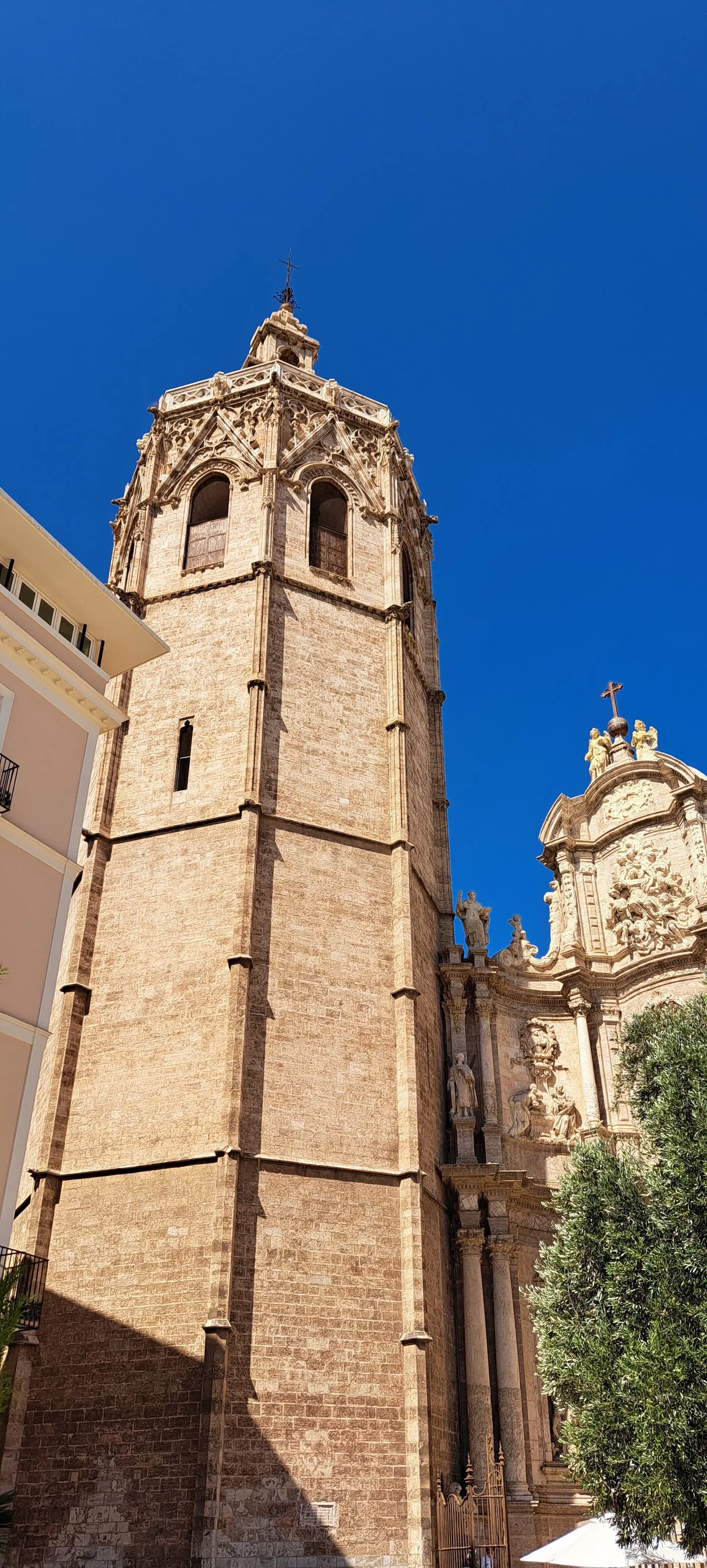
Now marking the northern entry to the El Carmen neighborhood, the Torres de Serranos operates as a public historic monument and one of only two surviving gates from the original defensive perimeter. Visitors can tour the open interior halls and ascend the stone staircases to the roof battlements. These open platforms provide 360-degree panoramic views, contrasting the red-tiled roofs and the Miguelete bell tower of the historic quarter with the green expanse of the Turia Gardens below.
Beyond its daily role as a viewpoint and historical anchor, the gate serves as the official stage for La Crida. Held on the last Sunday of February, this event features the Fallera Mayor and city officials addressing crowds from the gate to officially announce the start of the Fallas festival.
FAQ
Why were the Torres de Serranos not demolished with the rest of the city walls?
The gates were spared during the 1865 demolition of València's medieval walls because they were actively functioning as a prison for knights and aristocrats at the time.
Can visitors climb to the top of the Torres de Serranos?
Yes, the towers operate as a public historic monument where visitors can climb stone staircases to the roof battlements for 360-degree views of the historic quarter and the Turia Gardens.
How did the Torres de Serranos protect art during the Spanish Civil War?
Engineers converted the lower vaults into a secure storage facility for evacuated Prado Museum masterpieces, reinforcing the ceiling with a 90-centimeter concrete slab, a one-meter layer of soil, and a one-meter cushioning layer of rice husks.