Cathedral-Basilica of Our Lady of the Pillar, Zaragoza
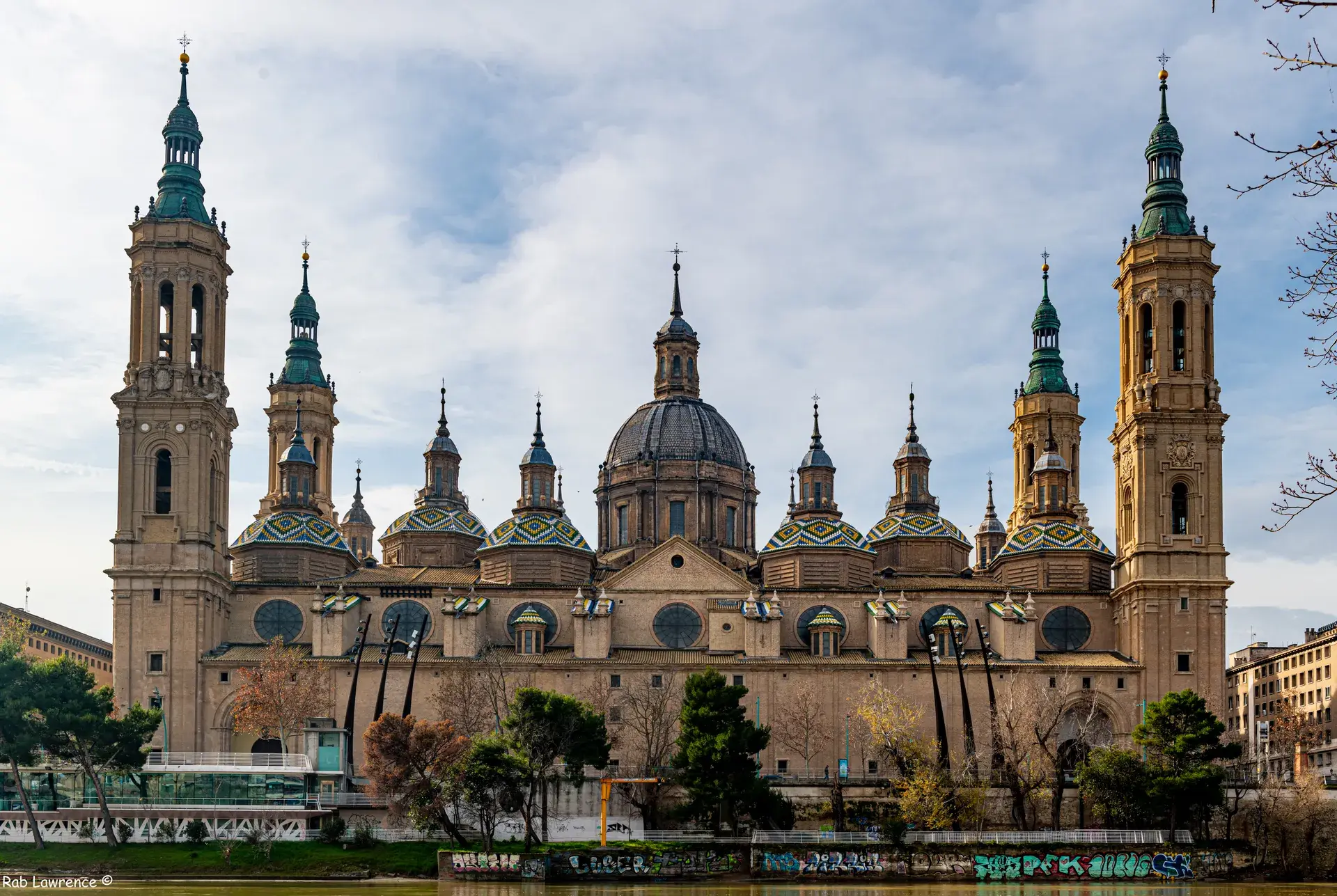
The Cathedral-Basilica of Our Lady of the Pillar, commonly known as El Pilar, is a monumental Catholic church on the banks of the Ebro River in Zaragoza, Spain. As a co-cathedral for the city, it stands as one of Spain's most significant religious and cultural landmarks, attracting pilgrims and visitors from around the globe. Its grand silhouette, defined by four corner towers and eleven shimmering domes, is an iconic feature of the city's skyline.
A Legendary Foundation
The origins of the basilica are rooted in a profound tradition dating to 40 AD. It is believed that the Virgin Mary, while still living in Jerusalem, appeared to the Apostle James the Greater in Caesaraugusta (modern Zaragoza). This event, a miraculous act of bilocation, is considered the first Marian apparition in history. According to the tradition, she instructed James to build a church on that spot and left a jasper pillar as a physical testament to her visit. This pillar remains the spiritual heart of the basilica.
Architectural Evolution and Artistry
While earlier Romanesque, Gothic, and Mudéjar churches stood on this sacred site, the current magnificent structure largely dates from the Baroque period. Construction began in 1681 under King Charles II of Spain. The building, measuring 130 meters long by 67 meters wide, showcases a blend of Baroque, Rococo, and Neoclassical styles.
In 1725, the architect Ventura Rodríguez designed the Holy Chapel, a lavish Baroque addition that houses the venerated pillar and statue. The basilica's interior is also a treasure trove of art, most notably featuring frescoes by the celebrated artist Francisco Goya, including his work 'Regina Martyrum' on one of the domes. Another masterpiece is the alabaster high altarpiece created by sculptor Damián Forment.
Historical Significance and Miracles
Over the centuries, numerous popes have recognized the devotion to Our Lady of the Pillar. Pope Innocent XIII officially approved the Marian apparition in 1723 and mandated its veneration throughout the Spanish Empire in 1730. The basilica's feast day, October 12, coincides with the date Christopher Columbus first sighted the New World in 1492, leading to the Virgin's patronage of the Hispanic world.
A remarkable event occurred during the Spanish Civil War (1936-1939) when three bombs were dropped on the basilica. Despite penetrating the roof, none of the bombs exploded. Two of these deactivated devices are now displayed within the church as a reminder of what many consider a miracle.
The Basilica Today
Today, the Basilica of Our Lady of the Pillar functions as an active co-cathedral and a major center for Marian devotion. It is Spain's second-most visited pilgrimage site, where daily masses are held. A central act of devotion for pilgrims is kissing the exposed part of the jasper pillar. The basilica is the focal point of the city's largest festival, the Fiestas del Pilar, held each October. The site also includes the Museo del Pilar, which displays a collection of the Virgin's ornate mantles, and visitors can ascend one of the towers for panoramic views of Zaragoza.
FAQ
Why is the Basilica of Our Lady of the Pillar famous?
The basilica is famous as the traditional site of the first Marian apparition in history, where the Virgin Mary is said to have appeared to Apostle James in 40 AD. It is a major pilgrimage destination and a masterpiece of Baroque architecture.
What is the story of the bombs in the Basilica del Pilar?
During the Spanish Civil War (1936-1939), three bombs were dropped on the basilica. They penetrated the roof, but none of them detonated. Two of the deactivated bombs are now on display inside the church as a testament to this event.
What is the significance of the jasper pillar?
According to tradition, when the Virgin Mary appeared to Apostle James in 40 AD, she left a jasper pillar as a testament. The basilica is built around this pillar, which holds a small statue of the Virgin and is an object of veneration for pilgrims.
Who painted the frescoes inside the Basilica del Pilar?
The renowned Spanish artist Francisco Goya painted several frescoes in the basilica's domes, including the famous 'Regina Martyrum' (Queen of Martyrs).