Zaragoza's Monument to Agustina de Aragón
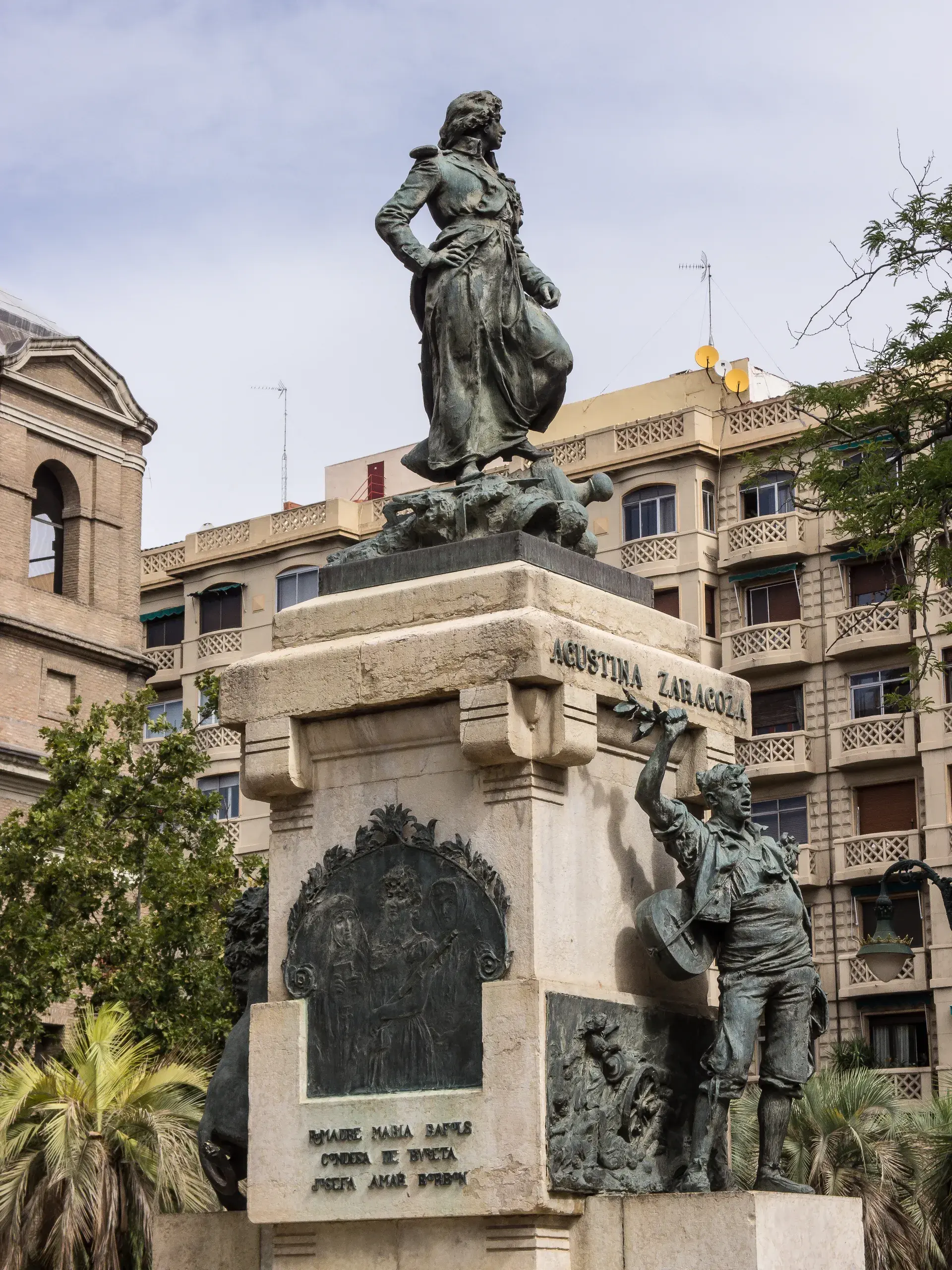
In Zaragoza's Plaza del Portillo stands the Monumento a Agustina de Aragón, a significant public art installation and historical landmark. This powerful sculpture immortalizes the city's resilience during the Napoleonic Wars and serves as a lasting tribute to its defenders. The monument is a focal point for understanding a key period in Spanish history.
A Monument Forged in History
Designed by the renowned sculptor Mariano Benlliure, the monument was officially unveiled on October 29, 1908. The inauguration was a major national event, attended by King Alfonso XIII and Queen Victoria Eugenie, coinciding with the centenary commemorations of the Sieges of Zaragoza. The project, which began around 1901, culminated in this grand tribute, with the bronze for the statues notably supplied by the Spanish Ministry of War.
The Legend of Agustina de Aragón
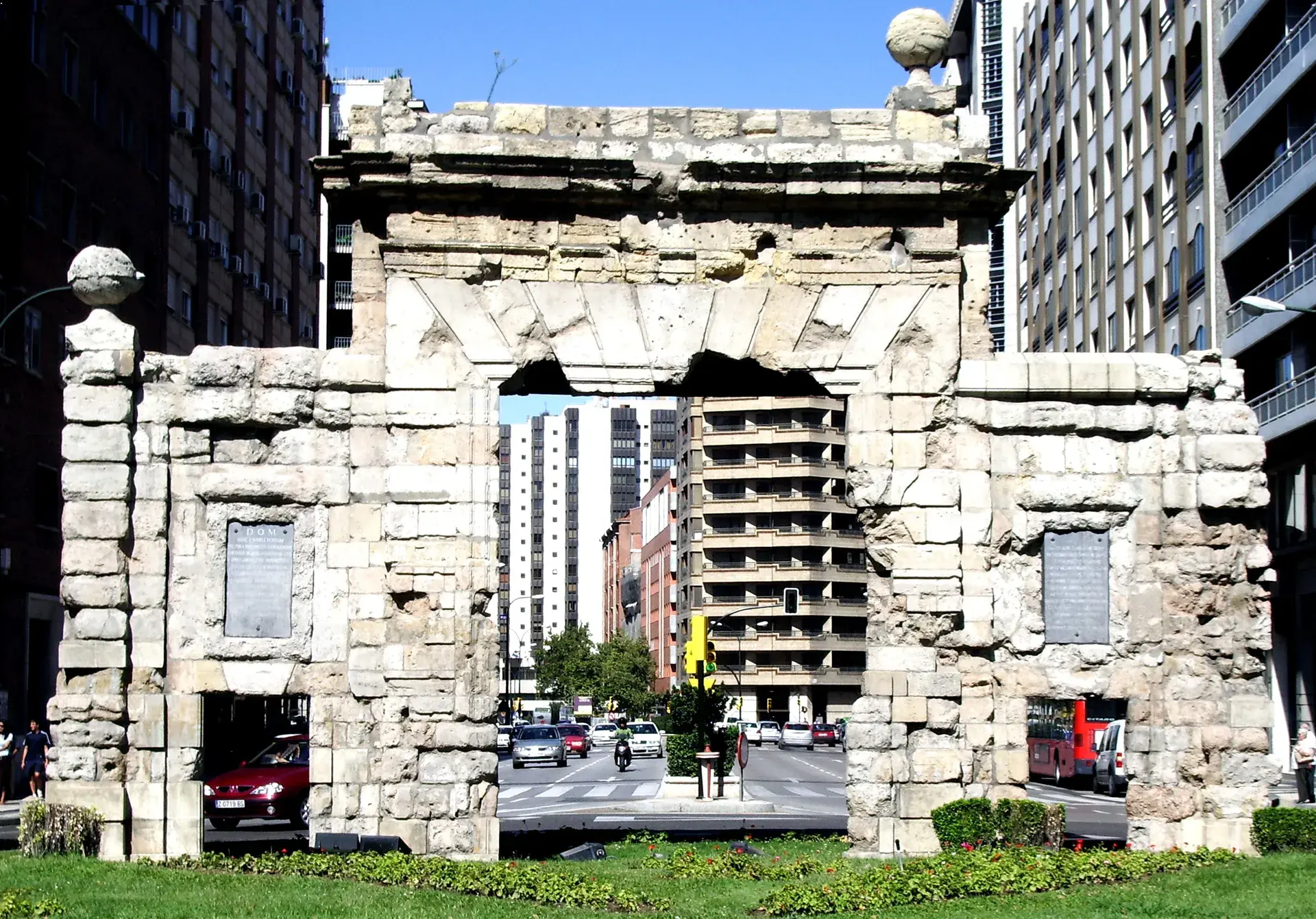
The monument commemorates the extraordinary bravery of Agustina Zaragoza Domènech during the first Siege of Zaragoza in 1808. As French forces assaulted the Portillo gate, with the Spanish defenders falling, Agustina, a civilian, took charge. She seized a lit fuse from a dying artilleryman and fired a 24-pound cannon at the attackers, repelling their advance. This singular act of defiance, witnessed by General Palafox, earned her the rank of an artillerywoman and transformed her into a national symbol of resistance against the invasion.
A Tribute to All Heroines
While the heroic bronze figure of Agustina stands atop the white stone pedestal, the monument is also known as "Agustina Zaragoza y las Heroínas." It explicitly honors six other women who played crucial roles in the city's defense. Reliefs and sculptural groups on the pedestal commemorate María Rafols, a nun who cared for the wounded; Manuela Sancho, a civilian defender; and four other heroines: María de la Consolación Azlor, Josefa Amar y Borbón, Casta Álvarez, and María Agustín.
Artistic Details and Symbolism
The monument is rich with symbolic details. The main figure of Agustina, dressed in an artillery jacket, was surprisingly modeled after Lucrecia Arana, a famous opera singer of the era. The pedestal also features a bronze figure of a 'baturro,' a traditional Aragonese peasant, who is depicted with a guitar on his back placing a laurel wreath over Agustina's name. An inscription on the back of the pedestal, '2 de julio de 1808,' marks a significant date from the Peninsular War.
FAQ
Who was Agustina de Aragón?
Agustina de Aragón was a civilian who became a national heroine during the first Siege of Zaragoza in 1808. She famously fired a cannon at French troops at the Portillo gate, an act of bravery that symbolized Spanish resistance during the Peninsular War.
Where is the Monument to Agustina de Aragón located?
The monument is located in Plaza del Portillo in Zaragoza, Spain. This site is historically significant as it was one of the most fiercely contested defensive points during the Sieges of Zaragoza.
Does the monument only honor Agustina de Aragón?
No, while Agustina is the main figure, the monument also pays homage to six other heroines of the sieges: María Rafols, María de la Consolación Azlor, Josefa Amar y Borbón, Manuela Sancho, Casta Álvarez, and María Agustín.
Who was the model for the statue of Agustina de Aragón?
The heroic bronze figure of Agustina de Aragón was reportedly modeled after Lucrecia Arana, a well-known Spanish opera singer at the time the monument was created.