Puerta del Carmen: Zaragoza's Battle-Scarred Gate
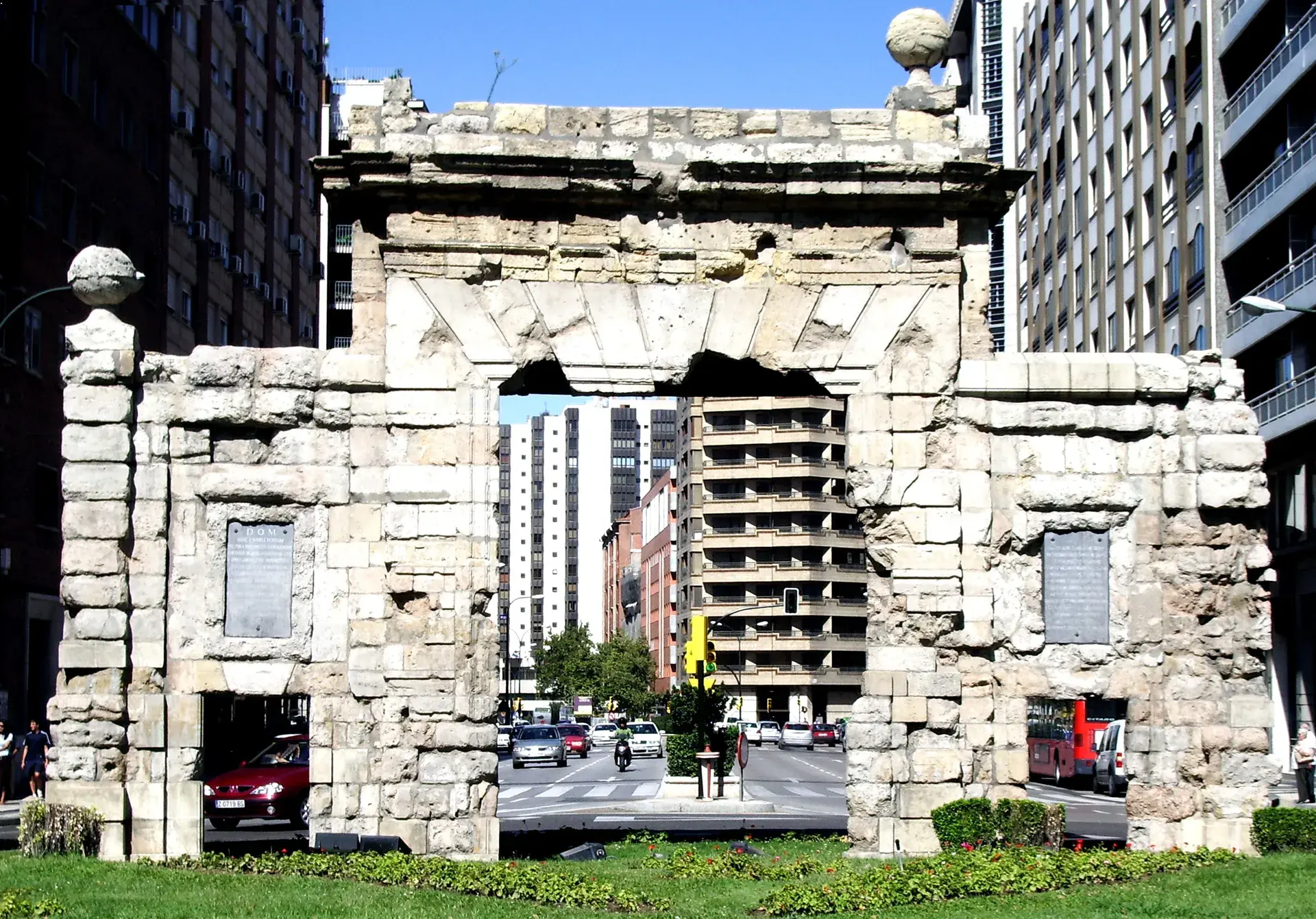
The imposing stone gate of Puerta del Carmen stands in Zaragoza as a bullet-scarred survivor from the late 18th century. Once one of twelve entrances to the fortified city, it is now the sole remaining gate, a powerful symbol of civic resilience and history.
Architectural Origins
Designed by architect Agustín Sanz, the Puerta del Carmen was constructed between 1789 and 1795, with its official inauguration taking place in 1792. The gate exhibits a sober neoclassical style, drawing inspiration from Roman triumphal arches. It was built on the site of an earlier gate, the Puerta de Baltax, which had stood since at least the 13th century and was renamed Puerta del Carmen in 1656 due to its proximity to a Carmelite convent.
A Symbol of Resistance
The gate's most dramatic history was written during the Peninsular War. It served as a crucial defensive point during the Sieges of Zaragoza (1808-1809), becoming a fortress for Aragonese resistance against Napoleonic forces. The numerous bullet and cannonball marks still visible on its stone walls are a direct testament to the fierce fighting it endured. After the war, repairs stabilized the structure, but much of the battle damage was deliberately left as a memorial. The gate also saw action during the First Carlist War, when troops entered the city through it in 1838.
From City Wall to Urban Landmark
For centuries, Zaragoza was protected by a series of defensive walls with twelve gates. The Puerta del Carmen is the only one to have survived. As the city expanded in the 19th century, the walls were demolished. The houses adjacent to the gate were removed in 1927, leaving it isolated as a standalone monument. Today, it is situated in the middle of a busy intersection where Avenida César Augusto and Paseo María Agustín meet, a stark contrast to its original context.
The Gate in Modern Times
Declared an Asset of Cultural Interest in 1908, the Puerta del Carmen now functions as a commemorative landmark. It is freely accessible year-round and is a popular spot for photographs. Its historical resilience faced a modern challenge in 1997 when a bus crashed into the structure. The gate's significance is such that a replica, complete with simulated battle scars, was installed in Madrid's Casa de Campo in 1956 to showcase national heritage.
FAQ
Why is the Puerta del Carmen covered in marks and holes?
The marks are from bullets and cannonballs sustained during the Sieges of Zaragoza in 1808-1809. After the war, the damage was intentionally preserved as a memorial to the city's resistance against Napoleonic forces.
How old is the Puerta del Carmen?
The gate was constructed between 1789 and 1795. It was designed by the architect Agustín Sanz in a neoclassical style and was inaugurated in 1792.
Is Puerta del Carmen the only old gate in Zaragoza?
Yes, it is the sole survivor of the twelve gates that once protected Zaragoza. The original city entrances included four Roman and eight medieval gates.