La Seo Cathedral of Zaragoza: A History in Stone
The Cathedral of the Savior of Zaragoza, commonly known as La Seo, stands as a testament to the city's layered history. Officially the Catedral del Salvador, this Catholic cathedral is a key part of the 'Mudéjar Architecture of Aragon' UNESCO World Heritage Site, a designation it received in 2001. Its structure is a remarkable chronicle of evolving architectural tastes, showcasing a blend of Romanesque, Gothic, Mudéjar, Renaissance, Baroque, and Neo-Classical styles.
A Tapestry of Architectural Styles
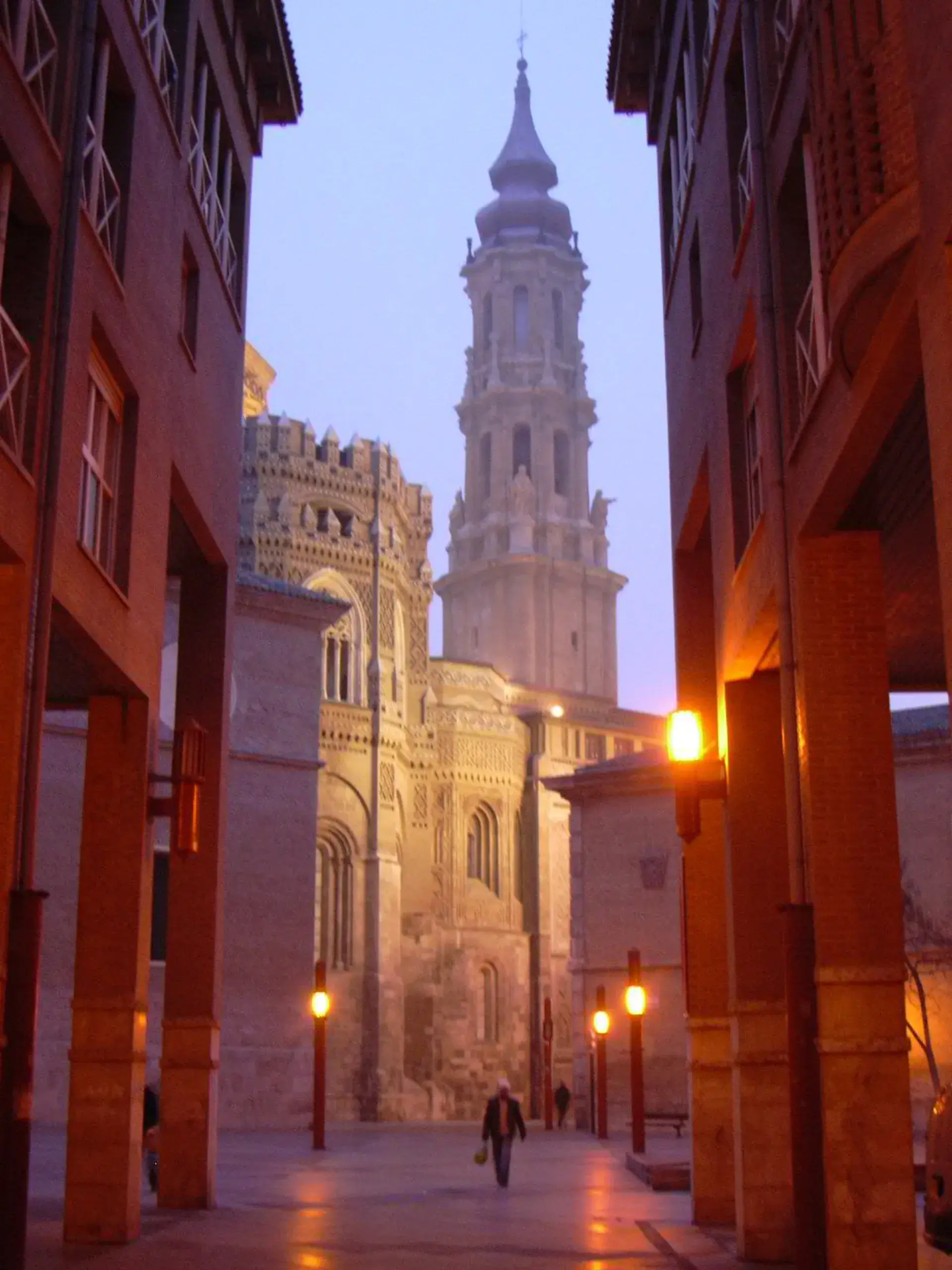
The cathedral's construction began in the 12th century in the Romanesque style and underwent continuous alterations and expansions for centuries. This evolution is visible across its exterior and interior. The Baroque tower, designed by Juan Bautista Contini, was completed with its spire in 1704 and incorporates the internal structure of an earlier Almohade minaret. The main facade is a later addition, designed by Julián Yarza in the 18th century in the Neo-Classical style.
From Roman Forum to Christian Cathedral
La Seo's foundations are deeply rooted in Zaragoza's past, built upon the site of the ancient Roman forum of Caesaraugusta. The location later housed a Visigothic church and then the main mosque of Saraqusta, which was one of the oldest in Al-Andalus. Following the Christian reconquest of the city by Alfonso I the Battler in 1118, the mosque was consecrated as the Church of San Salvador in 1121. The first Christian structure was intentionally oriented to the north, a deviation from the traditional eastward orientation, to avoid alignment with the former mosque's prayer direction towards Mecca.
A Royal and Religious Center
From 1204 to 1518, La Seo held the distinct privilege, granted by Pope Innocent III, of being the coronation site for all the kings of Aragon. The last monarch to be crowned within its walls was Charles I. The cathedral's importance grew when Pope John XXII created the archbishopric of Zaragoza in 1318, elevating La Seo to a metropolitan cathedral. For centuries, it had a rivalry with the nearby Basilica of Our Lady of the Pillar, which was resolved in 1676 when Pope Clement X granted both co-cathedral status.
Notable Features and Artworks
Inside, the cathedral contains significant artistic treasures. The choir is furnished with 117 meticulously carved oak seats, and its grand pipe organ includes components from a Gothic organ dating back to 1469. La Seo also houses the Tapestry Museum, renowned for possessing one of the world's most important collections of Flemish tapestries from the 15th to 17th centuries. The collection is so extensive, with over 60 large pieces, that the tapestries are displayed on a rotational basis. Among its many artworks are relic-busts donated by Pope Benedict XIII (Pedro de Luna), including one of Saint Valerius crafted to resemble the pope himself.
The Cathedral Today
Today, La Seo functions as an active co-cathedral and remains a vital religious and cultural landmark in Zaragoza. After undergoing a major restoration project from 1980 to 1998, the cathedral continues to attract visitors and locals for prayer, contemplation, and to explore its rich history and architectural diversity.
FAQ
Why is the Cathedral of Zaragoza a UNESCO World Heritage Site?
La Seo is part of the 'Mudéjar Architecture of Aragon' UNESCO World Heritage Site, recognized for its exceptional blend of architectural styles, including Romanesque, Gothic, and Mudéjar, which reflect centuries of cultural and artistic history.
What was on the site of La Seo before it was a cathedral?
The site has a layered history. Before the cathedral was built, it was the location of the ancient Roman forum, a Visigothic church, and subsequently the main mosque of the city of Saraqusta.
What is the Tapestry Museum inside La Seo Cathedral?
The Tapestry Museum houses one of the finest collections of 15th to 17th-century Flemish tapestries in the world. Due to the size and number of the tapestries, they are displayed on a rotational basis.
Why does Zaragoza have two cathedrals?
After a long-standing rivalry between La Seo and the Basilica of Our Lady of the Pillar, Pope Clement X resolved the issue in 1676 by granting both churches co-cathedral status, a distinction they share to this day.