Parish Church of San Pablo: Zaragoza's Mudéjar Gem
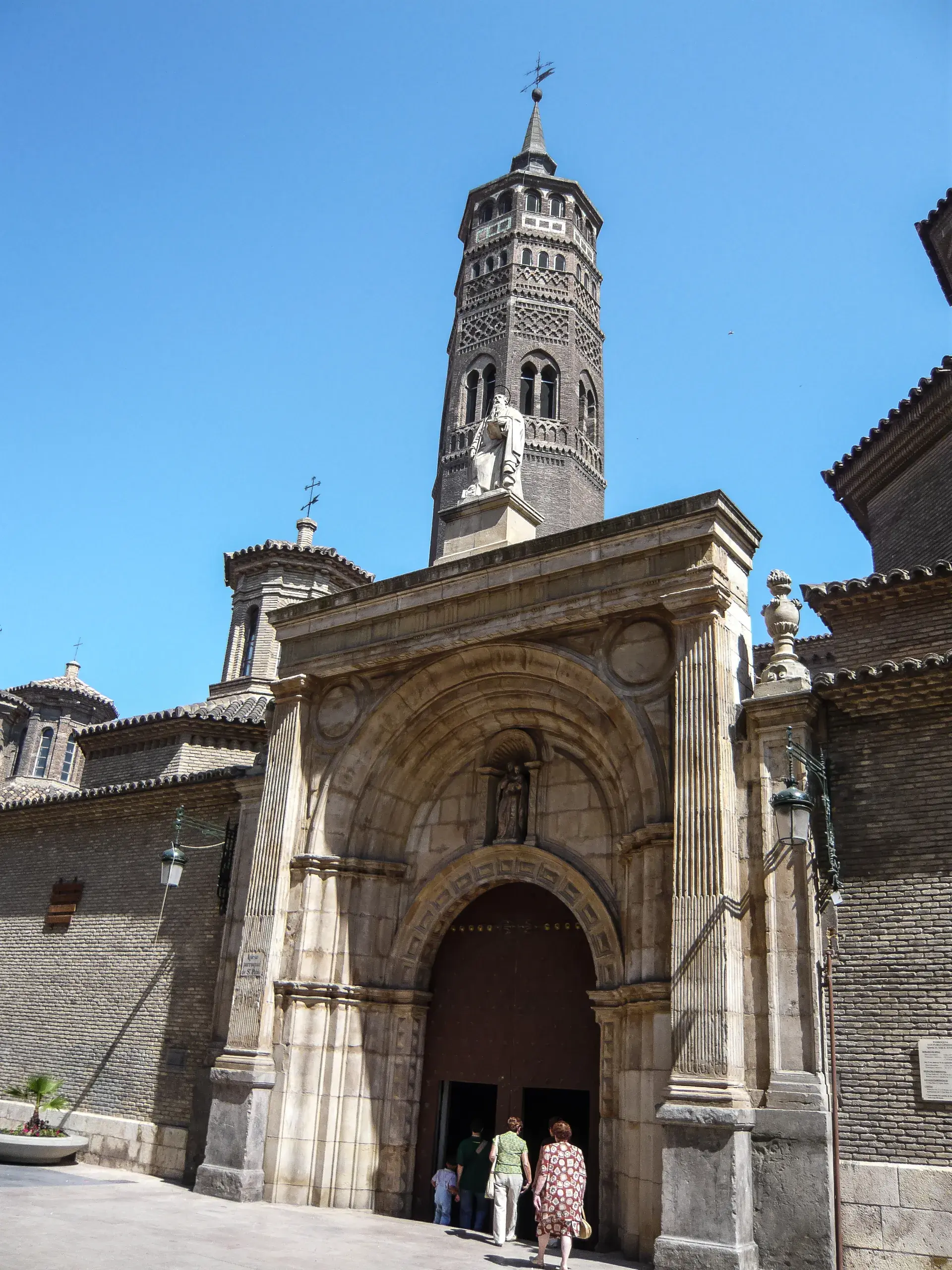
The Parish Church of San Pablo in Zaragoza stands as a striking masterpiece of Mudéjar architecture, beautifully displaying a fusion of Gothic and Moorish styles. Often called Zaragoza's "third cathedral," this church is a testament to the city's rich cultural history and is recognized as a UNESCO World Heritage site.
History and Significance
The church's origins trace back to a small Romanesque hermitage dedicated to San Blas. As the working-class district outside Zaragoza's walls grew after the 12th-century Reconquest, a larger church was needed. In 1259, Bishop Arnaldo de Peralta formally established the parish. The earliest parts of the current structure were built in the late 13th or early 14th century, with significant enlargements and additions of chapels and aisles occurring between the 15th and 18th centuries.
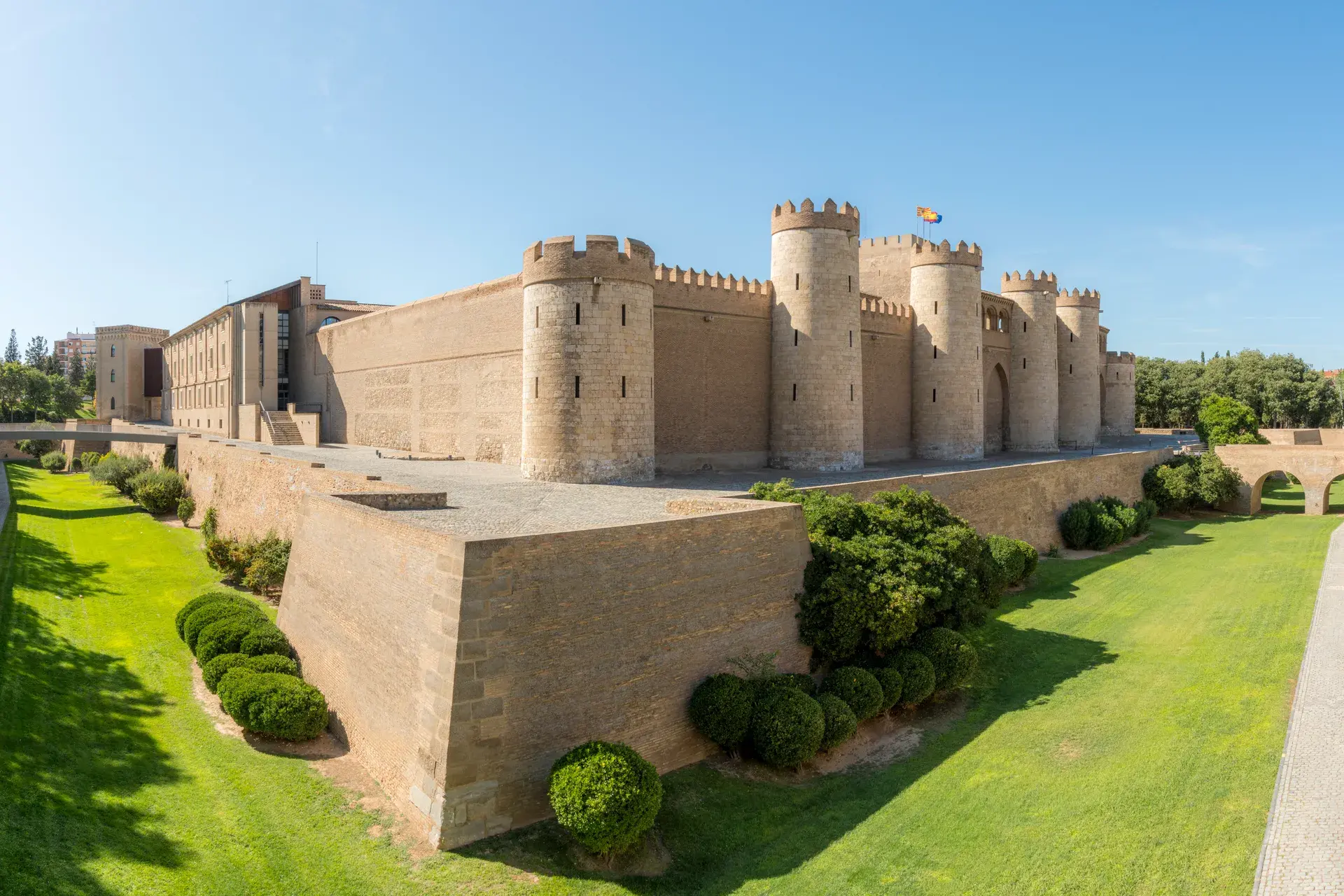
The church's importance is highlighted by its inclusion in the "Mudéjar Architecture of Aragon" UNESCO World Heritage site in 2001, alongside La Seo Cathedral and the Aljafería Palace. It was also declared a National Monument of Spain in 1931.
Architectural Highlights
The Church of San Pablo is a prime example of the Mudéjar style, which merges Islamic artistic traditions with European Gothic elements. This is most evident in its inventive brickwork and use of glazed tiles. A defining feature is its octagonal Mudéjar tower, added in 1343. This 66-meter-tall structure incorporates an Almohade minaret design, with an outer tower enveloping an inner one and a stairwell between them.
A surprising aspect of the tower is that it was originally built separate from the church. Over centuries of expansion, the building grew to enclose the tower's lower section, which is no longer visible from the outside. Inside, the church houses a magnificent main altarpiece created by Renaissance sculptor Damián Forment between 1515 and 1518. Crafted from gilded and polychrome black pine and juniper, it depicts scenes from the life of Saint Paul.
The Church Today
As an active Roman Catholic church, San Pablo holds daily Masses and offers a space for personal prayer. It maintains strong popular traditions, including devotions to Saint Blaise and participation in Holy Week processions. Beyond its religious role, the church serves as a cultural venue for concerts and musical cycles.
Visitors can explore the church through self-guided digital tours or guided tours in Spanish. An option to climb the tower provides panoramic 360-degree views of Zaragoza. Known for its tranquil atmosphere, the church allows for intimate exploration, and photography without flash is permitted inside. The crypt, once a burial place for presbyters, now serves as a meeting space.
FAQ
What is the architectural style of the Church of San Pablo?
The church showcases a distinctive blend of Gothic and Mudéjar architectural styles. This fusion of European and Islamic artistic traditions is characterized by its inventive use of brick and glazed tiles, and is a hallmark of the Aragon region.
Is the Church of San Pablo a UNESCO World Heritage site?
Yes, in 2001, the Church of San Pablo was included as part of the "Mudéjar Architecture of Aragon" UNESCO World Heritage site, recognizing its outstanding cultural and architectural value.
Who created the main altarpiece in the Church of San Pablo?
The main altarpiece was crafted by the renowned Renaissance sculptor Damián Forment between 1515 and 1518. Made of gilded and polychromed wood, it is considered a masterpiece and features scenes from the life of Saint Paul.
Can visitors climb the tower of the Church of San Pablo?
Yes, visitors have the option to climb the 66-meter-tall octagonal Mudéjar tower. The ascent offers panoramic 360-degree views of the city of Zaragoza.