La Lonja de Zaragoza: Renaissance Exchange & Art Hall
Located in Zaragoza's Plaza del Pilar, La Lonja stands as a magnificent example of Aragonese Renaissance architecture. Originally built as a merchants' exchange, this 16th-century edifice is now a celebrated public exhibition hall, bridging the city's rich commercial past with its vibrant cultural present.
A Monument to Commerce
La Lonja was constructed between 1541 and 1551, a project initiated by Archbishop Hernando de Aragón and the city council. Its primary purpose was to provide a dedicated, secular space for commercial transactions, moving merchants out of sacred spaces like the nearby La Seo cathedral. This shift reflected Zaragoza's significant economic power and prosperity during the 16th century, a period when travelers referred to it as 'the Florence of Spain'. The building is considered the most significant 16th-century civil construction in Aragon.
Architectural Ingenuity
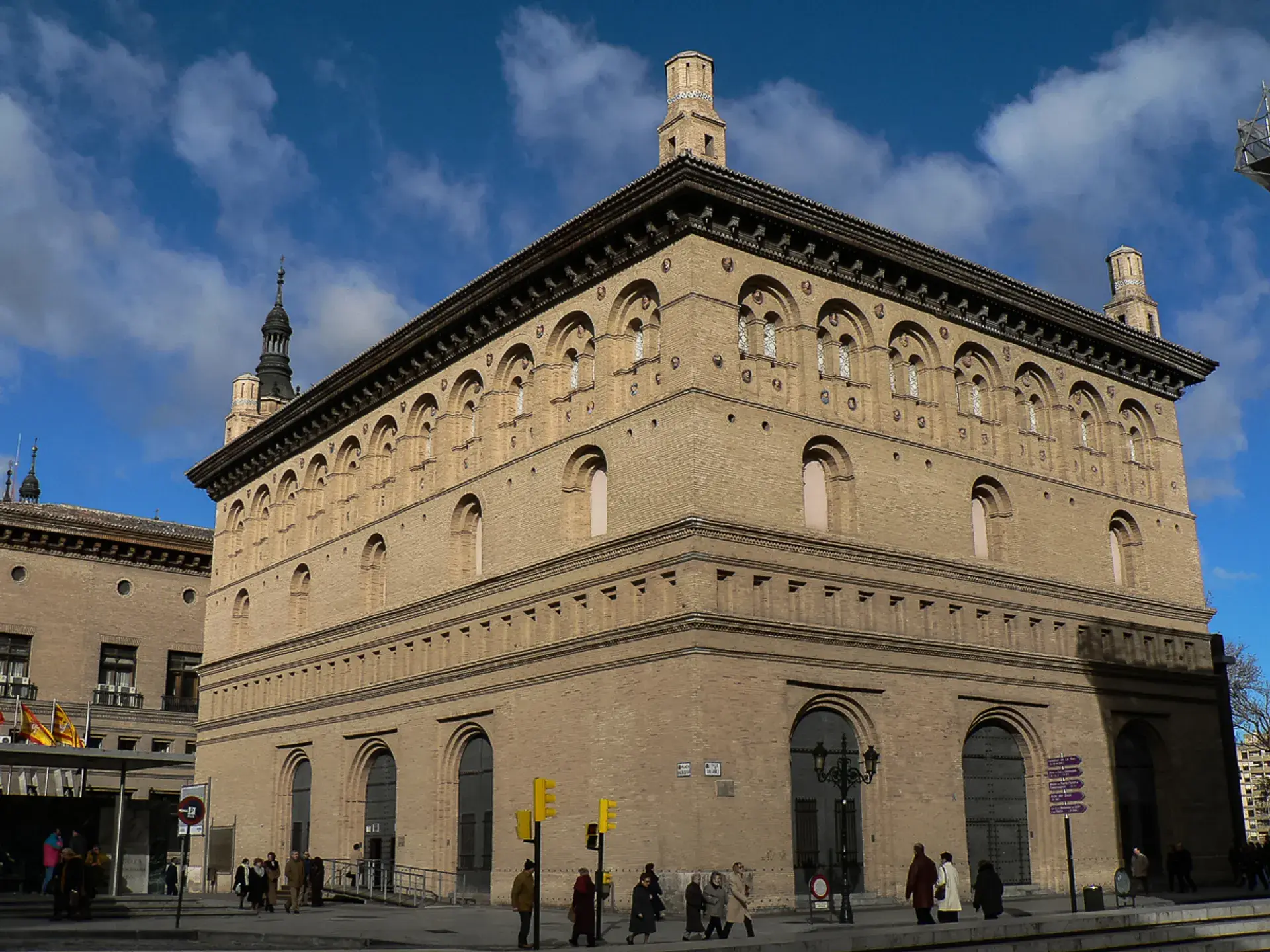
The design, by architect Juan de Sariñena, blends Aragonese Renaissance style with Florentine and Mudéjar influences. A striking feature of La Lonja is its deceptive facade; while the exterior appears to have three floors, the interior consists of a single, grand hall. This vast space is crowned by a continuous starry vaulted ceiling. Inside, the imperial shield of Emperor Carlos V, held by lions, is a prominent decorative feature, underscoring the political landscape of the era. An original plan for a central, lantern-like tower was abandoned after Sariñena's death in 1545.
La Lonja Today: A Cultural Hub
Today, La Lonja serves as the primary exhibition hall for the Zaragoza City Council and is regarded as the most important exhibition space in the city. It hosts a diverse program of art and photography exhibitions, featuring works from classic masters like Goya to contemporary Spanish and international artists. Entry to these exhibitions is often free, making it an accessible cultural venue for locals and visitors alike. The building is typically open from Tuesday to Saturday and on Sunday mornings, remaining closed on Mondays.
FAQ
What was the original purpose of La Lonja in Zaragoza?
La Lonja was built between 1541 and 1551 to serve as a merchants' exchange, providing a secular venue for commercial activities that had previously taken place in churches and on the street.
What is unique about the architecture of La Lonja?
The building's exterior facade gives the illusion of three distinct floors, but the interior is actually a single, large hall with a high, vaulted ceiling.
What is La Lonja used for now?
Currently, La Lonja functions as the main exhibition hall for the Zaragoza City Council, hosting a variety of art and cultural exhibitions. Entry is frequently free to the public.
Who commissioned the construction of La Lonja?
The construction was commissioned by Archbishop Hernando de Aragón in collaboration with the city council of Zaragoza in the mid-16th century.