Feskekörka: Gothenburg's Historic Fish Church
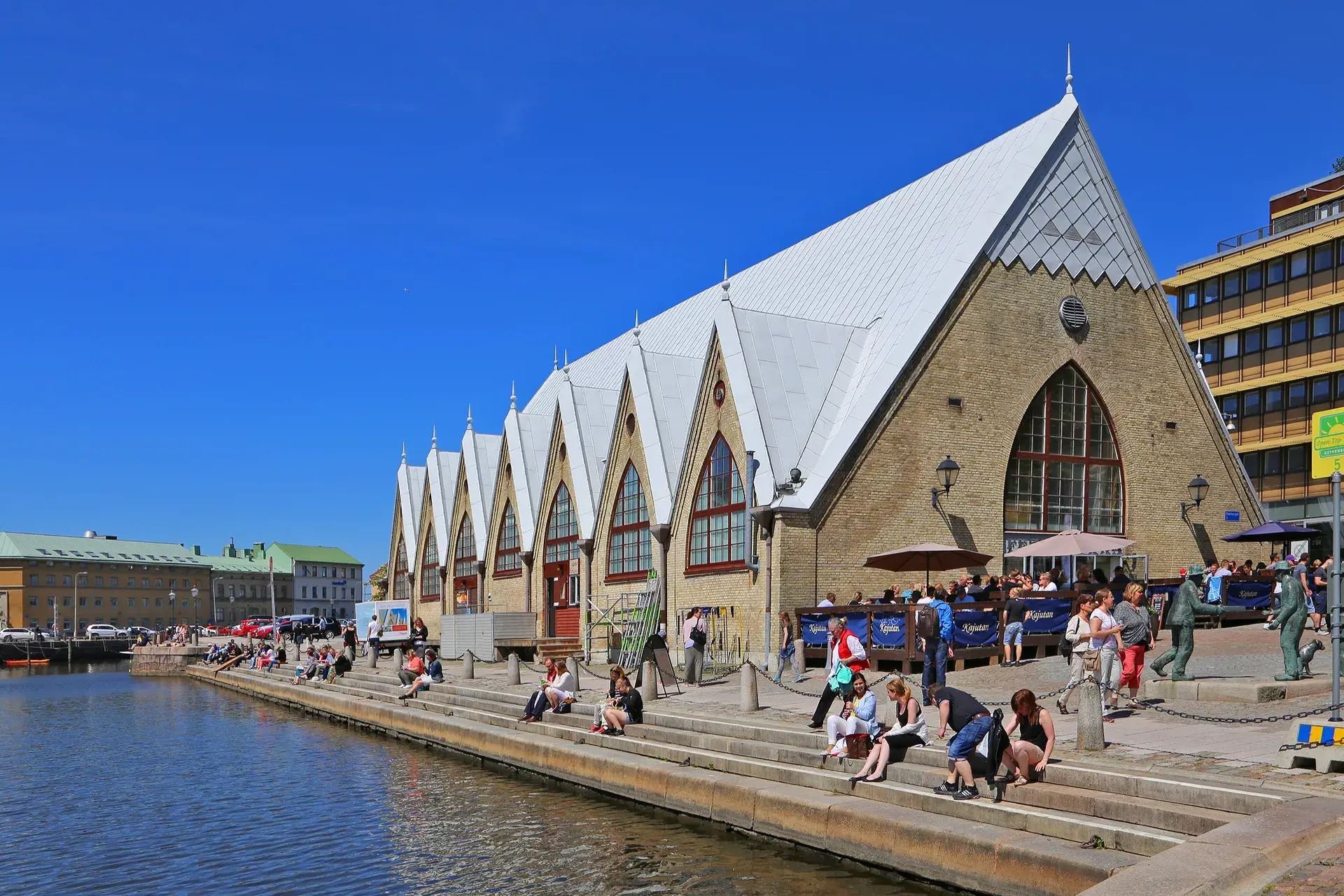
Feskekörka, locally known in the Gothenburg dialect as the "Fish Church," stands as a prominent architectural landmark situated at Fisktorget along the Rosenlund Canal. Inaugurated on November 1, 1874, the building combines Neo-Gothic design with elements of Old Norse wooden stave churches. It reflects Gothenburg's deep culinary and economic roots in the North Sea fishing industry and serves as a key fixture on the city-center route between Kungsparken, Haga, and the central shopping districts.
A Solution to a Smelly Problem
Before the hall's construction, Gothenburg's fish trading took place entirely outdoors along the Rosenlund Canal. Fish piles were left exposed to rain, mud, and dust, creating severe hygiene issues and a persistent stench. To address this public health concern, the city council commissioned an enclosed indoor market in 1871.
Designed by city architect Victor von Gegerfelt, Feskekörka originally opened as a wholesale fish auction hall. By 1910, commercial wholesale operations moved west to a new fishing port, transforming the building into a retail market catering to local consumers. In 1923, municipal health regulations officially required all remaining street vendors on the quays to move their operations indoors.
Innovative Gothic Architecture
Despite its ecclesiastical appearance, Feskekörka was never a religious site. The nickname "Fish Church" was coined by local dockworkers and citizens who were amused that such grand spiritual styling was devoted entirely to gutting and selling herring. The structure was officially designated a listed historical monument in 2013.
The building's steep roofline features pointed arches and large windows, but its most surprising structural detail lies inside. The architect utilized an innovative timber truss system borrowed from Gothic buttress mechanics. This design allows the entire 40-meter market floor to stand completely clear of load-bearing interior columns or partition walls.
A Revitalized Culinary Destination
After closing in late 2020 for a multi-year restoration led by White Arkitekter and property owner Higab, Feskekörka reopened in May 2024 to mark its 150th anniversary. The renovation included the excavation of a technical basement to hide cooling and ventilation machinery. This modification successfully returned full natural daylight to the main hall and reconnected the interior directly to the canal dockside.
Today, the scent of iced displays filled with shrimp, langoustines, lobsters, oysters, and fresh fish mingles with the sound of market bustle and canal water lapping against the quay doors. The modernized space houses fresh seafood counters, multiple fish restaurants, bars, and event spaces, along with an expansive outdoor terrace. A local dining tradition at the venue pairs fresh seafood with snaps, offering dedicated aquavit selections and a proprietary Alsace seafood wine.
FAQ
Why is Feskekörka called the Fish Church?
The building features a steep roofline and pointed Neo-Gothic arches resembling a church. Locals coined the nickname because they were amused by the grand spiritual architecture being used for a herring market. It was never a consecrated religious site.
When was Feskekörka built?
The market hall was inaugurated on November 1, 1874. It was designed by Gothenburg city architect Victor von Gegerfelt to move unhygienic outdoor fish trading indoors.
What can be found inside Feskekörka today?
Following a major restoration that concluded in May 2024, the hall features fresh seafood counters, fish restaurants, bars, and event spaces. It also offers an outdoor terrace facing the Rosenlund Canal.