Haga: Gothenburg's Oldest Suburb & Historic District
Gothenburg's oldest suburb was built on an architectural loophole and saved from the wrecking ball by a citizen uprising. Today, the historic district of Haga is a carefully preserved quarter known for its distinct architecture and vibrant café culture. Situated between the central canal ring, Järntorget, and the Linné district, it serves as a historic link connecting the city's 17th-century core to the fortress of Skansen Kronan.
A Clever Architectural Loophole
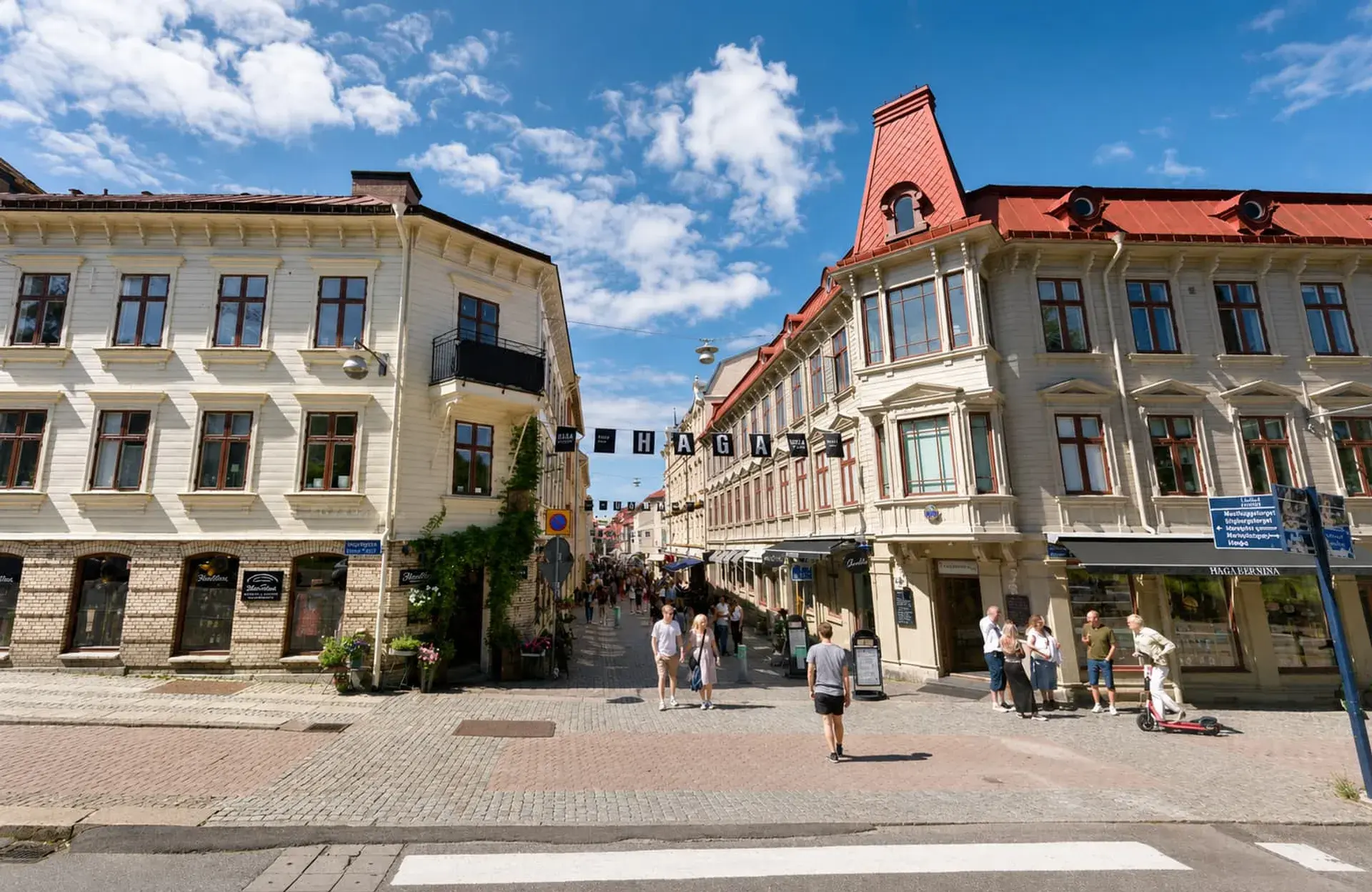
The defining feature of Haga is its signature landshövdingehus, or governor's houses. These distinct structures feature a ground floor constructed from brick or stone, topped by two wooden upper storeys. The pastel and earth-toned facades line preserved cobblestone streets, giving the district its historic visual identity.
This unique architectural style was born out of necessity. In the 19th century, Gothenburg's fire bylaws strictly prohibited the construction of wooden buildings taller than two storeys. Resourceful builders bypassed this rule by constructing the first floor in masonry and labeling it a "basement above ground," which allowed them to add two timber floors on top.
When the city council initially rejected this building plan, the County Governor (Landshövding) overturned the veto. His decision not only allowed the construction to proceed but also lent the new architectural style its name.
From Slum Clearance to Heritage Preservation
Haga was established in the mid-17th century during the reign of Queen Christina. Originally built outside the city moat to house sailors, craftsmen, and laborers, the crown reserved the right to demolish the buildings in the event of a military siege. During Gothenburg's 19th-century industrialization, an influx of workers transformed the area into a densely packed neighborhood.
By 1962, the district had fallen into disrepair, prompting the city to draft a redevelopment plan that slated much of Haga for total clearance. However, a citizen uprising changed the course of local history.
In 1970, activists formed the Haga Group to protest the widespread demolitions. Their efforts successfully halted the mass clearance by the late 1970s. During the 1980s, the remaining historic fabric underwent careful restoration and adaptive reuse, saving the neighborhood's structural heritage.
Swedish Fika and the Giant Cinnamon Bun
Today, the district is centered around Haga Nygata, a car-free commercial spine occupied by independent boutiques, vintage shops, and artisanal bakeries. It stands as a major hub for heritage tourism and traditional Swedish fika, a cultural practice centered around enjoying a coffee break with pastries.
The sensory experience of the district is defined by the aroma of freshly baked cinnamon, cardamom, and roasted coffee drifting from café entrances. The culinary icon of this experience is the Hagabulle, famously baked at Café Husaren. These oversized cinnamon buns measure approximately 10 inches across and are typically shared among two or three people rather than eaten individually.
As an added geographic curiosity, the area comprising Haga parish holds the record for being the smallest territorial parish in all of Sweden.
FAQ
What is a landshövdingehus?
A landshövdingehus, or governor's house, is a unique architectural style in Gothenburg featuring a ground floor of brick or stone topped by two wooden upper storeys. It was created to bypass 19th-century fire regulations restricting wooden buildings to two floors.
Where can you find the giant cinnamon bun in Haga?
The giant cinnamon bun, known as the Hagabulle, is famously baked and served at Café Husaren on Haga Nygata. It measures about 10 inches across and is typically shared.
Why was Haga almost demolished?
By 1962, the district had become severely dilapidated, and a city redevelopment plan slated the area for clearance. It was saved when citizen activists formed the Haga Group in 1970 and successfully protested the demolition.