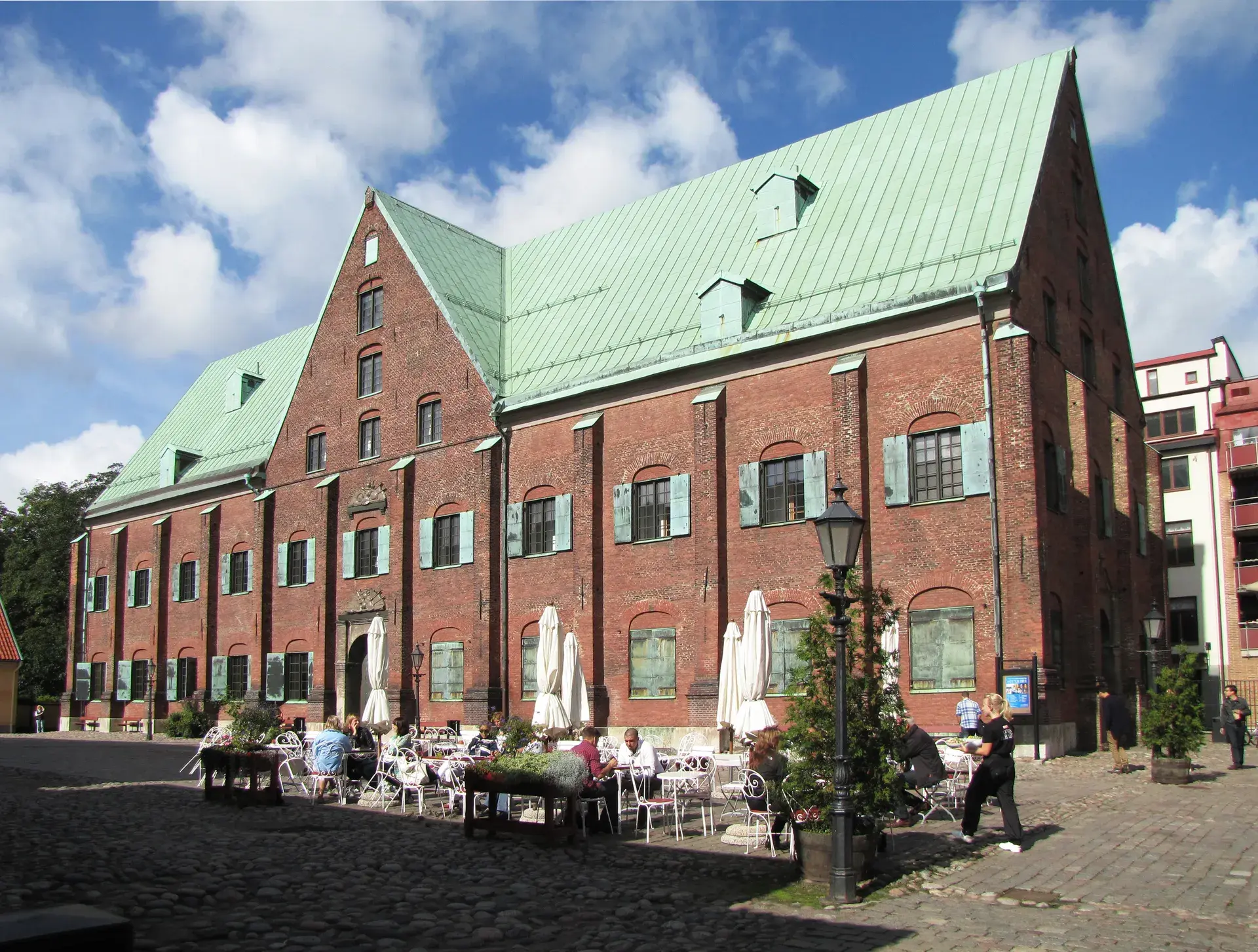
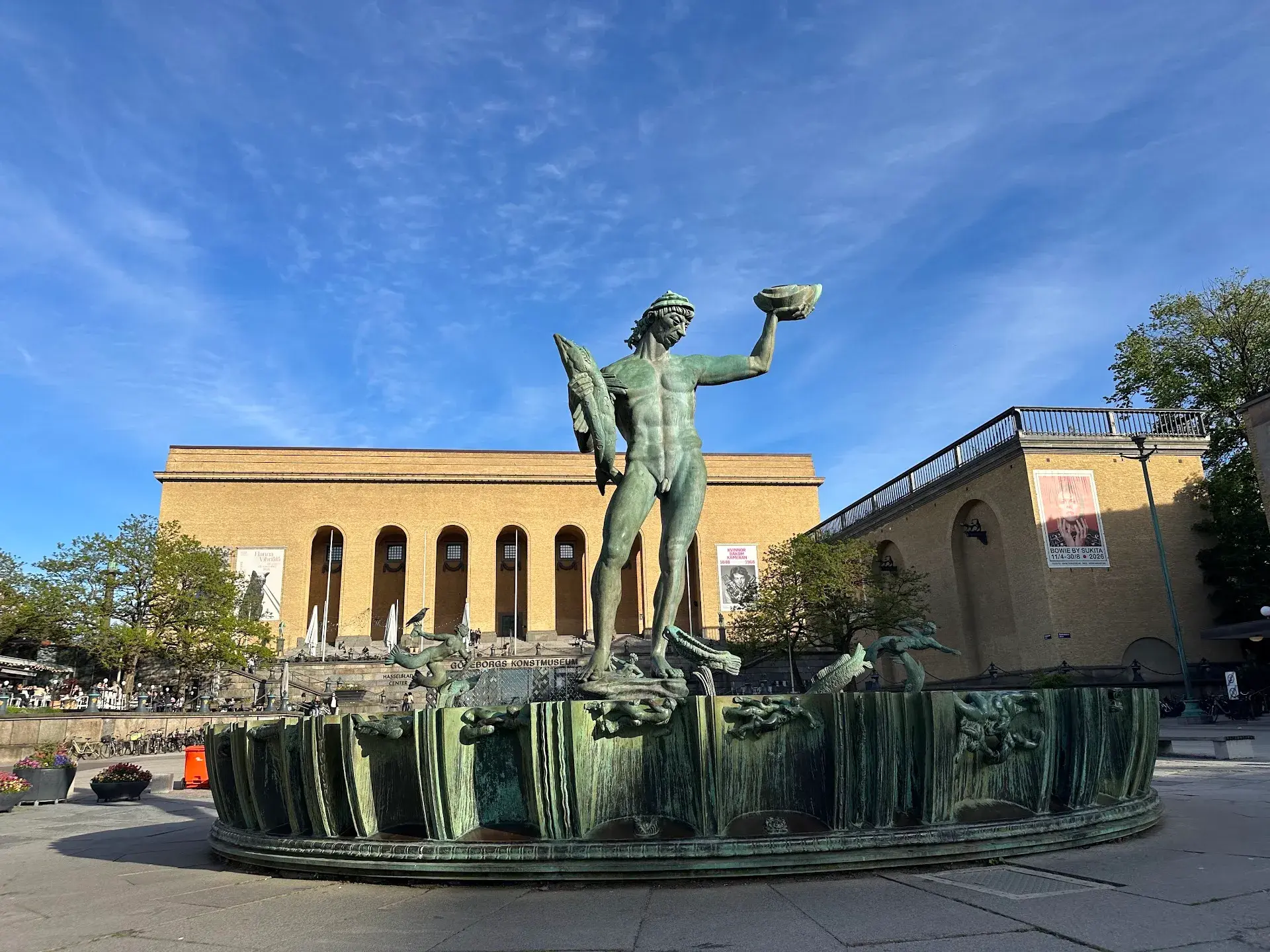
Poseidon Statue: Carl Milles' Iconic Gothenburg Landmark
Stand before Carl Milles' iconic bronze fountain statue of Poseidon dominating the cultural heart of the city. A towering bronze sea god that once sparked a city-wide scandal over his physique now serves as the undisputed symbol of Gothenburg. Standing at the southern terminus of the main boulevard, Kungsportsavenyn, the monument directly reflects the historic identity of Sweden’s principal port and maritime gateway.
A Monumental Masterpiece
Created by Swedish sculptor Carl Milles, the bronze statue stands seven meters tall upon a raised, shell-shaped plinth. Poseidon is depicted wearing a stylized shell on his head while holding a water-spouting fish in his right hand and a large conch shell in his left.
The central figure rests inside a bronze fountain basin installed in 1927, which features a 1.2-meter wall decorated with six smaller sculptures. These intricate reliefs showcase tritons, naiads, mermaids, and an array of sea life, including lobsters, crabs, and corals.
Running, splashing water jets emitted from the fish and basin contrast with the wide, stone-terraced expanse of Götaplatsen. The dark-bronze figure is dramatically framed against the monumental brick facade and seven high arches of the Gothenburg Museum of Art, offering an unobstructed vista straight down the full length of Kungsportsavenyn.
From Scandal to Civic Symbol
Götaplatsen was originally designed for the 1923 Gothenburg Tercentenary Jubilee Exhibition, where a temporary plaster fountain occupied the site. Commissioned through the Charles Felix Lindberg donation fund, the permanent central statue was officially inaugurated on September 24, 1931.
Upon its unveiling, the permanent bronze Poseidon sparked local outcry and intense moral debate. The controversy centered on the sea god's nudity, highly muscular physique, and anatomical proportions. Over subsequent decades, however, the debated figure transformed into Gothenburg's premier civic landmark.
Traditions and Curiosities
Today, the fountain serves as a major urban meeting place and a focal point for public celebrations, including the Gothenburg Culture Festival. It is deeply embedded in local traditions; graduating high school and Chalmers University students famously jump into the basin's water to celebrate their commencement. Over the decades, locals have also occasionally engaged in midnight pranks, dressing the towering bronze deity in oversized garments, hats, or scarves.
The statue holds a few local secrets. Tradition has long debated who modeled for the sea god's face, with rumors pointing to either museum director Axel Romdahl or theater director Knut Ström. Additionally, when viewed from a specific angle on the steps outside the nearby Gothenburg Concert Hall, the fish held in Poseidon’s right hand aligns with his groin to create the optical illusion of an exaggerated phallus.
FAQ
When was the Poseidon statue in Gothenburg built?
The bronze fountain basin was installed on November 20, 1927, and the central Poseidon statue, created by Carl Milles, was officially inaugurated on September 24, 1931.
Why was the Poseidon statue controversial when it was unveiled?
When the statue was unveiled in 1931, it sparked local outcry and moral debate due to its nudity, muscular physique, and anatomical proportions, before eventually becoming a beloved civic symbol.
What do graduating students do at the Poseidon fountain?
It is a local tradition for graduating high school and Chalmers University students to jump into the fountain's basin to celebrate their graduation.
Discover Gothenburg like never before
Dive into Gothenburg hidden stories and secret spots with Ciceru interactive tours.
Explore tour
Audioguide
Quizzes
Maps
Solo
Couples
Groups & families

© Photo by Bahadır Çeviker via Google Maps · Google Places