S:ta Karin Ruin: Visby's Franciscan Church History
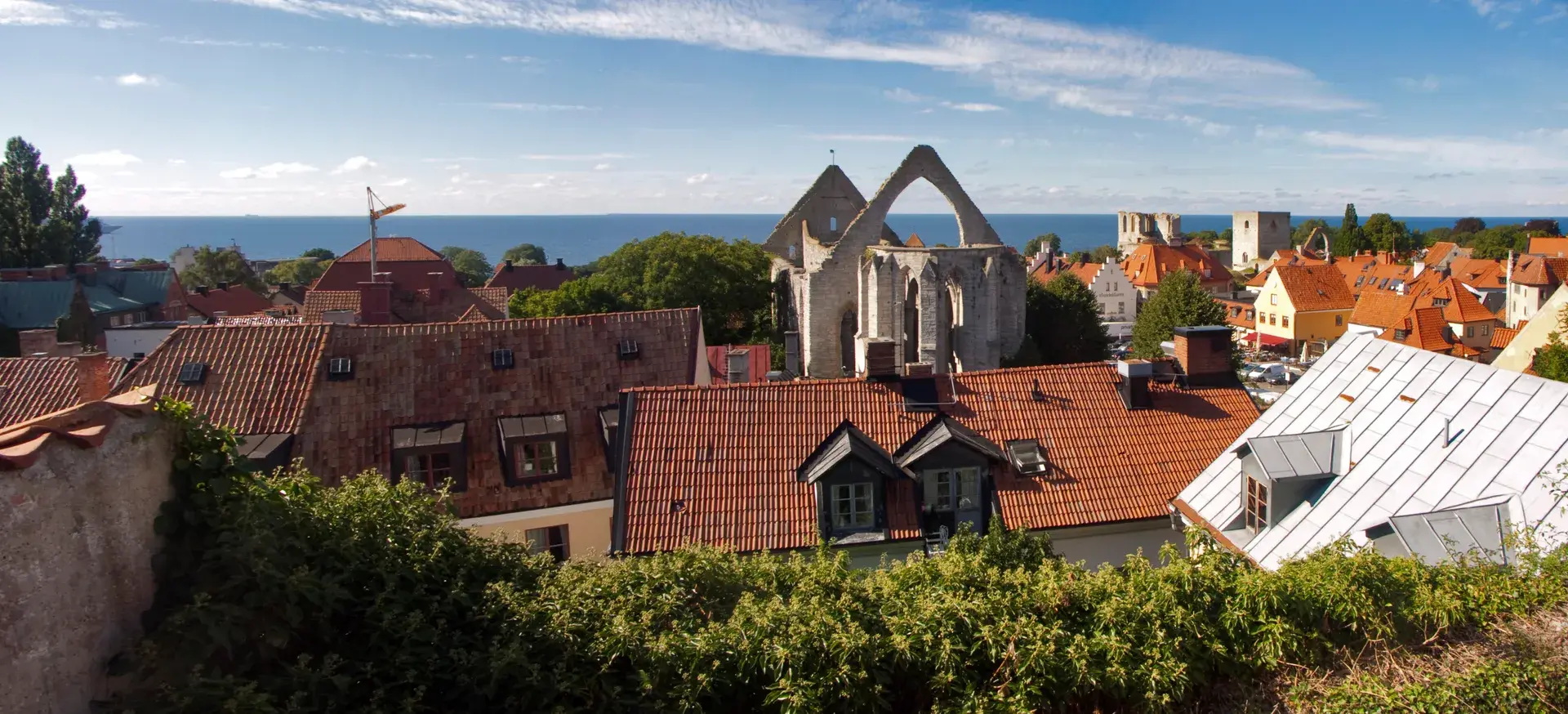
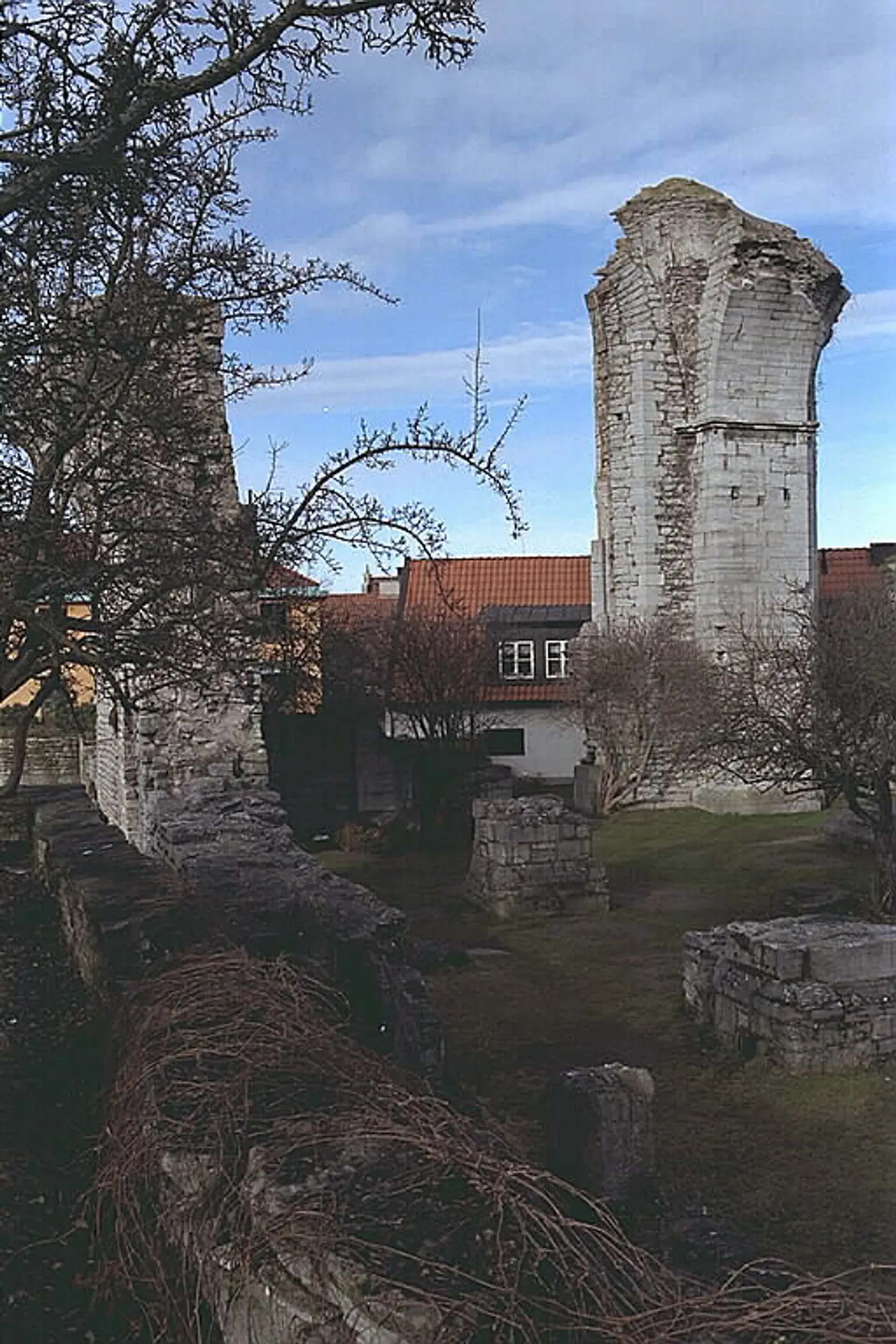
The dramatic Gothic arches of S:ta Karin ruin, also known as St. Catherine's Church, are the skeletal remains of a once-grand Franciscan church. Located next to Stora Torget, Visby's main square, it is one of the most significant church ruins in this UNESCO World Heritage city.
Franciscan Origins and Construction
The church was the heart of Visby's first Franciscan monastery, established in 1233 by friars known as the 'gråbröder' (gray brothers). The initial church, a long and narrow structure with high, round-arched windows, was finished around 1250. The Franciscan order's popularity led to major expansions in the late 1300s, including a grander choir with tall windows. This expansion, initiated by Bishop Niels and opened by Archbishop Henrik in 1391, featured the pioneering use of brick for vaults, a unique choice in limestone-dominated Visby.
Collapse, Decline, and Ruin
Construction was not without challenges. In 1402, a significant setback occurred when six arches collapsed during an extension of the longhouse, requiring new columns and arches to be built with brick. Despite its inauguration in 1412, the church was never fully completed, as funds were often diverted to other monastery buildings. The church's life came to an end following the Lübeck pillage of Visby in 1525. Shortly after, the Reformation in the early 1530s led to the abolition of monasteries, and S:ta Karin, like most churches in Visby, was abandoned and left to decay.
A Medieval Burial Ground
The ground within the ruin served as a burial site for Franciscan friars and others. It is still filled with untouched graves, and it is documented that human remains can be found just 30 centimeters below the surface. Historical records indicate that to manage the scent from the decaying bodies, medieval practices sometimes included boiling the flesh from the bones.
S:ta Karin Ruin Today
Today, S:ta Karin ruin is a freely accessible public landmark, officially protected since 1805. It is a popular venue for public and private events, including weddings, concerts, and exhibitions, with a capacity for hundreds of people. Managed by the Gotlands Museum, the ruin is typically open to visitors from May to September, surrounded by cafes and restaurants that make it an integral part of Visby's social fabric.
FAQ
Why is S:ta Karin a ruin?
The church was likely destroyed during the Lübeck pillage of Visby in 1525 and was officially abandoned following the Reformation in the early 1530s, which led to the closure of all monasteries.
What was S:ta Karin ruin originally?
It was originally St. Catherine's Church (S:ta Karin), the central building of Visby's first Franciscan monastery, which was founded in 1233.
Can you visit S:ta Karin ruin?
Yes, the ruin is a prominent and freely accessible landmark in Visby. It is generally open to visitors from May to September.
What is unusual about the ground at S:ta Karin ruin?
The ground within the ruin is full of untouched medieval graves. Human remains, such as a toe or shoulder blade, can reportedly be found just 30 centimeters below the surface.