
Abbey Churchyard & Roman Baths: Bath's Historic Heart
The Thermal Heart of Bath
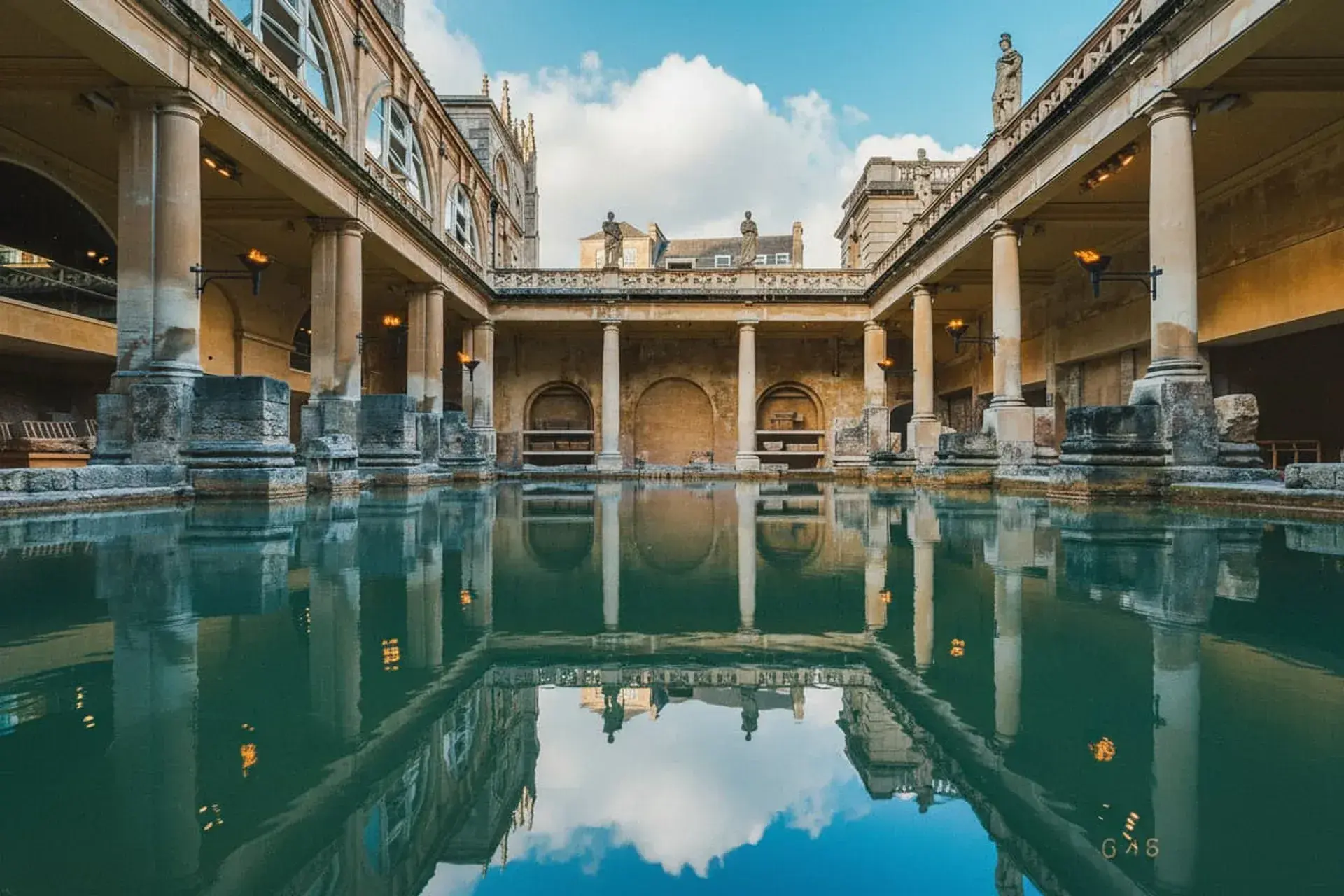
Abbey Churchyard and the adjacent Roman Baths complex form the historical and civic core of Bath. The entire site is positioned over the King's Spring, the largest of the city's three natural thermal springs. Every day, more than 1.1 million litres of mineral-rich water emerge from the earth at temperatures between 45°C and 46°C.
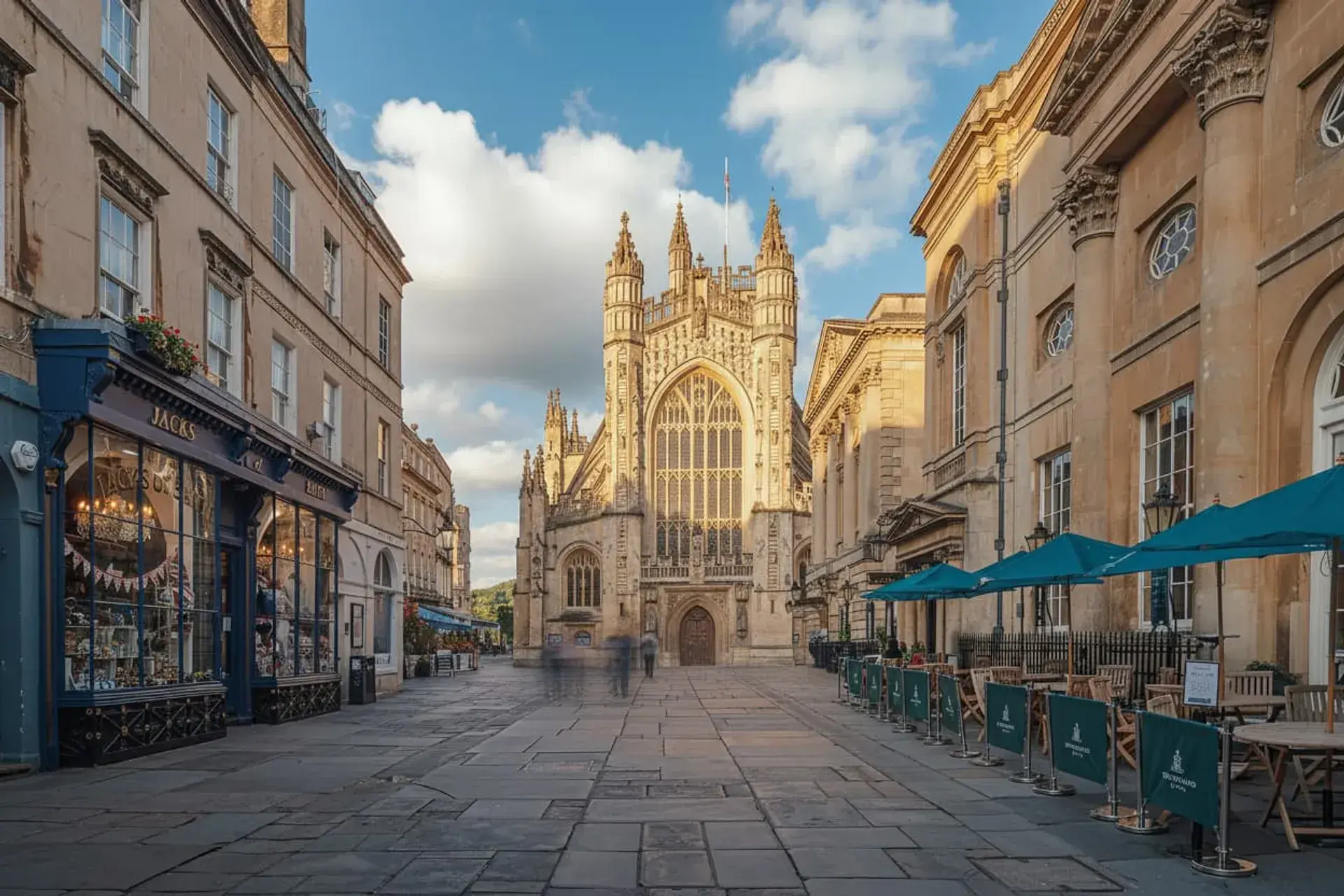
Discharging directly into the open air above the Great Bath, the thermal waters produce visible plumes of steam, especially in cold weather. This vapor carries a faint, earthy scent created by dissolved minerals such as sulfate, calcium, and sodium. Situated in the southern section of Bath's UNESCO World Heritage site, the paved pedestrian churchyard bridges the medieval quarter surrounding Bath Abbey with the Georgian commercial streets of Stall Street and Cheap Street.
Bath walking tour with audio and quizzes: Roman baths, Georgian fronts
2 hours9 stopsAudio guideStart any day, at your own paceTicket on your phone · 30-day refundFrom Aquae Sulis to Georgian High Society
Around AD 60–70, following the Roman conquest of Britain, engineers enclosed the natural spring inside an irregular stone chamber lined with Mendip lead. Dedicating the site to Sulis Minerva—a deity blending the Celtic water goddess Sulis with the Roman goddess Minerva—the Romans established the religious sanctuary of Aquae Sulis. Over the next three centuries, the complex expanded into an elaborate bathing establishment featuring caldaria, tepidaria, and vaulted swimming halls. Excavations in the Sacred Spring later uncovered approximately 130 lead and pewter curse tablets (defixiones). In these inscribed messages, ancient bathers called upon Sulis Minerva to punish thieves who had stolen their clothes while they bathed.
Following the collapse of Roman administrative control in the 5th century, the complex silted over and fell into ruin. The area experienced a dramatic renaissance during the 18th century when Bath emerged as Britain's premier fashionable spa resort. Under Master of Ceremonies Richard "Beau" Nash, social life centered around drinking the mineral waters. To accommodate elite society, architects Thomas Baldwin and John Palmer designed the Neoclassical Grand Pump Room, constructed between 1789 and 1799. Its triangular pediment overlooking the churchyard displays a gilded Greek inscription from Pindar's Olympic Ode: ΑΡΙΣΤΟΝ ΜΕΝ ΥΔΩΡ, translating to "Water is best."
Rediscovery and Modern Heritage
In the late 19th century, city surveyor Charles Edward Davis began uncovering the buried Roman structures beneath modern street levels. In 1897, architect John McKean Brydon designed a formal municipal entrance to house the excavated finds. Today, the complex operates as a ticketed museum managed by Bath & North East Somerset Council, welcoming over one million visitors annually to view the ancient masonry, walk the original Roman flagstones, and sample treated thermal water.
At street level, the honey-coloured Bath stone colonnades and facades frame an active civic space. The Grand Pump Room operates as a traditional tearoom and restaurant offering morning coffee, lunch, and afternoon tea accompanied by live performances from a solo pianist or the Pump Room Trio. Outside, Abbey Churchyard functions as a pedestrian hub where licensed street entertainment and acoustic musicians perform under guidelines coordinated by the local council and Bath BID.
Thermal Safety and Sustainable Energy
Direct contact with the untreated thermal waters inside the Roman Baths has been strictly forbidden since 1978. Bathing was permanently discontinued after a swimmer died from an infection caused by Naegleria fowleri, a waterborne amoeba that thrives in warm, untreated water. Modern spa bathers instead use the nearby Thermae Bath Spa, where the spring water is filtered and sanitized.
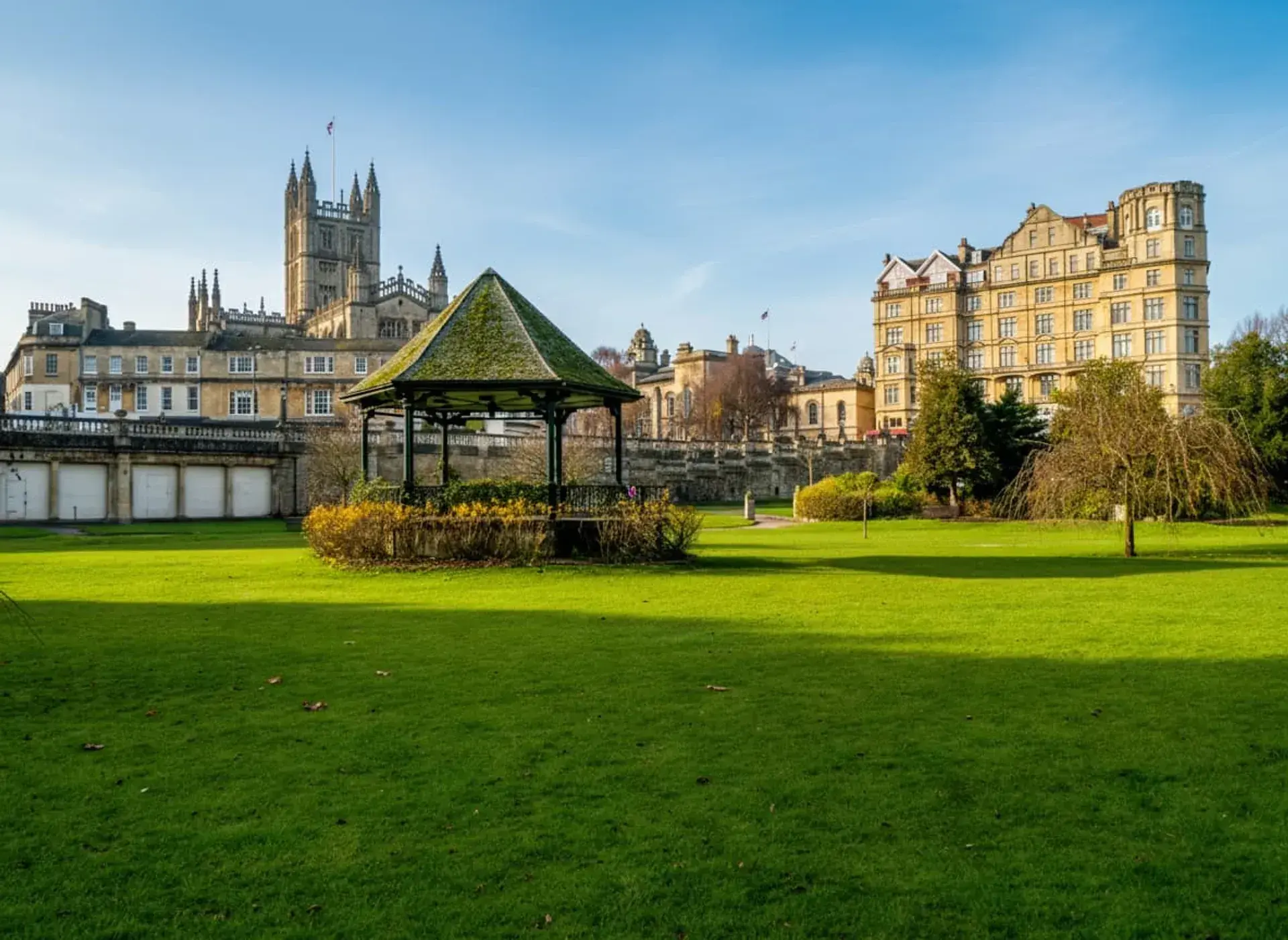
Despite the restrictions on public swimming, the spring water continues to serve functional purposes. Bath Abbey uses an underfloor heating system installed during its Footprint Project that captures heat directly from the spring. Energy is harnessed from the 40°C thermal run-off water exiting the Roman Baths' drain before it discharges into the River Avon, warming the church interior through sustainable engineering.
FAQ
Why is swimming prohibited in the Great Bath?
Public swimming was halted in 1978 after a swimmer contracted a fatal infection from Naegleria fowleri, a waterborne amoeba found naturally in warm, untreated spring waters.
What does the Greek inscription on the Grand Pump Room mean?
The pediment features the gilded Greek words 'ΑΡΙΣΤΟΝ ΜΕΝ ΥΔΩΡ', an excerpt from Pindar's Olympic Ode translating to 'Water is best.'
How does the spring water heat Bath Abbey?
As part of the Abbey's Footprint Project, surplus thermal energy is extracted from the 40°C run-off water leaving the Roman Baths' drain before it flows into the River Avon.
What are the Roman curse tablets found at the site?
Around 130 lead and pewter tablets were found in the Sacred Spring, inscribed by bathers asking the goddess Sulis Minerva to punish thieves who stole personal belongings, such as tunics and cloaks.