Sally Lunn's Bath: History, Architecture & Legends
One of Bath's Oldest Dwellings
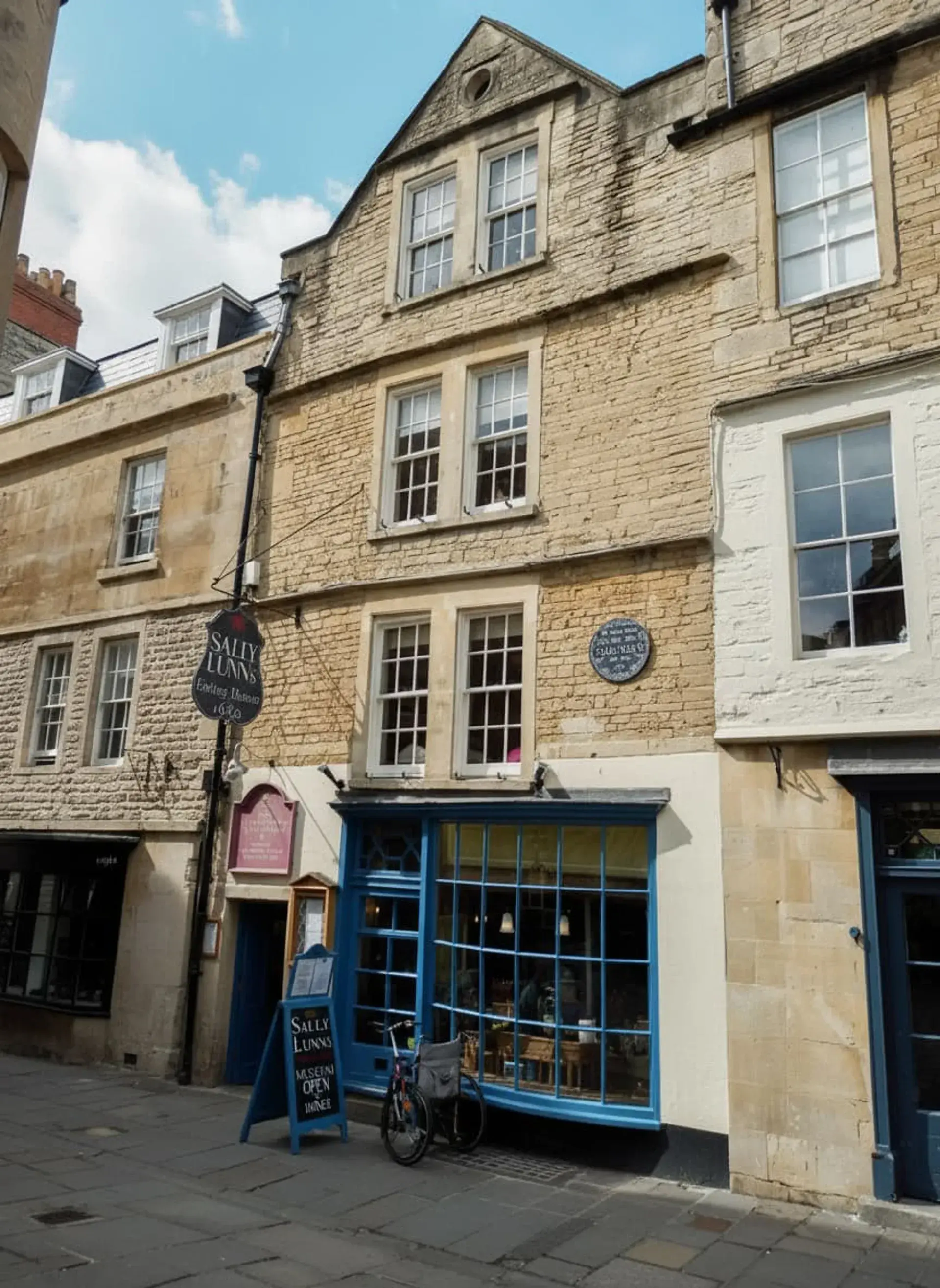
Tucked into the pedestrian flagstones of North Parade Passage—historically known as Lilliput Alley—stands Sally Lunn's. Situated just south of Bath Abbey, this Grade II* listed building represents one of the few surviving pre-Georgian timber-framed houses in the city. While central Bath is famous for its uniform 18th-century classical terraces and crescents, this site preserves a direct architectural link to the city's medieval and early modern urban fabric.
The current timber-framed structure was constructed around 1482 or rebuilt in 1622 by carpenter George Parker over masonry foundations from the 12th century. Prior to the Dissolution of the Monasteries, the land formed part of the south precinct of Bath Abbey, housing monastic kitchen and refectory facilities rebuilt after the city's Great Fire of 1137. Following monastic confiscation, the estate passed through the Colthurst and Hall families before Parker took on the lease.
Bath walking tour with audio and quizzes: Roman baths, Georgian fronts
2 hours9 stopsAudio guideStart any day, at your own paceTicket on your phone · 30-day refundThe Raised Street and Ancient Cellar
The building underwent significant structural adaptation in the 18th century when Bath began its grand Georgian transformation. A classical stone facade was added to update the dwelling's exterior, and local street levels were raised by roughly one full story to combat river flooding.
Because the exterior street was elevated, what had historically served as the ground-floor kitchen was transformed into a subterranean cellar. Today, this basement houses the Sally Lunn Kitchen Museum. Archaeological excavations in the cellar revealed seven distinct historical floor levels. These archaeological strata stretch from Roman remains dating to approximately AD 200—potentially a Roman inn connected to the nearby thermal baths—up through Norman and medieval monastic masonry.
Among the preserved cellar features is an ancient faggot oven. This historic masonry oven was designed to be fired using "faggots," or tightly bundled sticks of wood, a baking method dating back to monastic times.
Folklore and the Sally Lunn Bun
The house is renowned as the historic origin point of the Sally Lunn bun, a large, brioche-like yeast teacake. Local tradition asserts that the recipe was introduced around 1680 by Solange Luyon, a French Huguenot refugee fleeing religious persecution. According to lore, her colleagues in the bakery anglicised her name to Sally Lunn, associating her with the golden teacakes she baked.
Despite the endurance of this tale, archival research has found no contemporary 17th-century records confirming the existence of Solange Luyon or a baker named Sally Lunn in Bath. The bun first appeared in print during the late 18th century, notably referenced by writer Philip Thicknesse in 1780. Alternative etymological theories suggest the term may derive from the French phrase soleil et lune (sun and moon), describing the bun's golden crust and pale interior, or from solilem, a regional French enriched bread.
In the 1930s, artist Marie Byng-Johnson established Sally Lunn Ltd, commercially revitalising the teahouse and its folklore. She claimed to have discovered an original recipe hidden in a concealed cupboard behind an old fireplace, though the original document was subsequently reported lost.
The Historic Eating House Today
Sally Lunn's continues to operate as an active eating house, tearoom, and evening bistro. The interior retains low ceilings, creaking timber floorboards, and uneven historical doorways, offering an intimate pre-Georgian setting illuminated by candlelight in the evenings.
The bakery continues to produce Sally Lunn buns daily, serving them toasted with sweet toppings or savoury accompaniments alongside hot tea. The subterranean museum remains accessible on the lower level, allowing diners and history enthusiasts to view the original bakehouse setting and centuries of preserved masonry.
FAQ
What is the architectural history of the Sally Lunn building?
Located at 4 North Parade Passage, the timber-framed building was constructed around 1482 or rebuilt in 1622 by carpenter George Parker. It sits atop 12th-century monastic masonry foundations linked to Bath Abbey and was updated with an 18th-century classical stone facade.
Why is the Sally Lunn kitchen located in a cellar?
During early Georgian urban developments in the 18th century, the street level of Lilliput Alley was raised by approximately one full story to prevent river flooding. This elevation turned the original ground-floor kitchen into a basement.
Was Sally Lunn an actual historic figure?
While tradition claims that a Huguenot refugee named Solange Luyon arrived in Bath around 1680, historians have found no contemporary archival evidence of her. The Sally Lunn bun first appeared in historical print records in the late 18th century.
What archaeological remains exist beneath the house?
Cellar excavations revealed seven historical floor levels dating from Roman remains around AD 200 through medieval monastic structures. The basement also preserves an ancient masonry faggot oven fired with bundled sticks.