Parade Gardens: Bath’s Riverside Pleasure Ground
Monastic Roots and Georgian Promenade
Before becoming one of Bath's most popular pleasure grounds, the site of Parade Gardens served as the monastic Abbey Orchard outside the medieval city walls, situated beside Monk's Mill on the River Avon. The transformation into a fashionable gathering place began in 1709, when Master of Ceremonies Richard "Beau" Nash prompted Thomas Harrison to construct the city's first formal Assembly Rooms. Alongside the building, Harrison laid out a sycamore-shaded gravel avenue that became known as Harrison's Walk.
In 1738, architect John Wood the Elder incorporated the pleasure grounds into his architectural plan for North and South Parade. Wood introduced elevated stone promenades that allowed Georgian society to look down upon the sunken garden, which then featured manicured walks and a circular bowling green. The setting became an established hub for social display and chaperoned courtship in the resort town.
Bath walking tour with audio and quizzes: Roman baths, Georgian fronts
2 hours9 stopsAudio guideStart any day, at your own paceTicket on your phone · 30-day refundEvolution of the Municipal Grounds
The landscape continued to evolve through the nineteenth and twentieth centuries. In 1824, Harrison's original Assembly Rooms were replaced by the Bath Royal Literary and Scientific Institution, giving the space the title of Institution Gardens. City Architect C. E. Davis altered the perimeter in 1895 by introducing an Italianate colonnade alongside Grand Parade.
Municipal acquisition transformed the grounds in the 1930s. Following roadway expansion, the Literary and Scientific Institution building was demolished, making way for grand stone staircases descending from Orange Grove and a domed ticket office. Since then, the 2.5-acre site has functioned as a public civic park managed by Bath & North East Somerset Council.
Riverside Architecture and Atmosphere
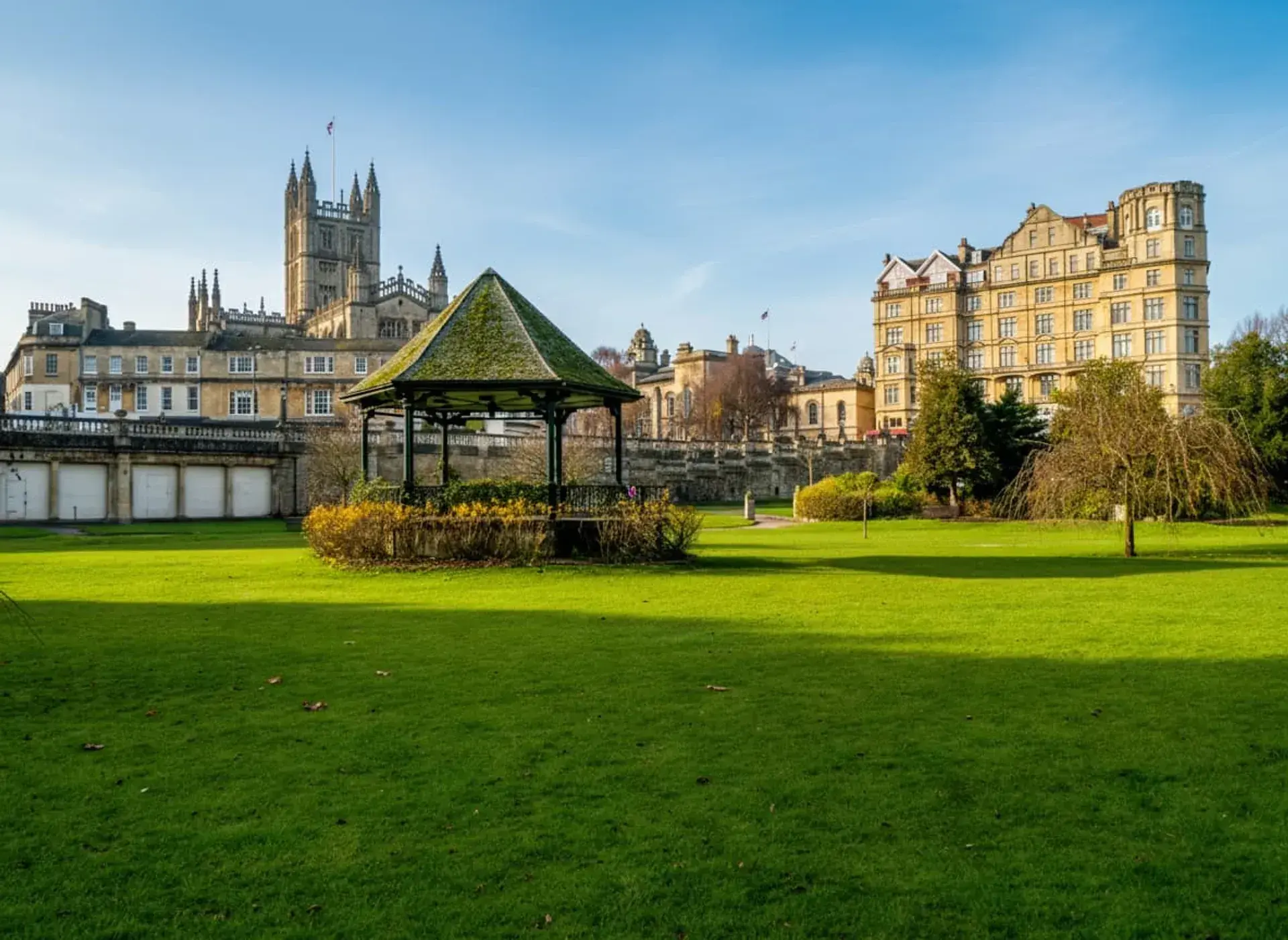
Now recognized as a Grade II-listed pleasure ground, Parade Gardens features a distinct triangular, sunken layout framed by balustraded street terraces and riverside colonnades. Its position along the western bank of the River Avon places it directly east of Bath Abbey and south of Grand Parade, serving as a tranquil green space linking Bath's historic centre to the river.
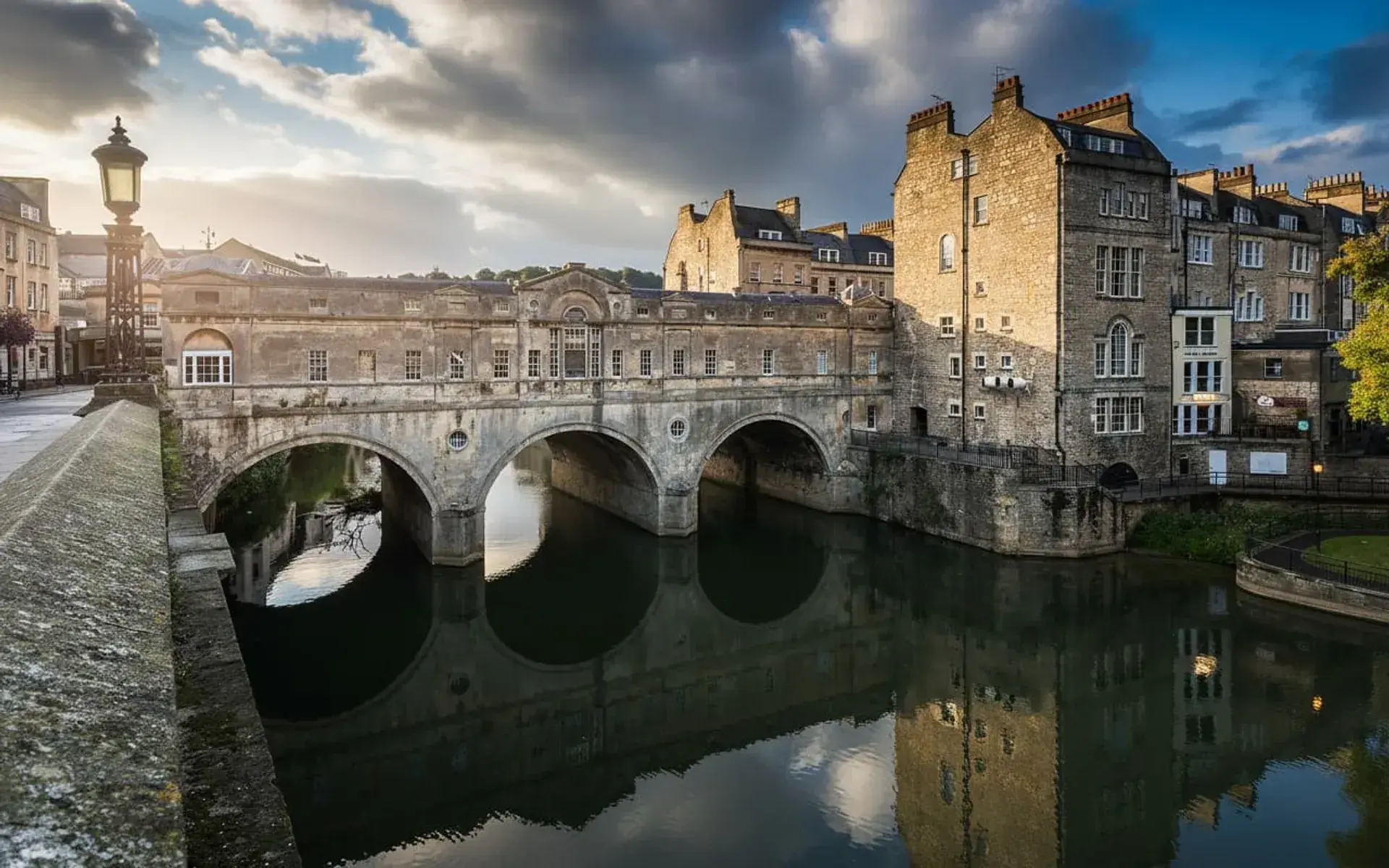
The park offers clear, close-up vantage points of Pulteney Bridge and the horseshoe-shaped Pulteney Weir. Within the sunken perimeter, the low, steady roar of water tumbling over the weir echoes against the stone retaining walls, contrasting with the manicured lawns. Today, the park provides deckchair seating, an outdoor café, an Edwardian bandstand that hosts summer brass band concerts, and licensed facilities for open-air civil wedding ceremonies.
Curiosities and Historic Relics
Beyond its manicured lawns and seasonal three-dimensional carpet bedding displays—sculpted each summer from living flowers to commemorate historic anniversaries and civic emblems—Parade Gardens houses several historic artifacts:
- Monk's Mill Remnants: In a riverside corner of the park stand stone fragments from Monk's Mill, a monastic corn and cloth-fulling mill recorded as early as the 13th century. This stonework predates the current building of Bath Abbey.
- The Angel of Peace Statue: A bronze memorial depicting an angel holding an olive branch and orb atop a stone plinth honours King Edward VII. Sculpted by Newbury Abbot Trent, the monument was relocated to the gardens in 1933.
- Municipal Pet Cemetery: Concealed near the boundary wall is a quiet cemetery where miniature engraved headstones mark the burial sites of local residents' pet dogs dating from the early twentieth century through 1988.
FAQ
What viewpoints are available from Parade Gardens?
Parade Gardens offers direct, open sightlines of Pulteney Bridge, the crescent-shaped Pulteney Weir on the River Avon, and the eastern facade of Bath Abbey.
What historical role did Beau Nash play at Parade Gardens?
In 1709, Master of Ceremonies Richard 'Beau' Nash encouraged Thomas Harrison to build Bath's first Assembly Rooms and establish Harrison's Walk, drawing fashionable social life beyond the medieval walls.
What is the pet cemetery inside Parade Gardens?
Located along the park's boundary wall, the municipal pet cemetery contains miniature inscribed headstones marking the graves of local dogs buried between the early 1900s and 1988.
What are the oldest surviving stone remains in the park?
The gardens contain remnants of Monk's Mill, a monastic fulling and corn mill documented in the 13th century, which predates the present structure of Bath Abbey.