Milsom Street: Bath's Historic Fashion Parade
The Georgian Genesis of Milsom Street
Milsom Street is a wide, gently climbing Georgian thoroughfare running north from Quiet Street and New Bond Street to George Street in central Bath. The avenue was laid out between 1761 and 1762 by builder Thomas Lightholder on land leased by schoolmaster and Bath Corporation member Daniel Milsom. Conceived during Bath's 18th-century expansion, it was originally planned as an aristocratic residential corridor linking the low-lying medieval core and Roman baths with the developing residential crescents on the northern hill.
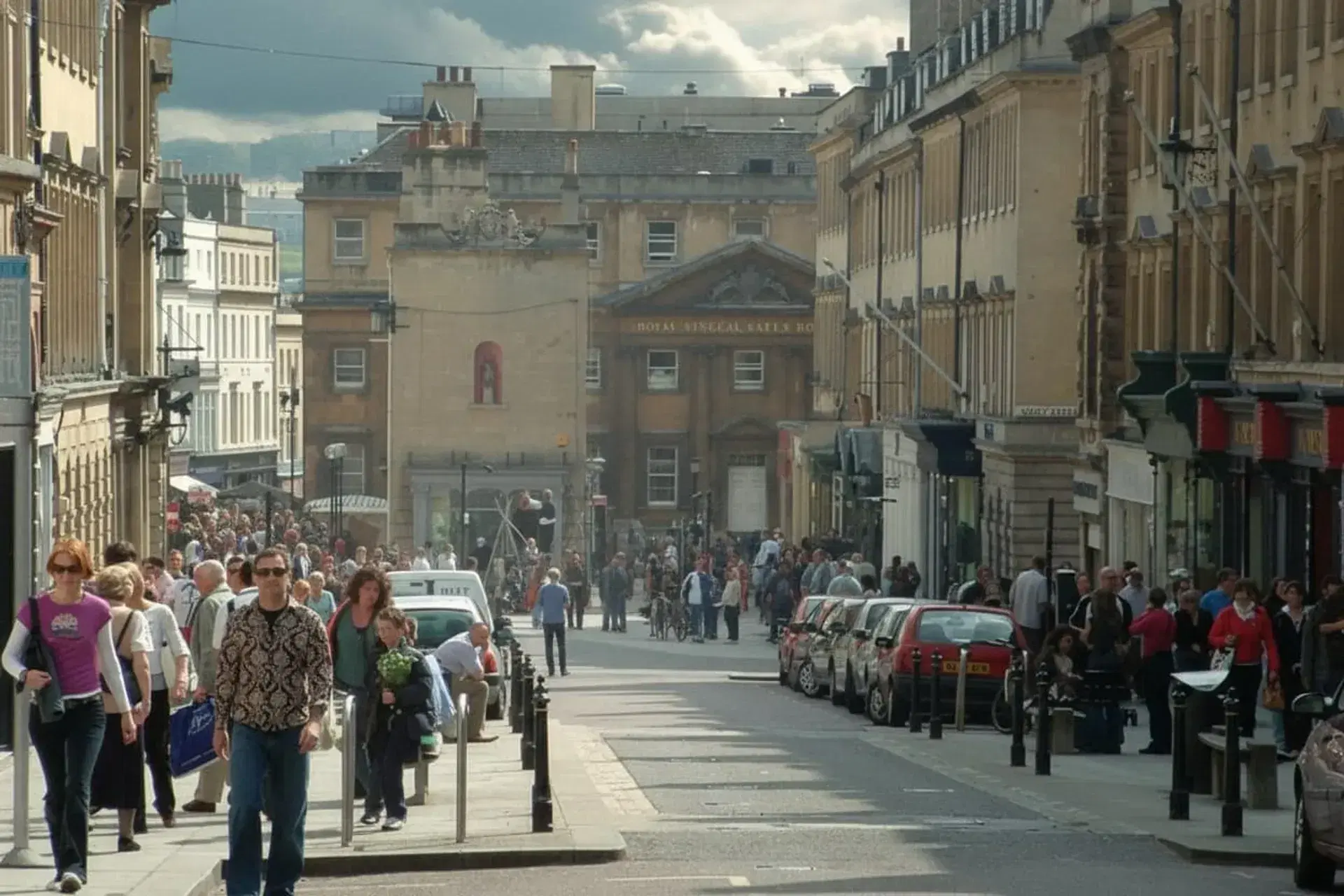
Architecturally, the street presents a unified streetscape defined by three- to four-storey facades constructed in local honey-coloured Bath stone. The buildings feature classical detailing such as rusticated ground floors, Corinthian columns, mansard roofs, and rhythmic sash windows. Today, the thoroughfare preserves an exceptional level of historic integrity, containing numerous Grade II listed buildings along with Grade II* listed landmarks.
Unlike modern streets that separate odd and even addresses on opposing sides, Milsom Street retains a continuous Georgian horseshoe numbering pattern. Addresses begin on the west side, where numbers 1 through 23 climb northward toward George Street, before numbers 24 through 47 return southward along the eastern side.
Bath walking tour with audio and quizzes: Roman baths, Georgian fronts
2 hours9 stopsAudio guideStart any day, at your own paceTicket on your phone · 30-day refundBath's Premier Commercial Promenade
Although intended for private residential townhouses, Milsom Street swiftly evolved during the 1770s into the city's preeminent shopping promenade. Luxury trades quickly moved in to serve the affluent visitors flocking to the spa resort. Renowned potter Josiah Wedgwood opened a showroom here in 1773, soon joined by milliners, fine drapers, jewellers, circulating libraries, and Molland’s confectionery shop in 1781.
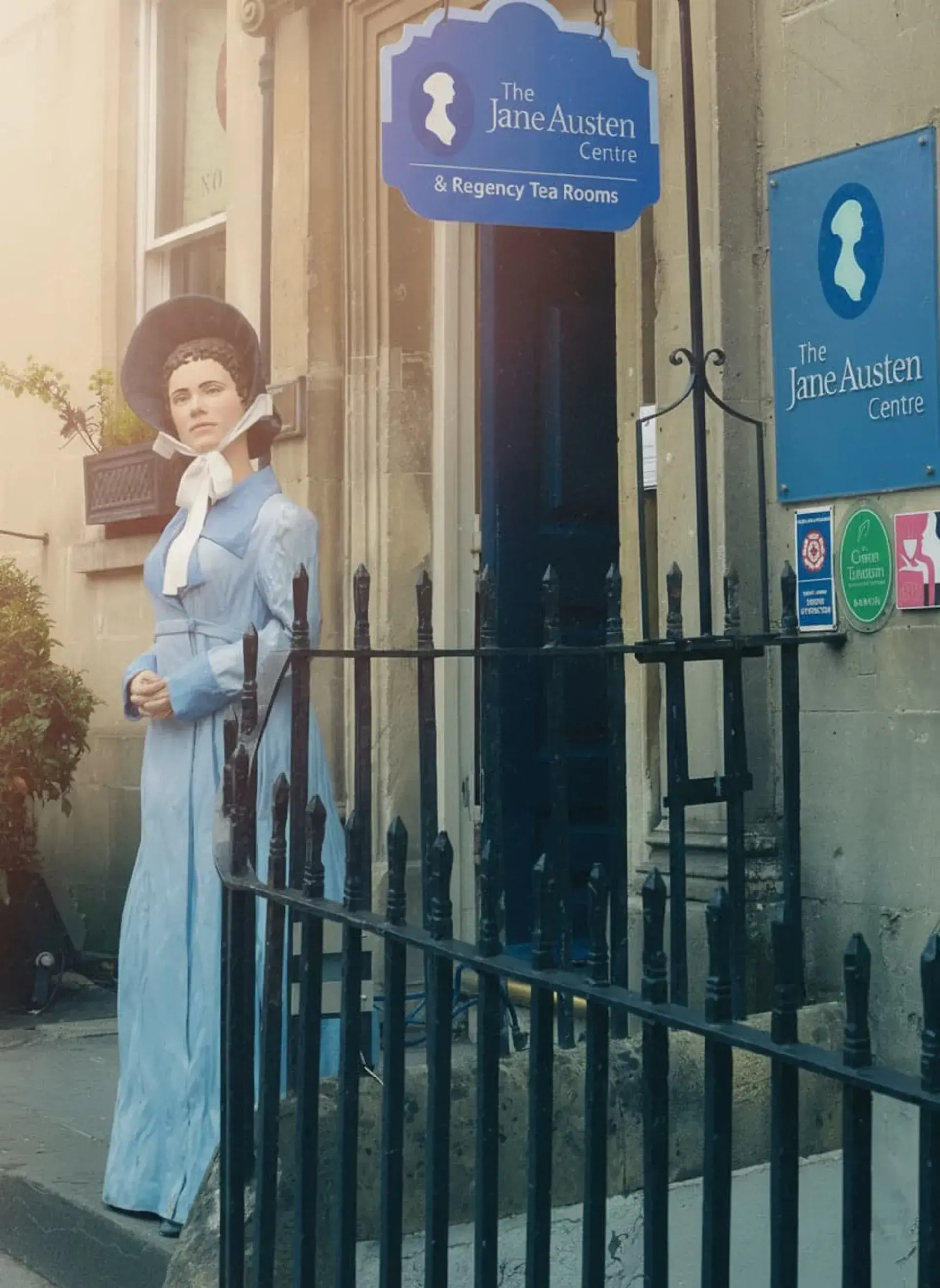
By the early 19th century, Milsom Street was celebrated as the epicentre of social life in Bath. In 1819, writer Pierce Egan described it as the "magnet of Bath," where high society gathered to promenade and converse before dinner. Novelist Jane Austen, who resided in Bath from 1801 to 1806, featured Milsom Street prominently in Northanger Abbey and Persuasion as an essential backdrop for shopping, lodging, and social encounters. Retail innovation continued into the 19th century when James Jolly established a drapery shop at No. 12 in 1823. Over subsequent decades, the enterprise expanded across adjacent plots into Jolly’s, which became one of the earliest department stores in the United Kingdom.
Architectural Grandeur and Hidden Spaces
One of the most notable architectural achievements on the street is the Somersetshire Buildings, occupying Nos. 37 to 42. Constructed between 1781 and 1783 by City Architect Thomas Baldwin, this Grade II* listed terrace was designed with a grand 17-bay Corinthian facade and a projecting central bow. Baldwin engineered the facade to project the grand illusion of a single palatial country mansion, masking the reality that it housed five speculative commercial units. However, the speculative venture met financial disaster in 1793 when the collapse of the Bath and Somersetshire Bank at No. 39 forced Baldwin and several fellow developers into bankruptcy.
Another architectural oddity stands tucked directly behind No. 46: the Octagon Chapel. Erected in 1767, this proprietary church was designed specifically for fashionable spa visitors. To protect wealthy churchgoers from cold draughts during services, the chapel's perimeter private boxes were equipped with fully functioning fireplaces.
Modern Character and the Milsom Quarter
Today, Milsom Street remains an upscale shopping and dining corridor, lined with fashion retailers, beauty brands, home goods stores, and restaurants. It serves as the centrepiece of the local council's "Milsom Quarter" urban regeneration project. The thoroughfare also integrates with Milsom Place, an interconnected pedestrian complex of restored Georgian courtyards and former carriage spaces housing independent boutiques and eateries.
To preserve its pedestrian character, permanent daytime traffic regulations were introduced in 2023, prohibiting general motor vehicles between 10:00 am and 6:00 pm, with exceptions for public buses. These restrictions quiet the avenue, allowing footsteps and outdoor cafe conversation to carry along the hard stone canyon. Beyond everyday retail, Milsom Street serves as a primary civic stage for local gatherings, hosting the annual Bath Carnival parade and food celebrations including The Great Bath Feast.
FAQ
Why was Milsom Street originally built?
It was laid out in 1761–1762 by builder Thomas Lightholder on land leased by Daniel Milsom as an aristocratic residential thoroughfare connecting central Bath to the developing upper town.
How are properties numbered on Milsom Street?
The street uses a traditional Georgian horseshoe numbering system. Numbers 1 to 23 run northward along the western side, while numbers 24 to 47 run back south along the eastern side.
What is the architectural significance of Nos. 37 to 42?
Known as the Somersetshire Buildings, this block was designed by architect Thomas Baldwin in the 1780s with a grand 17-bay Corinthian facade that mimicked a single palatial residence while actually housing five separate commercial premises.
What traffic regulations apply to Milsom Street?
Since 2023, daytime motor traffic restrictions permanently prohibit general vehicles from using the street daily between 10:00 am and 6:00 pm, with an exception for buses.