Albert Memorial Clock: Belfast's Leaning Tower
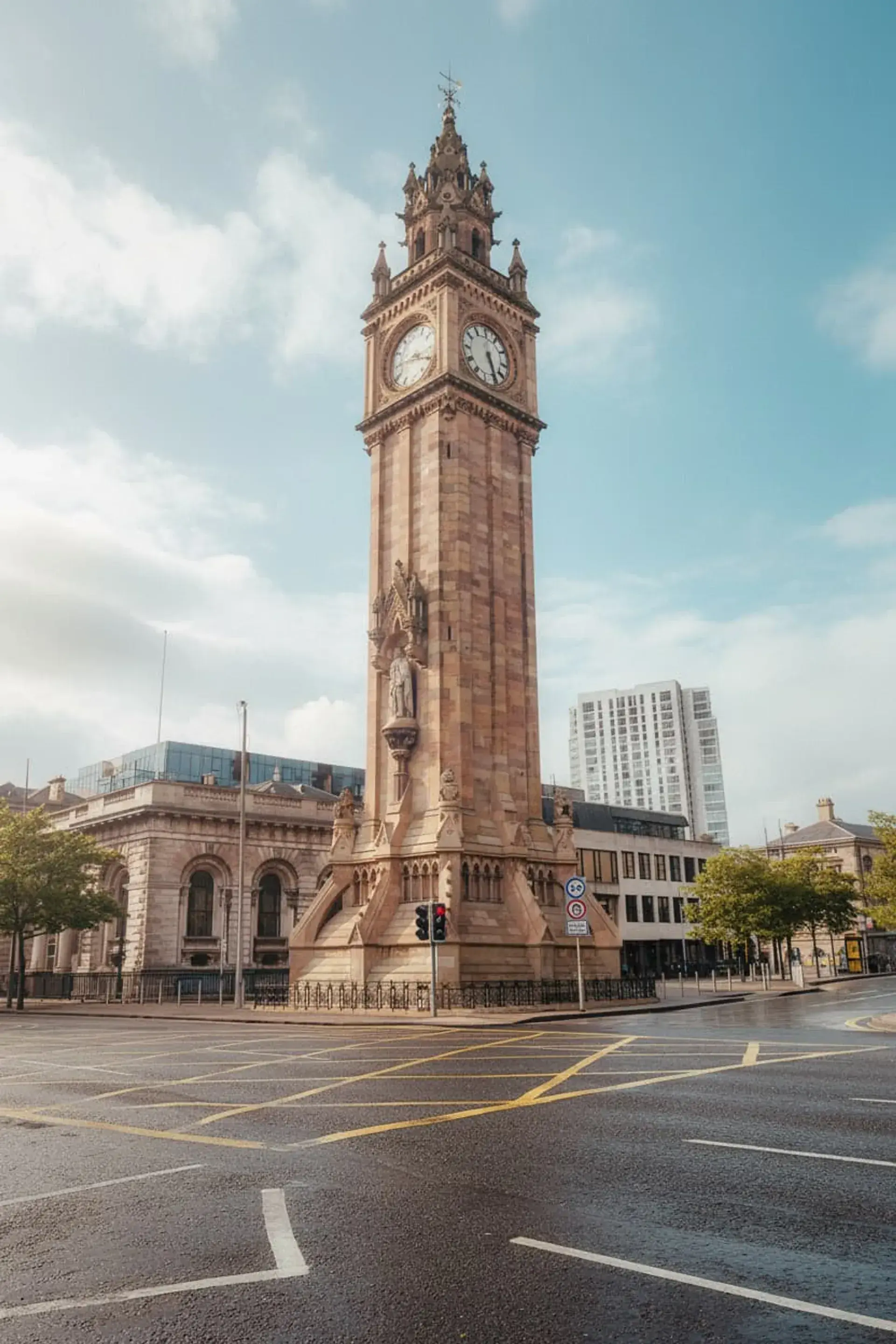
The Albert Memorial Clock is one of Belfast's most recognizable civic landmarks, rising above Queen's Square in the city centre. Known colloquially as Belfast's leaning tower, the Victorian Gothic structure tilts roughly 4 feet (1.25 metres) off vertical toward the east. This distinct tilt, paired with its functioning clock face, gave rise to a popular local pun stating that the monument "has both the time and the inclination."
Standing 113 feet (34 metres) to the belfry and roughly 141 feet (43 metres) to the tip of its spire, the clock tower weighs more than 2,000 tonnes. In addition to serving as an active public timepiece, it marks an important historical transition point between Belfast's commercial core and the riverfront.
Origins and Architectural Design
The monument was commissioned following the death of Prince Albert in 1861 and financed through approximately £2,500 raised by public subscription. In 1865, an architectural design competition awarded first place to William J. Barre. However, committee officials secretly attempted to transfer the contract to rival architect Charles Lanyon. Following a public outcry, Barre was reinstated, though he died in 1867 before construction was completed between 1865 and 1869.
Barre designed the tower in an eclectic blend of French and Italian Gothic styles, with masonry executed by the Fitzpatrick Brothers. The structure features flying buttresses with crowned heraldic lions holding shields, floral carvings, and gargoyles. On the western facade stands a statue of Prince Albert sculpted by Samuel Ferris Lynn, portraying the prince in the robes of a Knight of the Garter. The tower's internal clockwork and two-tonne bell were engineered by local High Street horologist Francis Moore.
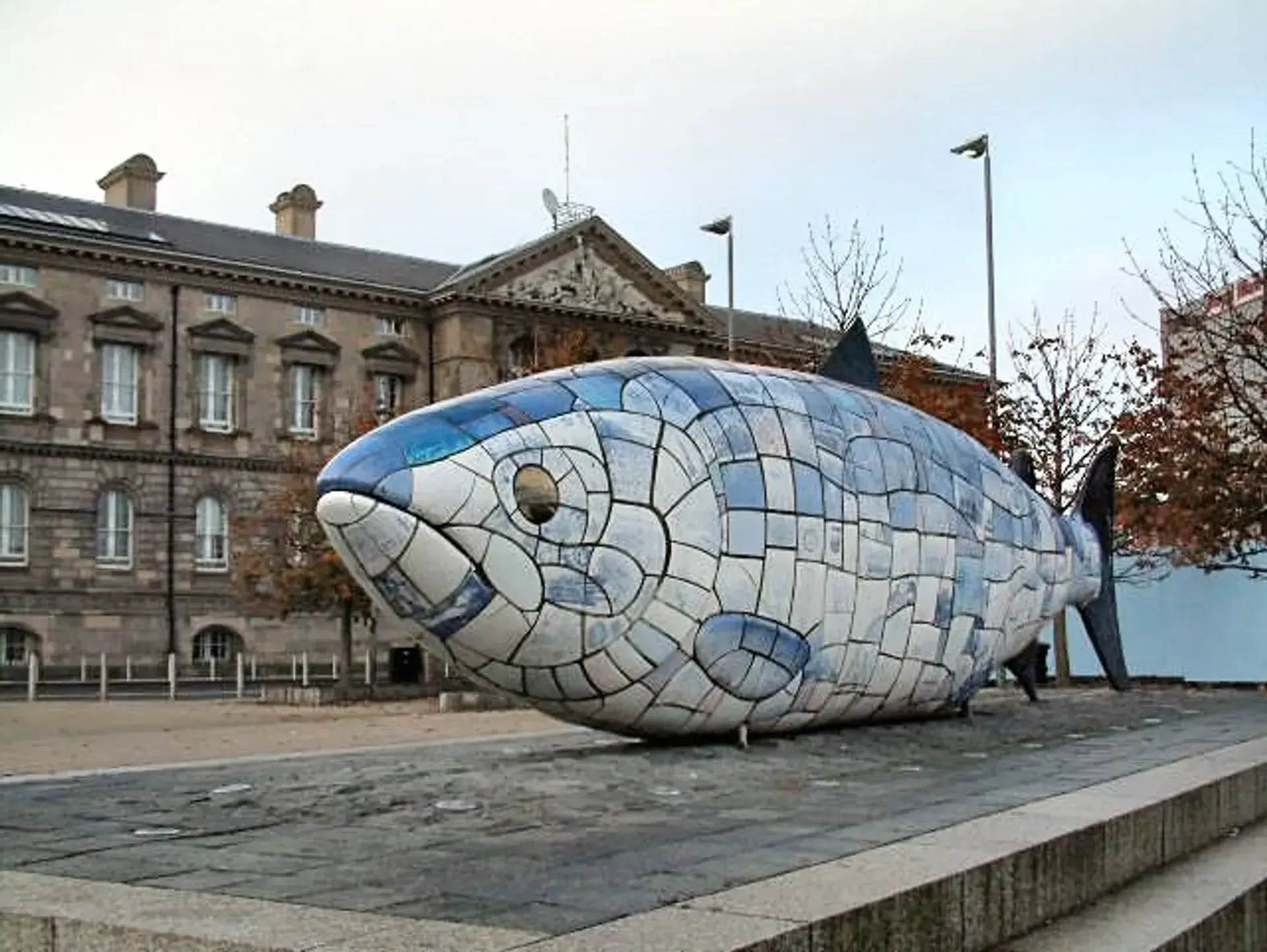
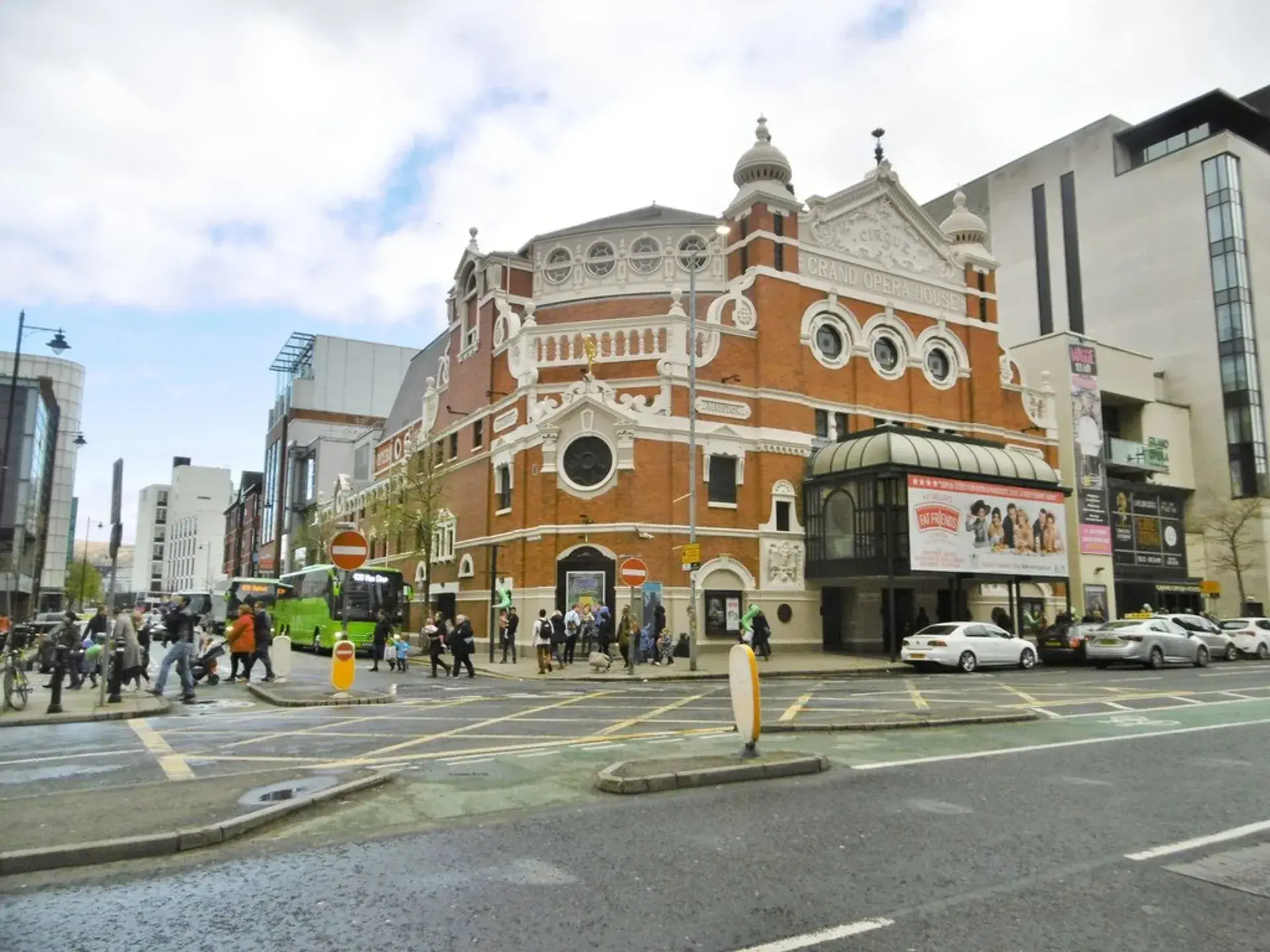
Belfast walking tour with audio and quizzes: Opera House to Big Fish
2 hours8 stopsAudio guideStart any day, at your own paceTicket on your phone · 30-day refundThe Leaning Foundation
The tower's tilt is the result of Belfast's challenging subterranean geography. The structure was built on timber piles driven into soft reclaimed estuary mud, known locally as "sleech." This ground sits directly where the underground River Farset empties into the River Lagan—the historical sandbank ford that gave Belfast its original Irish name, Béal Feirste.
Within decades of completion, the massive weight caused the ground to subside unevenly. In 1924, municipal authorities intervened to shed structural weight and reduce stress on the foundations. Workers removed high stone ornamentation and a heavy stone canopy that had originally covered the Prince Albert statue.
Damage and Restoration
On January 6, 1992, the clock sustained superficial damage when an IRA bomb detonated nearby on High Street. Despite the blast, the tower's overall structural integrity remained intact.
Between 2000 and 2002, a multi-million-pound engineering project was undertaken to safeguard the monument's future. Specialists stabilized the decaying timber foundation piles, effectively halting further movement. The project also cleaned decades of industrial soot from the pale sandstone, replaced weathered decorative carvings, and modernized the clock mechanism.
Cultural Profile and Current Setting
Throughout its history, the tower has occupied a colorful place in Belfast life. In the Victorian and Edwardian eras, its proximity to the bustling docks made the base a well-known gathering spot for sailors and sex workers. In cinema, the monument was prominently featured in director Carol Reed's 1947 film noir Odd Man Out, starring James Mason.
Today, the Albert Memorial Clock serves as an architectural anchor within the pedestrianized public space linking Queen's Square and Custom House Square. The tower connects the commercial spine of High Street and Donegall Square to the maritime heritage district along the River Lagan. While the interior is closed to visitors, the exterior is fully accessible around the clock, illuminated at night by architectural floodlighting. The eastern lean remains most noticeable when viewed looking down High Street against the vertical backdrop of modern waterfront buildings.
FAQ
Why does the Albert Memorial Clock lean?
The clock tower leans roughly 4 feet off vertical because its timber pile foundations were driven into soft reclaimed estuary mud, known as sleech, where the River Farset meets the River Lagan.
Can visitors enter the Albert Memorial Clock?
No, the interior of the tower is closed to the public, but the exterior can be viewed at any time in Queen's Square.
Who designed the Albert Memorial Clock?
The tower was designed by architect William J. Barre in a Victorian Gothic style blending French and Italian influences. The statue of Prince Albert was created by sculptor Samuel Ferris Lynn.