St Anne's Cathedral: Belfast's Spire of Hope
Architectural Origins and Unique Construction
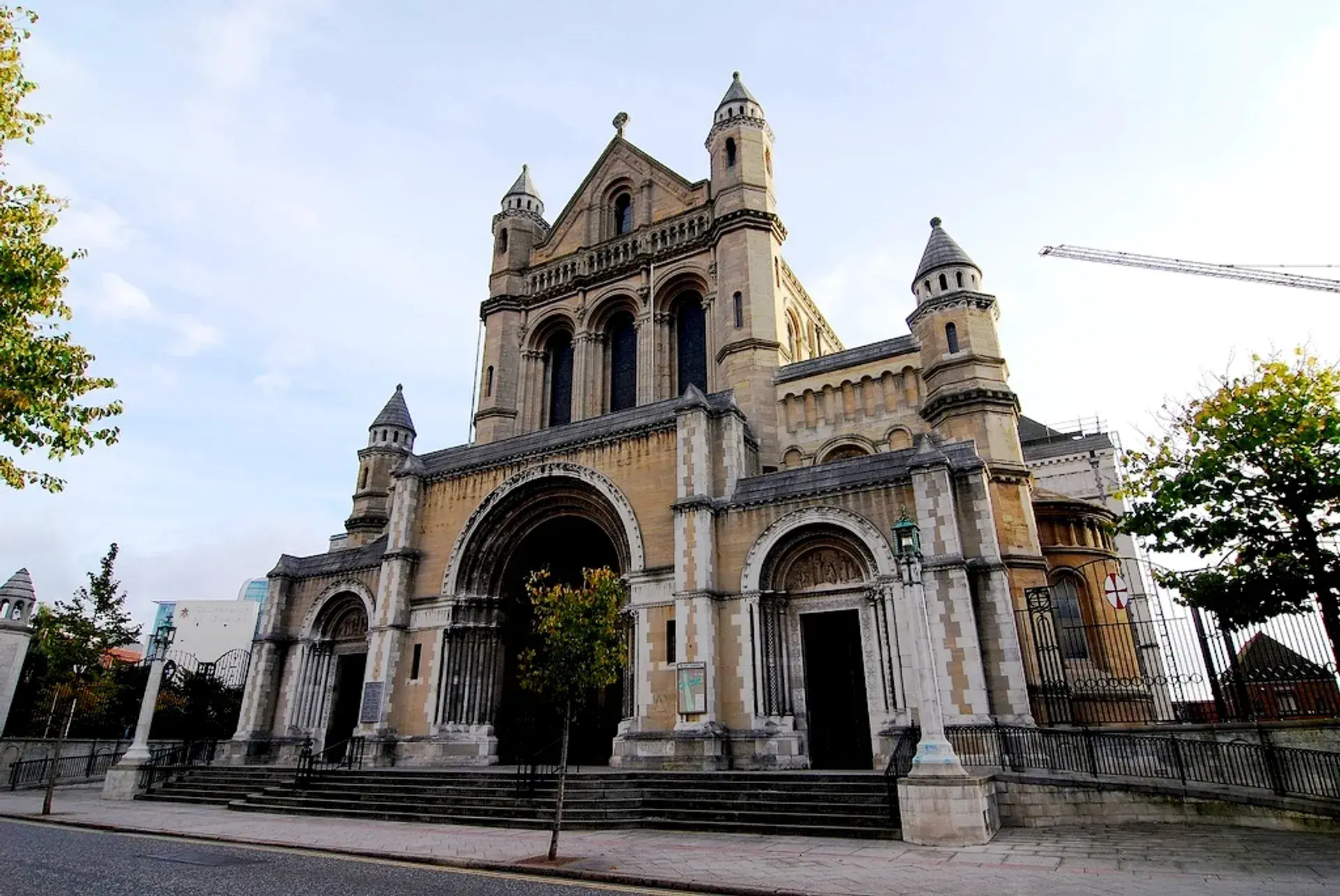
St Anne's Cathedral sits on Donegall Street in central Belfast, serving as the cultural heart and namesake of the surrounding Cathedral Quarter. The Church of Ireland cathedral occupies the site of an earlier 1776 classical parish church, which had been funded by Belfast's landlord, Arthur Chichester, the fifth Earl (later Marquess) of Donegall. Local tradition maintains that the cathedral was named in honor of Lord Donegall's wife, Anne, alongside its official dedication to Saint Anne, mother of Mary.
Designed primarily by architect Sir Thomas Drew with the assistance of W.H. Lynn, the cathedral was envisioned in a Romanesque basilican style, with subsequent modifications directed by Sir Charles Archibald Nicholson. The foundation stone was laid on September 6, 1899. In an extraordinary engineering feat, the massive stone nave was constructed entirely around the existing 1776 church building. This arrangement allowed the congregation to continue regular worship within the enclosed sanctuary until late 1903, after which the old structure was systematically dismantled inside the rising perimeter walls. The nave was formally consecrated on June 2, 1904, while intermittent construction continued over the next eight decades until the transepts were finished in 1981.
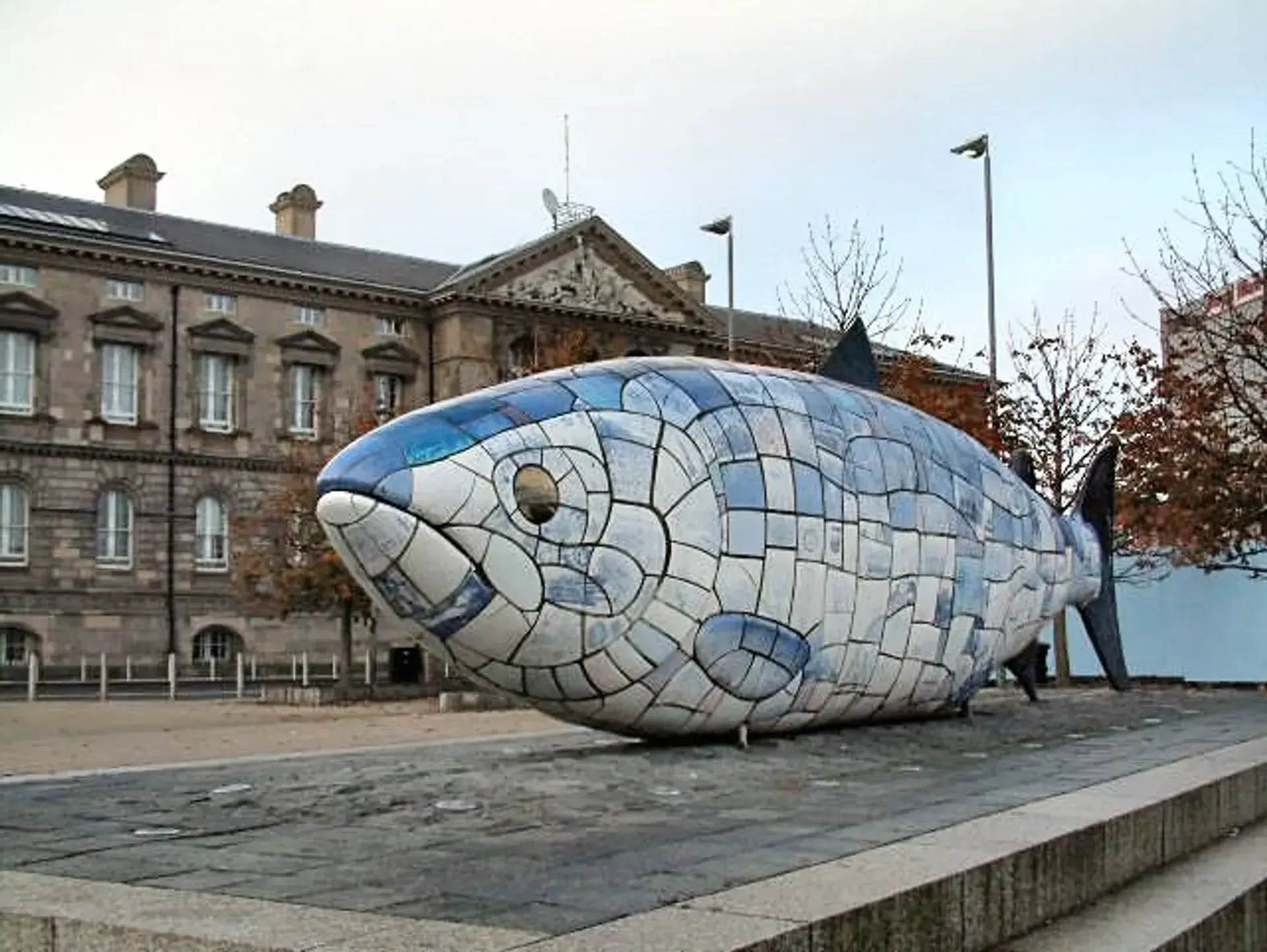
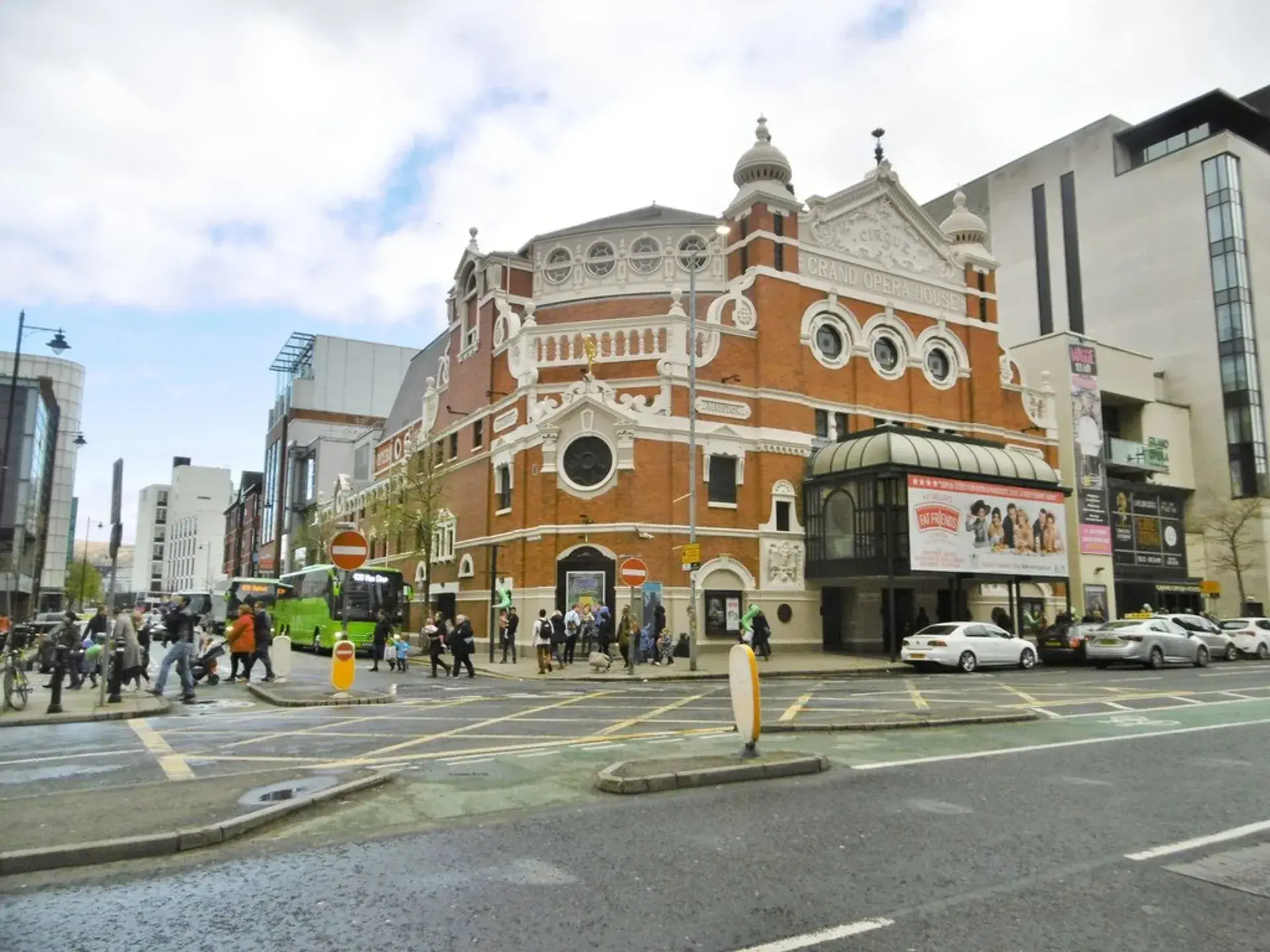
Belfast walking tour with audio and quizzes: Opera House to Big Fish
2 hours8 stopsAudio guideStart any day, at your own paceTicket on your phone · 30-day refundGround Foundations and the Spire of Hope
The physical landscape of central Belfast presented significant challenges to the cathedral's builders. The ground beneath consists of "sleech," a soft estuarine layer of mud, silt, and sand. To stabilize the building, builders drove fifty-foot wooden piles deep into firmer subterranean strata. Due to structural settlement into this subsoil, a visible wave and uneven tilt can be observed along the central nave floor. These weight restrictions historically prevented the construction of a heavy stone tower or traditional bell tower.
In 2007, this limitation was resolved with the installation of the Spire of Hope. Designed as a lightweight, 40-metre stainless-steel needle, the structure pierces through the roof directly above the choir stalls, reaching a total height of 80 metres above street level. Installed as a symbol of post-Troubles civic renewal, the spire features an internal shaft visible from inside the church through a transparent glass ceiling panel situated over the choir.
Interior Artistry and Historical Memorials
Despite heavy damage to the surrounding commercial district during the Belfast Blitz in April 1941, St Anne's Cathedral survived intact. Its interior contains centuries of ecclesiastical and civic history. The sanctuary retains the Good Samaritan stained-glass window, the sole structural element preserved from the original 1776 church.
Throughout the nave, stone pillar capitals carved primarily by Morris Harding depict scenes from Northern Irish life and labor, including linen manufacturing, shipbuilding, agriculture, science, healing, and womanhood. Above the baptistery font, the ceiling dome is decorated with a Creation mosaic composed of more than 150,000 hand-cut pieces of colored Italian glass.
The cathedral also houses the Titanic Memorial Pall, crafted from deep-indigo Merino wool and linen, embroidered with hundreds of silver crosses and Stars of David to commemorate those who died aboard the Belfast-built ship in 1912. Nearby lies the cathedral's sole interior burial: Irish Unionist political leader Lord Edward Carson, who was interred under the nave floor following a state funeral in 1935.
Civic Role and Living Traditions
St Anne's Cathedral holds a unique administrative role within the Church of Ireland as the cathedral for two separate dioceses: Connor, as well as Down and Dromore. It remains an active place of daily worship, hosting Sunday Choral Eucharist, Choral Evensong, and recitals on its 1907 Harrison & Harrison pipe organ.
Beyond daily religious life, the cathedral is internationally recognized for its annual "Black Santa" charity tradition. Begun in 1976 during the Troubles by Dean Sammy Crooks, the sit-out involves the dean wearing a heavy black clerical cloak on the cathedral steps before Christmas to collect donations for local charitable organizations, a practice faithfully upheld by each subsequent dean.
FAQ
Why does St Anne's Cathedral have a stainless steel spire instead of a stone tower?
The cathedral is built on a soft estuarine layer of mud and silt known as sleech. Because strict ground-weight limitations prevented the site from supporting a heavy stone tower, the lightweight 40-metre stainless-steel Spire of Hope was installed in 2007 instead.
How was the cathedral built without interrupting church services?
When construction began in 1899, the new stone nave was erected entirely around the older 1776 parish church. The congregation continued holding services inside until late 1903, at which point the original church was dismantled inside the newly constructed walls.
Who is buried inside St Anne's Cathedral?
The cathedral contains only one interior tomb: that of Irish Unionist political leader Lord Edward Carson, who was buried there following a state funeral in 1935.
What is the origin of the Black Santa tradition?
The tradition began in 1976 during the Troubles when Dean Sammy Crooks started standing on the cathedral steps in a black clerical cloak before Christmas to raise money for charity. The local press dubbed him 'Black Santa,' establishing an annual custom carried on by succeeding deans.