
Bristol Cathedral: History and Architecture Guide
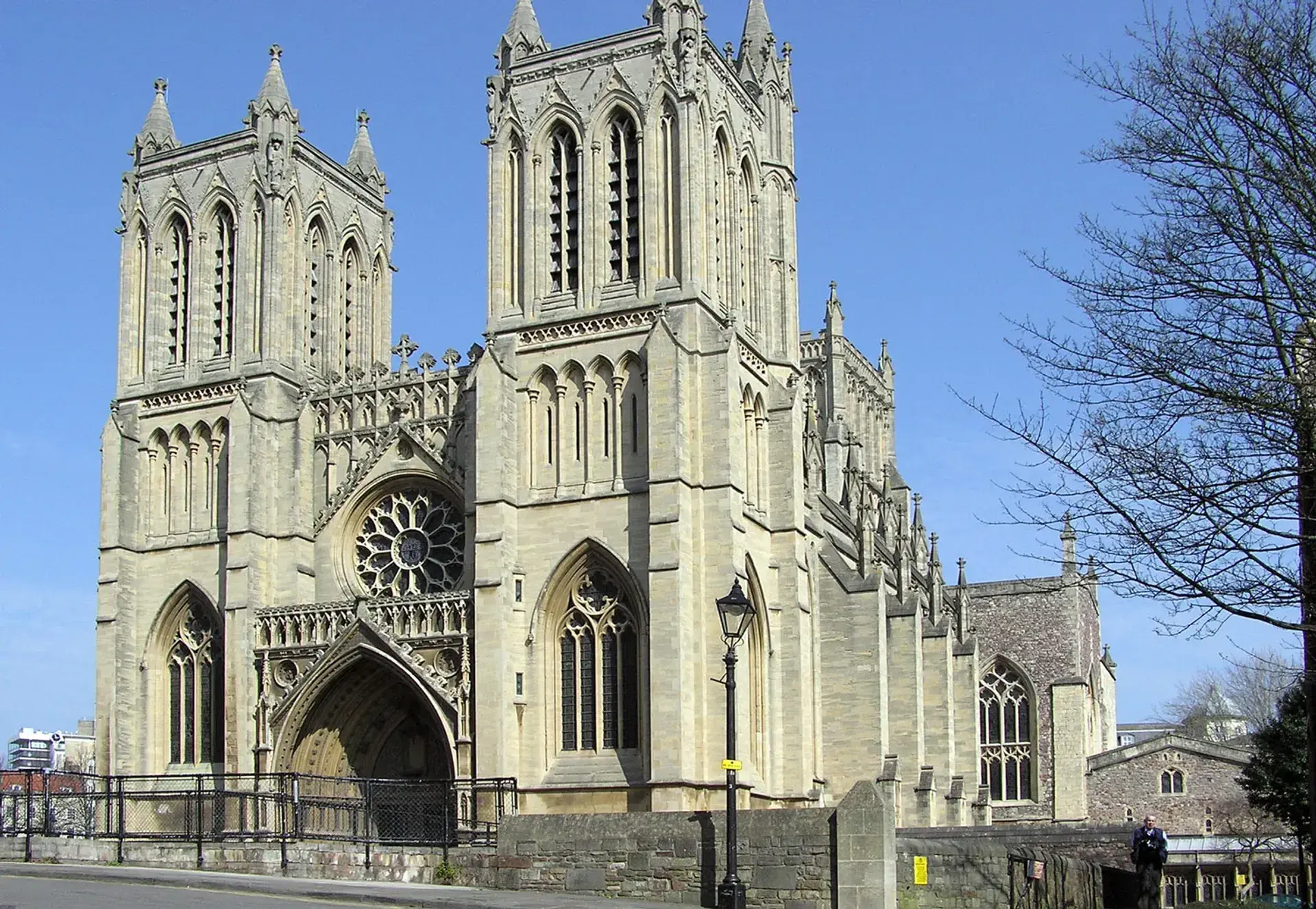
Bristol Cathedral, formally designated the Cathedral Church of the Holy and Undivided Trinity, stands as the historic spiritual anchor of Bristol's civic centre on College Green, directly across from the neo-Georgian façade of City Hall. Originating as a medieval monastic foundation, the Grade I listed building serves as the seat of the Bishop of Bristol and is recognized internationally as one of the finest and earliest examples of a Gothic hall church.
Origins and Medieval Expansion
The site began in 1140 as the Augustinian Abbey of St Augustine, established by the prominent Bristol burgess and royal official Robert Fitzharding. After its initial consecration in 1148, the abbey complex expanded significantly. By roughly 1160, the community completed a Romanesque gatehouse and a chapter house adorned with heavy semicircular arches and deeply carved geometric chevron and diamond reliefs.
Architectural evolution continued across the following centuries. Around 1220, Abbot David oversaw the construction of the Early English Gothic Elder Lady Chapel, an addition attributed to master mason Adam Lock. Later, between 1298 and 1332, Abbot Edward Knowle initiated a sweeping reconstruction of the eastern end in the Decorated Gothic style. This project introduced the cathedral's signature hall church layout and early lierne vaulting, departing from standard medieval arrangements.
Bristol walking tour with audio and quizzes: Christmas Steps and quays
2 hours9 stopsAudio guideStart any day, at your own paceTicket on your phone · 30-day refundThe Three-Century Missing Nave
In the 1530s, the original Norman nave was torn down with plans for a grand rebuilding. However, the monastic community was dissolved in 1539 under King Henry VIII before the work could advance. The structural materials were largely stripped, leaving the church truncated. Although Henry VIII re-founded the institution as a New Foundation cathedral in 1542, the church remained without a nave for well over 300 years.
During this protracted period of absence, domestic tenements were constructed directly across the footprint where the nave once stood. By the early 19th century, the cluster of residences had fallen into disrepute as a brothel district, prompting the Dean and Chapter to end property leases on the land in 1829. Construction of a permanent Gothic Revival nave finally commenced in 1868 under architect George Edmund Street, who matched the height and vaulting of the surviving medieval eastern arm. The west front and its twin towers were completed in 1888 by John Loughborough Pearson.
Architectural Significance
Unlike traditional English cathedrals, which feature lower side aisles beneath elevated central clerestory windows, Bristol Cathedral is designed as a hall church. The vaulted ceilings of the side aisles rise to the exact same height as the central nave and choir. This structural unity produces an open, evenly illuminated interior where sightlines flow freely beneath complex rib vaults.
Within the choir aisles, the stone vaulting incorporates angular transoms that span the bays. The aisle walls also feature distinctive pointed, angular starburst or stellate tomb recesses, created specifically to house effigies of the patron Berkeley family.
Historic Curiosities and Treasures
The cathedral holds remarkable historic artifacts within its walls. In the 13th-century Elder Lady Chapel, medieval stone carvers incorporated whimsical animal grotesques carrying out human tasks, including a monkey playing pipes and a ram playing a violin.
Another significant relic is the Harrowing of Hell Stone, an Anglo-Saxon carved relief dating between 1040 and 1050. The stone depicts Christ rescuing Adam and Eve while trampling Satan. After monastic records were burned during the 1831 Bristol Reform Riots, the stone was uncovered beneath the Chapter House floor, where it had been hidden face down and repurposed as a coffin lid.
Modern Worship and Access
Bristol Cathedral remains an active Church of England place of worship, conducting daily services that include Morning Prayer and Choral Evensong. Open daily to the general public with free admission, the cathedral serves as a prominent cultural and civic venue, hosting university degree ceremonies, classical concerts, and public exhibitions, including curated displays that explore the institution's historical benefactors and their ties to the transatlantic slave trade.
FAQ
What is a Gothic hall church?
A Gothic hall church is a design where the side aisles are built to the exact same ceiling height as the central nave and choir, creating an expansive, uniformly illuminated interior without the traditional lower aisles or high clerestory windows.
Why was Bristol Cathedral missing its nave for over 300 years?
The original Norman nave was demolished for rebuilding in the 1530s, but work halted when Henry VIII dissolved the abbey in 1539. The site remained unfinished and covered by residential tenements until a replacement nave was built between 1868 and 1877.
What is the Harrowing of Hell Stone?
It is an Anglo-Saxon stone relief dating to approximately 1040–1050 depicting Christ rescuing Adam and Eve. It was discovered beneath the Chapter House floor after the 1831 riots, where it had been placed face down as a coffin lid.
Is admission to Bristol Cathedral free?
Yes, Bristol Cathedral is open daily to visitors with free admission, alongside regular daily services, exhibitions, and civic events.