Bristol Old Vic: History of the Oldest Working Theatre
The Oldest Continuously Operating Theatre
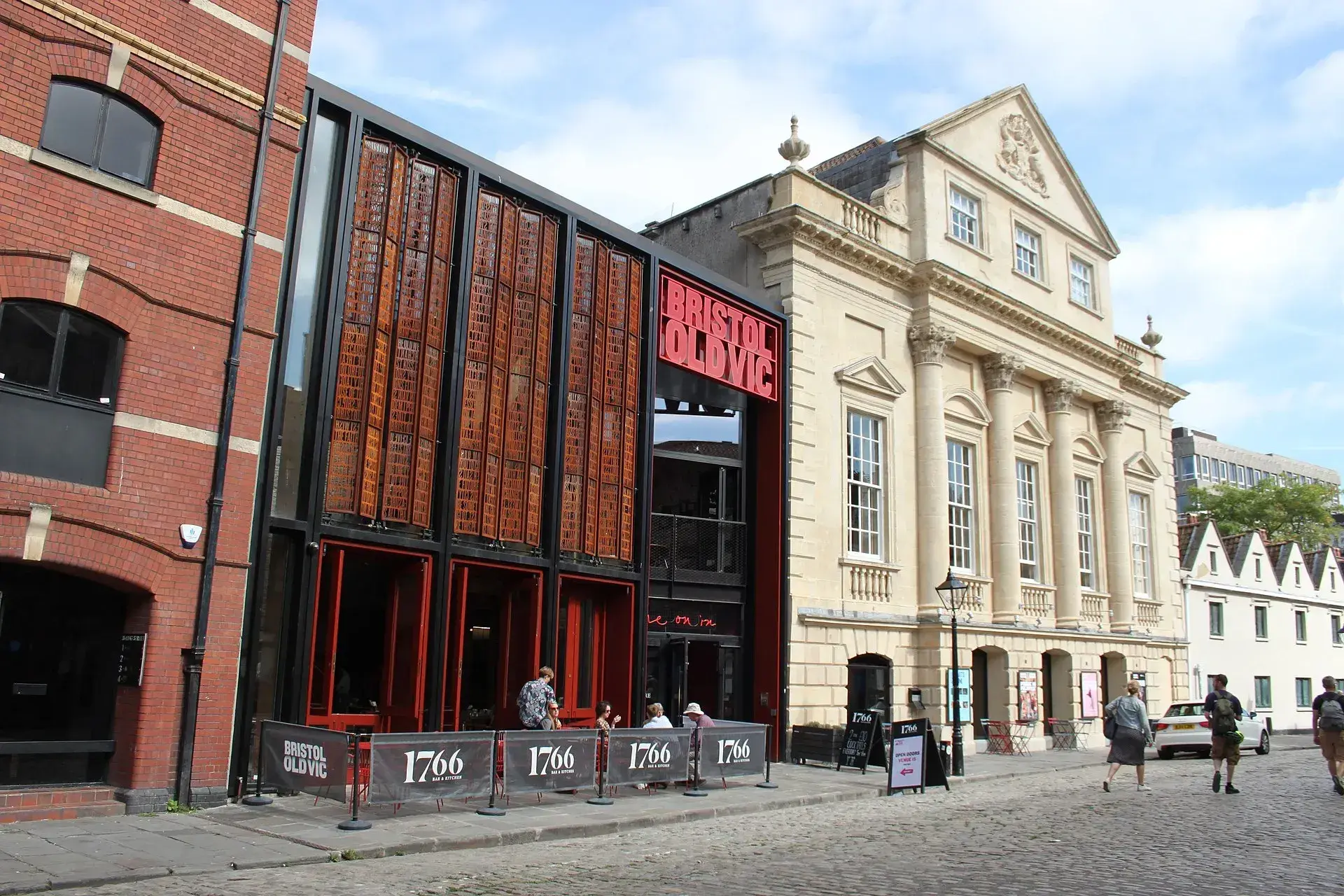
Built between 1764 and 1766 and officially opened on 30 May 1766, Bristol Old Vic is the oldest continuously operating theatre in the English-speaking world. The Grade I listed playhouse complex anchors King Street, a seventeenth-century cobbled route laid out across Bristol's old Town Ditch between Queen Square and the floating harbour at Welsh Back. Today, the complex represents both the cultural ambitions of Georgian Bristol and twentieth-century civic conservation.
Bristol walking tour with audio and quizzes: Christmas Steps and quays
2 hours9 stopsAudio guideStart any day, at your own paceTicket on your phone · 30-day refundSecret Origins Behind King Street
The venue began under illicit circumstances. Constructed without a Royal Patent under the strict censorship of the Licensing Act 1737, the playhouse was technically illegal. To avoid intervention by authorities, the building was hidden away behind a row of domestic houses in Rackhay Yard. Patrons originally navigated narrow domestic doorways and alleyways to gain access unseen from King Street.
To further bypass legal prohibitions, performances were deceitfully promoted as musical recitals accompanied by specimens of rhetoric. The theatre operated under these clandestine conditions until 1778, when it finally received a royal patent and officially assumed the name Theatre Royal, allowing it to stage licensed, full-length drama.
Architectural Evolution and Conservation
The historic Georgian auditorium was designed by James Saunders, a carpenter from London's Theatre Royal, Drury Lane, and supervised by Bristol architect Thomas Paty. While the auditorium originally accommodated more than 1,600 patrons packed across bench and gallery tiers, modern alterations have reduced capacity to between 600 and 650 seats arranged in an intimate horseshoe layout.
Over the centuries, the complex grew and adapted. In 1743–1744, architect William Halfpenny had built the adjacent Coopers' Hall, which was later incorporated into the theatre complex during a 1970–1972 redevelopment led by Peter Moro. Between 2012 and 2018, architecture firm Haworth Tompkins led a major redevelopment that stripped away previous mid-century additions. This work created a spacious, sunlit timber-and-glass foyer framed with Douglas fir beams and exposed the raw red-brick exterior of the original 1766 auditorium wall to King Street.
The Silver Tokens and Historic Curiosities
To finance the theatre's original £2,500 construction budget, 50 local investors each contributed £50. In return, each investor received a numbered silver token inscribed with the promise that the proprietor was entitled to view every performance held in the playhouse. In an unbroken tradition of institutional memory, Bristol Old Vic still honours surviving, authenticated original tokens, providing their holders with complimentary admission.
The theatre holds several other historical artefacts and details:
- Garrick's Prologue: Celebrated actor-manager David Garrick composed and delivered the prologue on opening night in 1766, declaring the auditorium to be the most complete in Europe for its dimensions.
- Kinetic Public Art: The operable exterior sun shutters on the King Street facade are perforated with the words of Garrick's 1766 prologue.
- Carpenters' Graffiti: Restoration projects revealed nineteenth-century markings behind the scenes, including an 1859 sketch of a full-rigged schooner signed by theatre carpenter E. J. Harwell.
Survival and Modern Function
The building narrowly escaped destruction during both the 1831 Bristol Riots and the Bristol Blitz of 1940–1941. In 1942, after facing the threat of commercial sale and demolition, a dedicated civic campaign saved the playhouse. In 1946, the Theatre Royal Bristol Trust invited London's Old Vic to base a resident company here, establishing the Bristol Old Vic Company and the associated Bristol Old Vic Theatre School.
Today, the site operates as a major regional producing theatre. In addition to staging home-grown productions, national tours, and works developed through initiatives like the Bristol Old Vic Young Company, the building serves as a public hub. The timber-and-glass atrium operates daily as a public indoor square, café, and bar, complemented by a studio performance space set within the barrel vaults of Coopers' Hall.
FAQ
Why was Bristol Old Vic originally hidden behind houses?
Because it was built without a Royal Patent under the restrictions of the Licensing Act 1737, the playhouse was technically illegal. It was constructed in Rackhay Yard behind a row of domestic houses to avoid legal scrutiny.
What is the story behind the Bristol Old Vic silver tokens?
To fund the initial £2,500 construction cost, 50 investors each contributed £50 and received an engraved silver token granting admission to every performance. Bristol Old Vic continues to honour authenticated original tokens today.
What architectural spaces make up the modern complex?
The complex includes the original 1766 Georgian horseshoe auditorium, the adjacent 1743–1744 Coopers' Hall with a studio theatre in its vaults, and a modern timber-and-glass foyer designed by Haworth Tompkins.