Llandoger Trow: History of Bristol's 1664 Timber Tavern
Origins on King Street
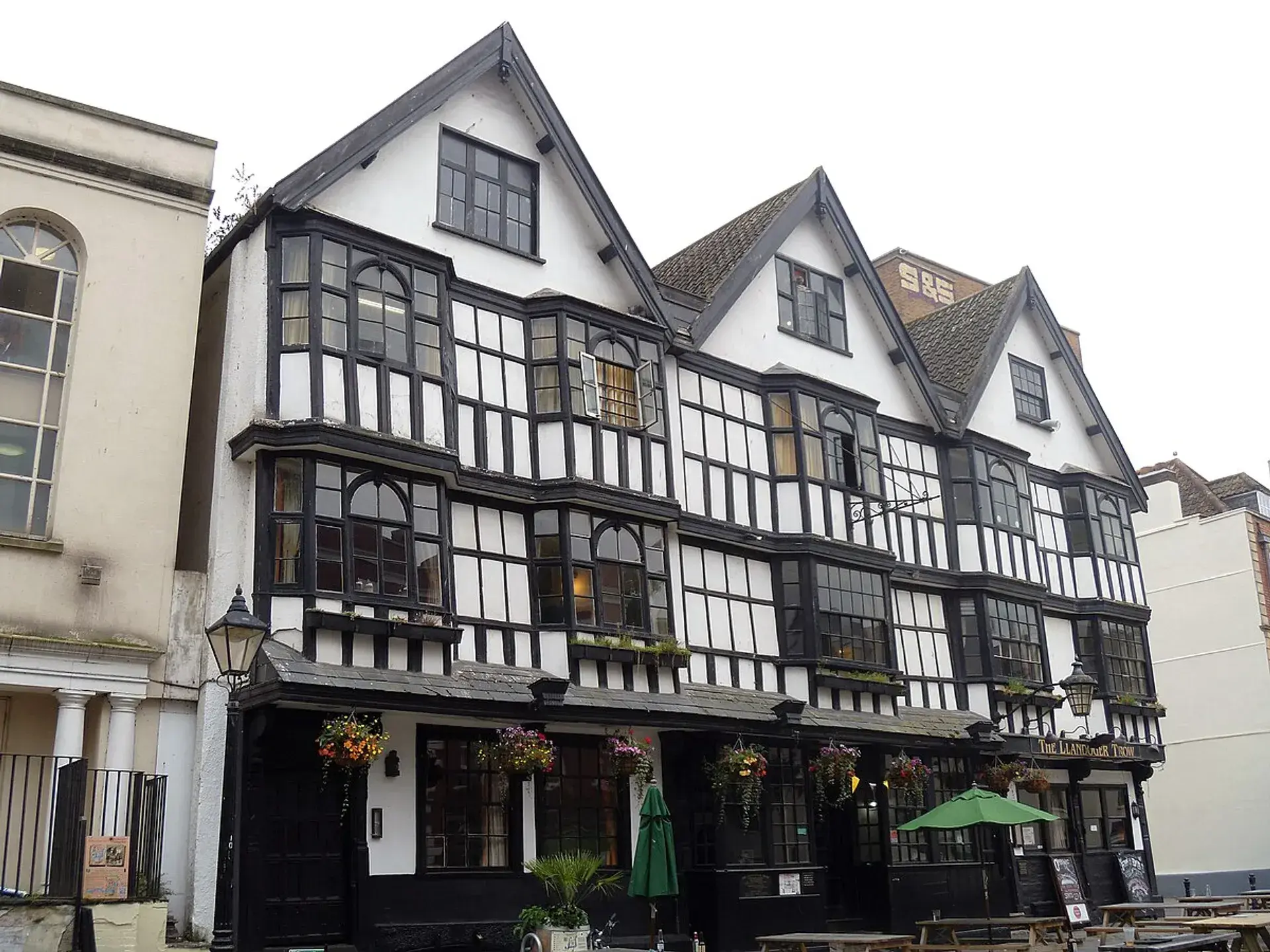
The Llandoger Trow is one of Bristol's most recognizable historic structures, positioned at the eastern end of King Street on the corner of Queen Charlotte Street. Constructed in 1664, the property originally began as a row of three timber box-frame houses complete with brick chimney stacks. The development coincided with the layout of King Street across the Town Marsh in the 1650s and 1660s, just outside Bristol's medieval boundary wall.
Soon after its completion, the property became an inn. It was named by an early innkeeper, Captain Hawkins, in honor of Llandogo, a village situated on the River Wye in South Wales. Llandogo was renowned for building "trows"—flat-bottomed river barges that transported goods downriver and across the Severn Estuary into the Port of Bristol.
Bristol walking tour with audio and quizzes: Christmas Steps and quays
2 hours9 stopsAudio guideStart any day, at your own paceTicket on your phone · 30-day refundMaritime Commerce and Theatrical Heritage
Positioned steps from the bustling wharves of Welsh Back, the inn served as an essential social hub for river traders, mariners, dockers, and merchants navigating Bristol's waterborne trade. Its low-beamed ceilings and timber floorboards bore witness to centuries of maritime commerce linked to the nearby Floating Harbour.
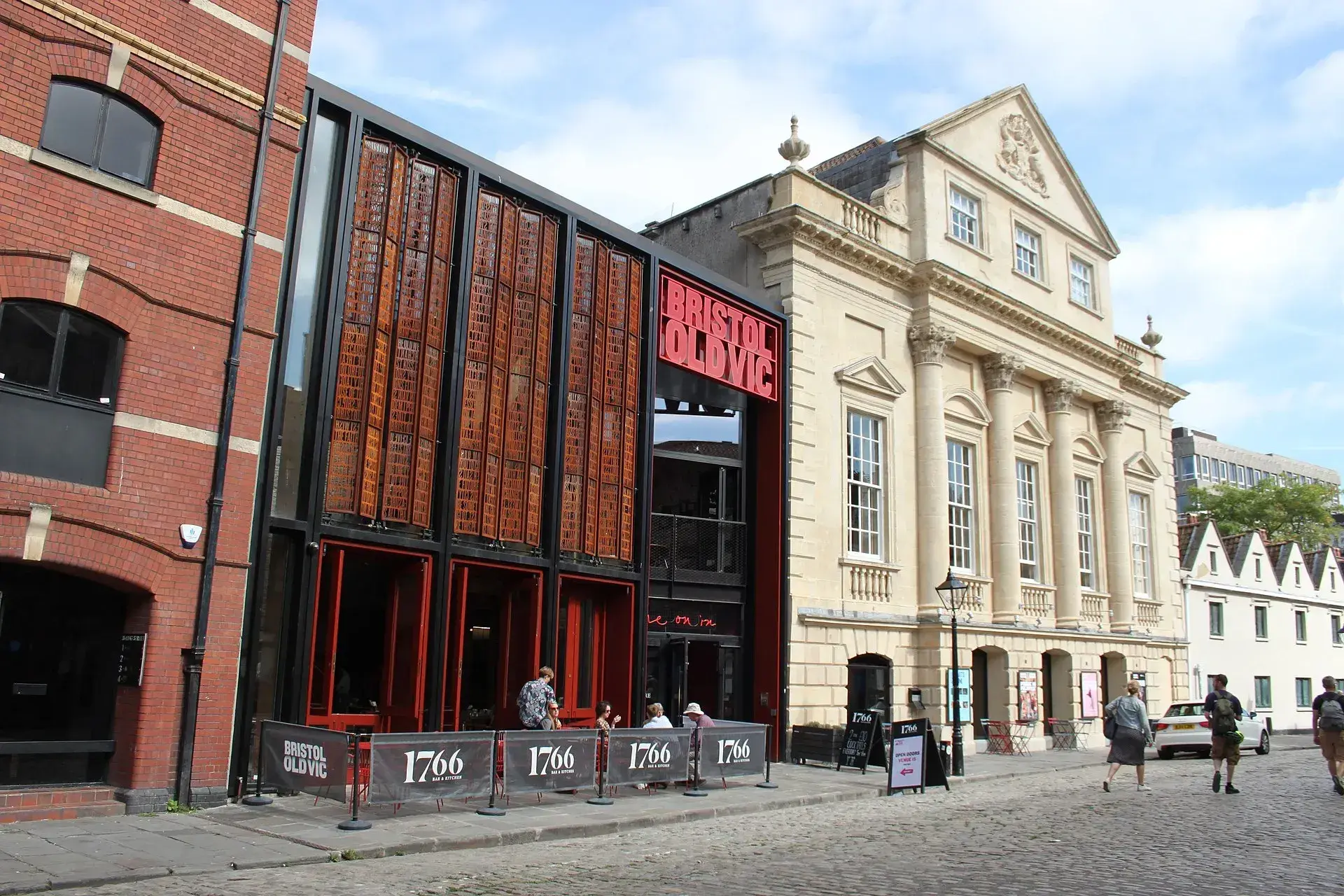
By the Victorian era, the inn's clientele expanded beyond dockworkers. Situated directly across King Street from the Theatre Royal (now the Bristol Old Vic), the tavern evolved into a favored gathering spot for stage performers and touring actors, including the renowned Victorian stage actor Sir Henry Irving.
In 1962, the historic inn underwent a notable commercial transition when it was converted into a Berni Inn steakhouse. Later operated under the Whitbread hospitality group, the pub eventually shut its doors in April 2019 due to the need for extensive structural repairs.
Wartime Survival and Architecture
The building is recognized as a Grade II* listed structure, defined by outward-leaning timber gables that cast silhouettes over the cobbled streetscape below. The exterior displays 18th-century shopfront woodwork, while the interior retains historic hearths and low wooden beams.
Originally, the structure featured five overhanging gables facing King Street. During the Bristol Blitz of World War II, two of the five gables were destroyed by aerial bombardment. Despite this loss, the survival of the remaining three gables was remarkable; the 1940 air raids flattened much of Bristol's medieval commercial core in nearby areas around Castle Park and Wine Street.
Literary Lore and Folk Legends
Over centuries of dockside trade, the Llandoger Trow collected a dense web of local folklore and literary associations. Local tradition maintains that author Daniel Defoe met Scottish mariner Alexander Selkirk at the inn following Selkirk’s rescue from a remote island, an encounter reputed to have inspired the 1719 novel Robinson Crusoe. However, no surviving contemporary documentation confirms this meeting took place inside the tavern.
Similarly, enduring literary lore connects the building to Robert Louis Stevenson’s classic adventure Treasure Island (1883), with readers often identifying the inn as the real-world model for the Admiral Benbow tavern. Bristol folklore also links the premises to the notorious pirate Edward Teach, known as Blackbeard, though historical evidence of his patronage is absent.
Beyond literature, the site holds a firm place in local ghost lore. Often cited among the city's most haunted locations, tales claim up to 15 distinct resident spirits inhabit the property, including auditory stories of a young child wearing metal leg braces heard on the upper floors.
Modern Taphouse Revival
After remaining dark for two years, the Llandoger Trow reopened in June 2021 under independent operator Bloomsbury Leisure Group following structural and interior repairs. The modern venue functions as an active craft beer and cider taphouse, pouring cask ales alongside more than 20 keg lines representing regional, German, and Czech breweries.
The venue also serves as a King Street cultural hub, hosting sea shanty singing groups, bluegrass sessions, and comedy performances, while a rear space known as the "Red Room" accommodates club nights and weekend music events. Today, the pub remains an architectural anchor, joining neighboring sites such as The Old Duke and the Bristol Old Vic along one of the city's best-preserved 17th-century streetscapes.
FAQ
Why is the pub named the Llandoger Trow?
An early innkeeper, Captain Hawkins, named the pub after Llandogo, a Welsh village on the River Wye where flat-bottomed cargo barges known as trows were built and sailed into Bristol.
How was the Llandoger Trow affected by World War II?
The building originally had five projecting timber gables. During the 1940 Bristol Blitz, bomb damage destroyed two of them, leaving the three overhanging gables that stand today.
What literary works are traditionally linked to the inn?
Local lore claims Daniel Defoe met castaway Alexander Selkirk here before writing Robinson Crusoe, and Robert Louis Stevenson is said to have modeled the Admiral Benbow in Treasure Island after the pub, though neither connection has primary historical documentation.
What kind of venue is the Llandoger Trow today?
Reopened in 2021 by Bloomsbury Leisure Group, it operates as a craft beer and cider taphouse with cask ales and over 20 keg lines, hosting events such as sea shanty singing sessions and live music.