The Corpus Clock: Cambridge's Kinetic Timepiece
The Concept and Creation of the Chronophage
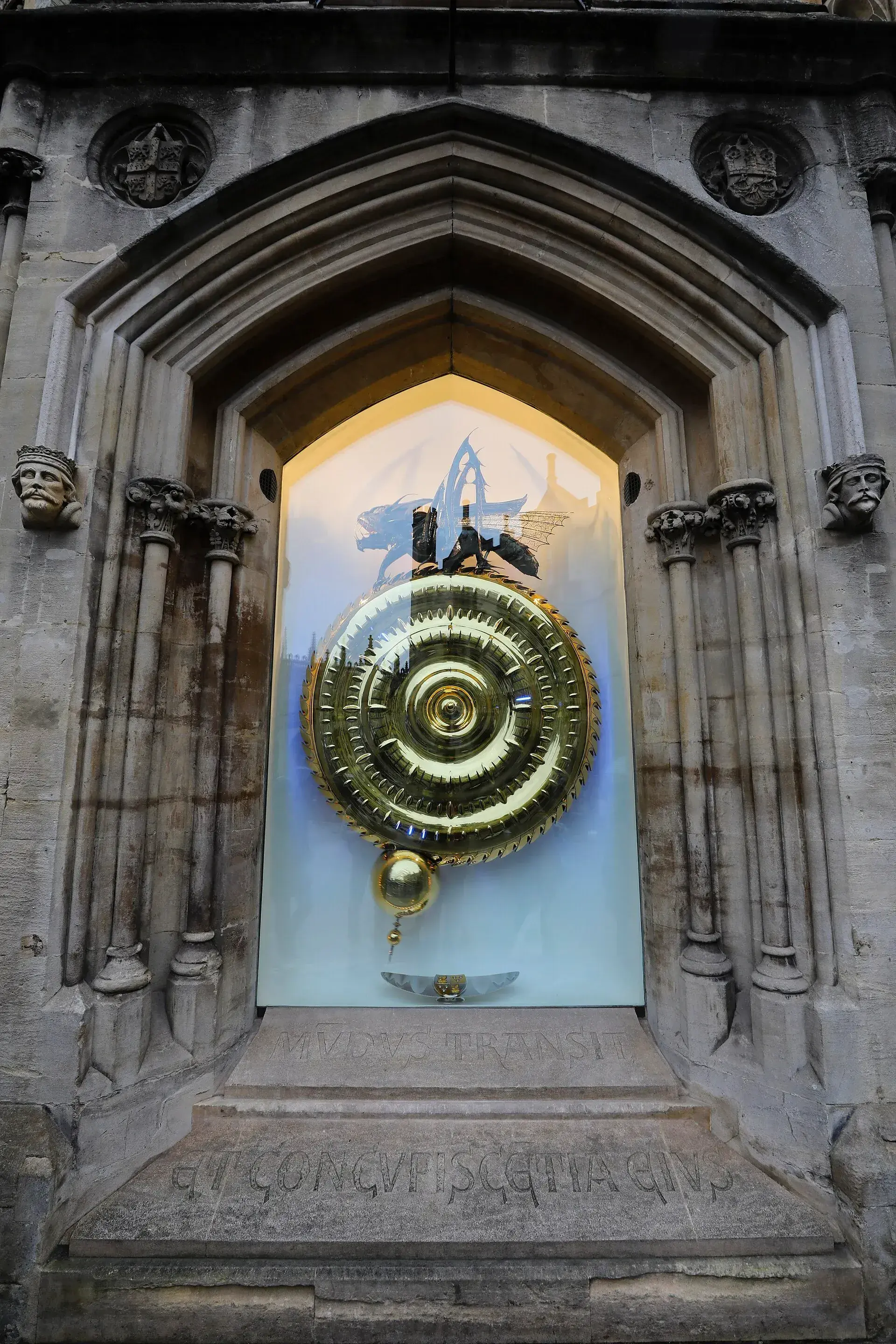
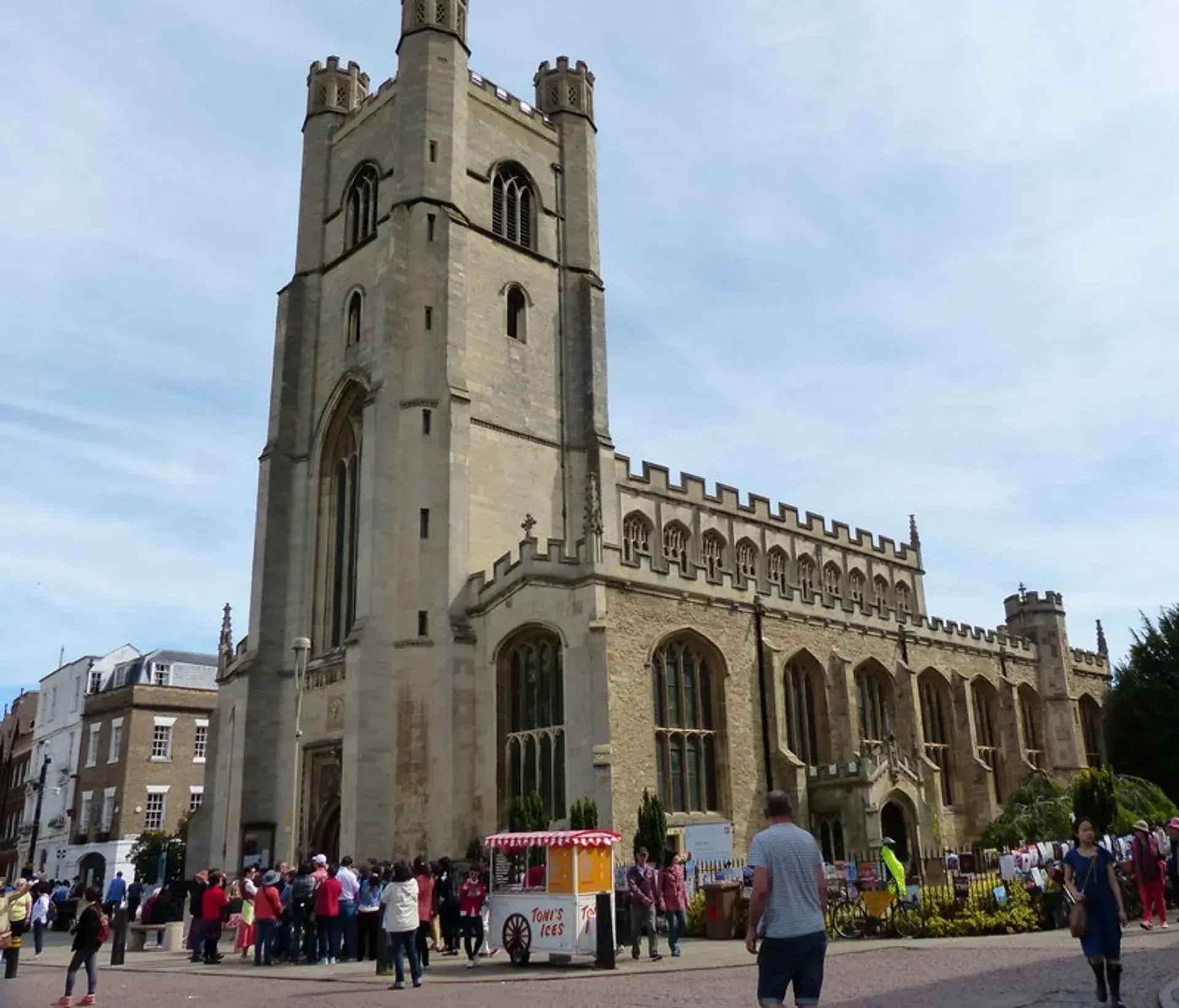
The Corpus Clock, colloquially known as the Chronophage ("time-eater"), is an outdoor kinetic sculptural timepiece set into the exterior wall of the Taylor Library at Corpus Christi College. Located at the corner of Trumpington Street and Bene't Street in Cambridge, the installation sits directly across from historic university buildings and just paces from the Saxon tower of St Bene't's Church.
The project was conceived, designed, and funded by inventor and horologist Dr. John C. Taylor OBE. Supported by the fortune he amassed from inventing the bimetallic switch used to switch off modern electric kettles, Dr. Taylor invested roughly £1 million into the piece. Fabrication lasted five years, involving over 200 specialists, including sculptor Matthew Sanderson and Cambridge engineering firm Huxley Bertram.
The Grasshopper Escapement and Unique Timekeeping
Perched atop the clock face is the Chronophage, a predatory, insect-like creature sculpted by Matthew Sanderson. The beast forms an homage to 18th-century horologist John Harrison, the inventor of the grasshopper escapement. Taylor brought this typically internal mechanism outside the housing, turning it into the world's largest operational grasshopper escapement. As the escape wheel turns, the Chronophage steps forward, snaps its jaws, and blinks its articulated eyelids, visually devouring every second.
Unlike conventional clocks, the Corpus Clock displays time without hands or numerals. Its 1.5-meter-diameter face is a wavy disc coated in 24-carat gold, featuring three concentric rings of laser-cut slits that pulse with blue LEDs to show hours, minutes, and seconds. The rippled shape of the dial was produced using explosive forming, a process in which underwater explosives at a military research facility in the Netherlands blasted a sheet of stainless steel into a mould.
The mechanism is programmed to be mathematically exact only once every five minutes. In the intervals between, the clock deliberately slows down, hesitates, or speeds ahead to represent the subjective nature of human time perception.
Symbolism and Sensory Details
Beyond its visual presence, the Corpus Clock generates an irregular mechanical clicking and grinding sound. The chime of each hour is marked by the sound of a chain dropping into a miniature wooden coffin concealed within the clock's inner structure. Beneath the dial, a Latin inscription from 1 John 2:17 in the Vulgate reads mundus transit et concupiscentia eius, translating to "the world passeth away, and the lust thereof."
Unveiling, Conservation, and Display
The clock was officially activated and unveiled on September 19, 2008, by physicist Professor Stephen Hawking, connecting the installation to Cambridge's scientific tradition of examining cosmological time and physics.
In March 2023, the clock was temporarily removed for conservation and repairs after an individual struck and cracked its protective glass casing with a hammer. After restoration work, the clock was reinstalled and returned to operation in June 2023. It remains on continuous 24/7 public display at street level.
FAQ
Who designed and unveiled the Corpus Clock?
The clock was conceived, designed, and financed by inventor Dr. John C. Taylor OBE, with engineering by Huxley Bertram and sculpture work by Matthew Sanderson. It was officially unveiled to the public on September 19, 2008, by physicist Professor Stephen Hawking.
Why does the Corpus Clock keep irregular time?
The timepiece is designed to be mathematically accurate only once every five minutes. Between those intervals, the mechanism intentionally slows down, hesitates, or accelerates to reflect how humans subjectively experience the passage of time.
How was the golden face of the clock made?
The 1.5-meter wavy stainless steel face was shaped via explosive forming, using underwater detonations at a military research facility in the Netherlands to force the metal against a mould before it was plated in 24-carat gold.