King's College Chapel: Cambridge's Gothic Wonder
An Architectural Anchor on King's Parade
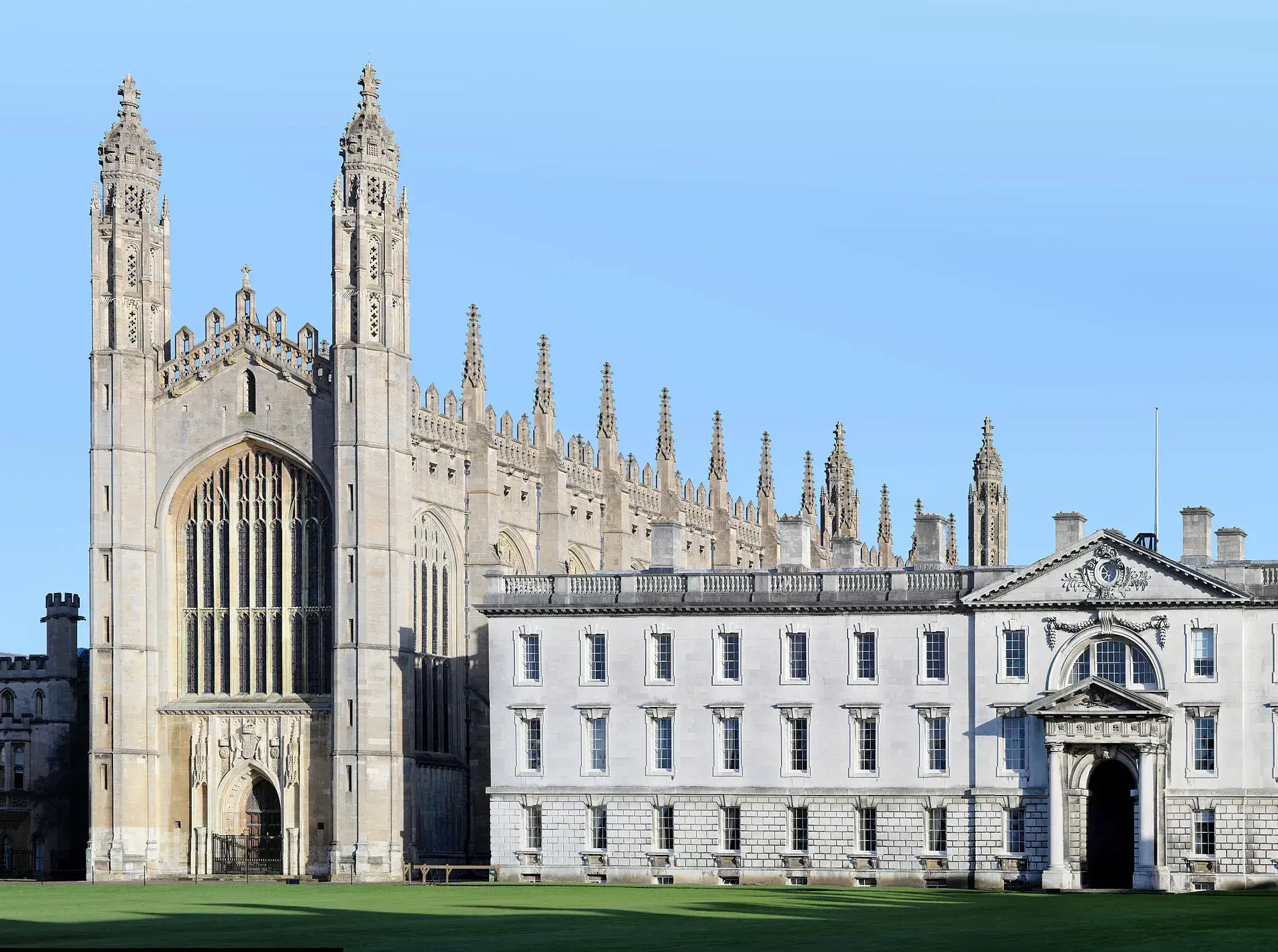
King's College Chapel stands as the focal landmark of King's Parade, defining the central university district of Cambridge. Viewed from across the lawns along the River Cam, its soaring west facade serves as the visual centerpiece of The Backs and remains an internationally recognized symbol of the town.
While entering the interior requires a paid admission ticket and can be restricted during college exams and university events, the monument works exceptionally well as an exterior viewing stop directly from the street. Observers on King's Parade can examine the expansive Perpendicular Gothic masonry without needing to purchase an admission ticket.
Royal Origins and the Wars of the Roses
King Henry VI initiated the project by laying the chapel's foundation stone on July 25, 1446. His grand vision for the collegiate church was soon interrupted by political upheaval and the outbreak of the Wars of the Roses. Following Henry VI's deposition and subsequent death, building operations stalled for decades.
Momentum returned only after King Henry VII visited Cambridge in 1506 and bequeathed substantial funds to finish the stalled structure. The main shell was ultimately completed in 1515 during the reign of King Henry VIII, who financed the interior woodwork, extensive glazing, and stone vaulting, ensuring the finished chapel showcased Tudor royal prestige.
The World's Largest Stone Fan Vault
Architecturally, the building is celebrated as one of the finest surviving examples of late Perpendicular Gothic design. Measuring approximately 289 feet (88 metres) in length and 80 feet (24 metres) in internal height, it forms a continuous interior volume unobstructed by dividing nave arcades or side aisles.
Between 1512 and 1515, master mason John Wastell constructed the stone ceiling, which remains the largest fan-vaulted ceiling in the world. Delicate stone ribs branch outward across a 12-metre span, creating a visually weightless lattice above the expansive floor. Beneath the vaulting sit 26 large stained-glass windows, completed between 1515 and 1531 by English and Flemish craftsmen, including Barnard Flower and Galyon Hone. The massive open stone space creates lengthy acoustic reverberations that amplify choral and organ music throughout the hall.
Tudor Emblems and Wartime Survival
Tudor heraldry lines the interior stone and timber fittings. Carvings inside the ante-chapel display the Beaufort portcullis, the Tudor rose, the Welsh dragon, and the Richmond greyhound. The wooden rood screen, crafted between 1532 and 1536 in an early Italian Renaissance style, features the intertwined initials "H" and "A" tied in lovers' knots for Henry VIII and Anne Boleyn. Unusually, these cyphers escaped removal after Boleyn's execution.
During the English Civil War, Parliamentarian troops were quartered inside the chapel and used the interior for drills. Despite this occupation, the original medieval fabric and stained glass avoided major destruction, though 17th-century graffiti left by billeted soldiers remains etched into the stonework near the altar. Centuries later, during World War II, the college dismantled and evacuated most of the 16th-century stained glass to secure storage locations to prevent bomb damage.
Rubens and Contemporary College Life
In 1968, the chapel installed Peter Paul Rubens's 1634 masterpiece The Adoration of the Magi above the High Altar. The installation caused national controversy because it required permanently lowering the sanctuary floor, altering the historic stepped layout of the choir and exposing original Tudor brick arches beneath the flagstones.
Today, King's College Chapel remains an active house of worship. It serves as the primary home of the Choir of King's College and functions as the broadcast setting for the annual Christmas Eve service A Festival of Nine Lessons and Carols. It also accommodates academic ceremonies and events such as the May Week Concert. While general sightseeing requires an admission charge, the public can attend daily worship services—including Choral Evensong sung six days a week during term—free of charge.
FAQ
Can King's College Chapel be experienced without paying for admission?
Yes. The chapel functions well as an exterior viewing stop from the street along King's Parade or from the river lawns across The Backs. Furthermore, daily religious services, such as Choral Evensong during term time, are open to the public free of charge.
Who designed the fan-vaulted ceiling inside the chapel?
Master mason John Wastell designed and built the chapel's stone fan-vaulted ceiling between 1512 and 1515. It is the largest stone fan vault in the world.
Why was the installation of Rubens's painting controversial?
Installing Peter Paul Rubens's 1634 painting *The Adoration of the Magi* above the High Altar in 1968 required permanently lowering the sanctuary floor. This altered the historic stepped choir layout and uncovered previously hidden Tudor brick arches beneath the stones.