The Eagle, Cambridge: DNA Discovery & RAF Bar History
The Scientific Breakthrough of 1953
On 28 February 1953, Francis Crick entered The Eagle during the midday rush and announced to patrons that he and James Watson had discovered the secret of life. Earlier that morning, the two scientists had formulated their double-helix model of DNA at the nearby Old Cavendish Laboratory on Free School Lane. Because the laboratory lacked its own dining facilities, The Eagle served as the researchers' regular lunchtime gathering place. Watson and Crick continued to use the pub as an informal workspace, returning later that year to draft the canonical list of the 20 amino acids.
Outside the building, a blue plaque commemorates this historic breakthrough. The original 2003 plaque recognized only Watson and Crick, prompting years of public protest during which visitors frequently wrote Rosalind Franklin’s name onto the wall in chalk. In 2023, the plaque was replaced with an updated memorial formally acknowledging Franklin and Maurice Wilkins for their vital X-ray diffraction research. The original 2003 plaque was subsequently relocated to Cambridge's Whipple Museum of the History of Science.
The RAF Bar and Preserved Ceiling Graffiti
During the Second World War, The Eagle became a central social hub for British, Commonwealth, and American aircrews stationed across East Anglia. Aviators gathered in the rear drinking room, which became known as the RAF Bar. Stationed crews used candle flames, petrol lighters, and lipstick to burn their names, initials, and squadron insignias directly into the plaster overhead.
Among the hundreds of service marks and squadron numbers is a lipstick sketch of a woman, which local pub lore identifies as the sister of the wartime landlady. Over the decades, heavy cigarette smoke and varnish darkened the ceiling and threatened to obliterate the historical inscriptions. In the 1990s, former RAF technician James Chainey and professional conservators cleaned away decades of grime and stabilized the flaking soot, ensuring the preserved signatures remained visible to the public.
Origins as a Historic Coaching Inn
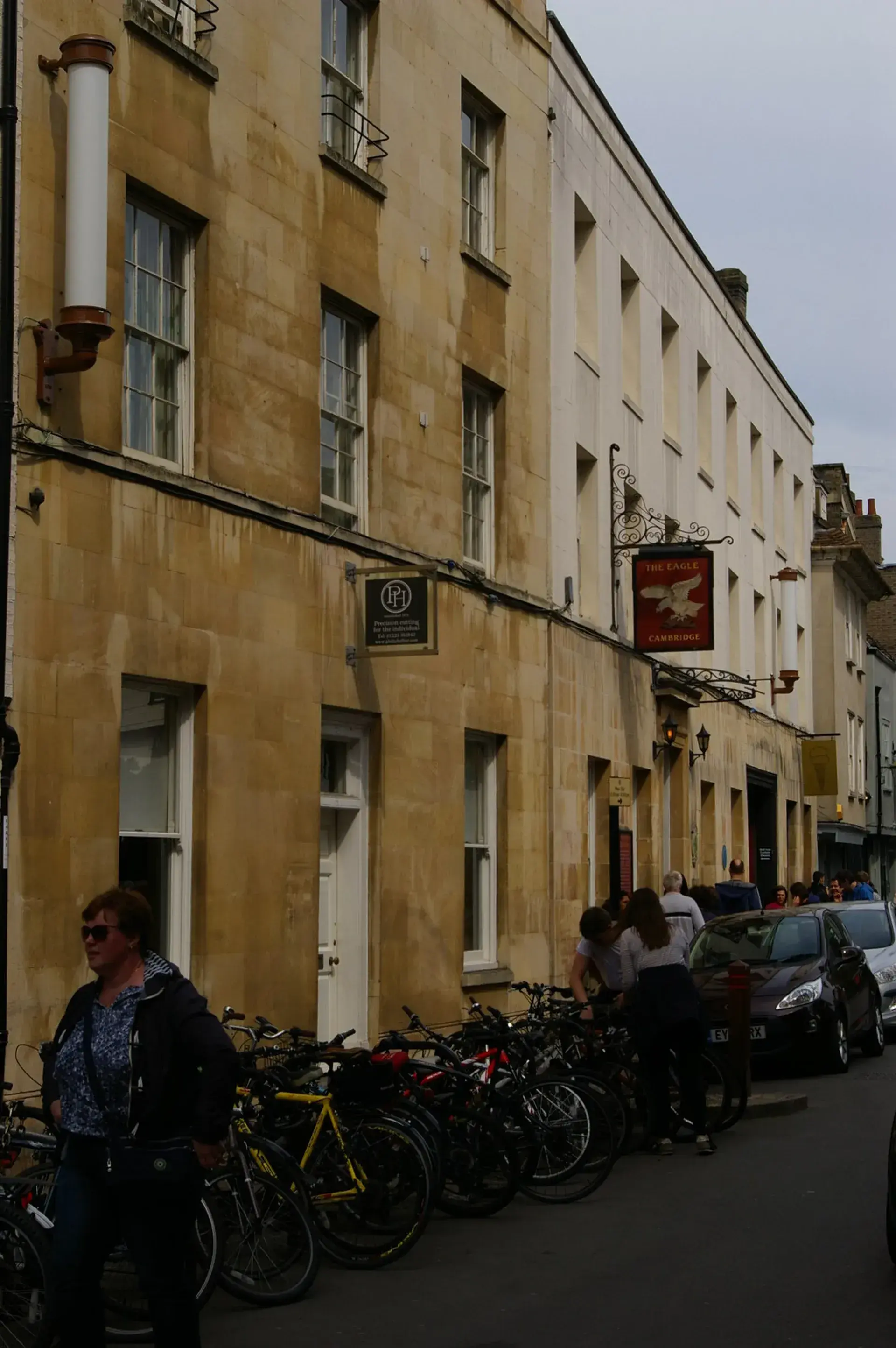
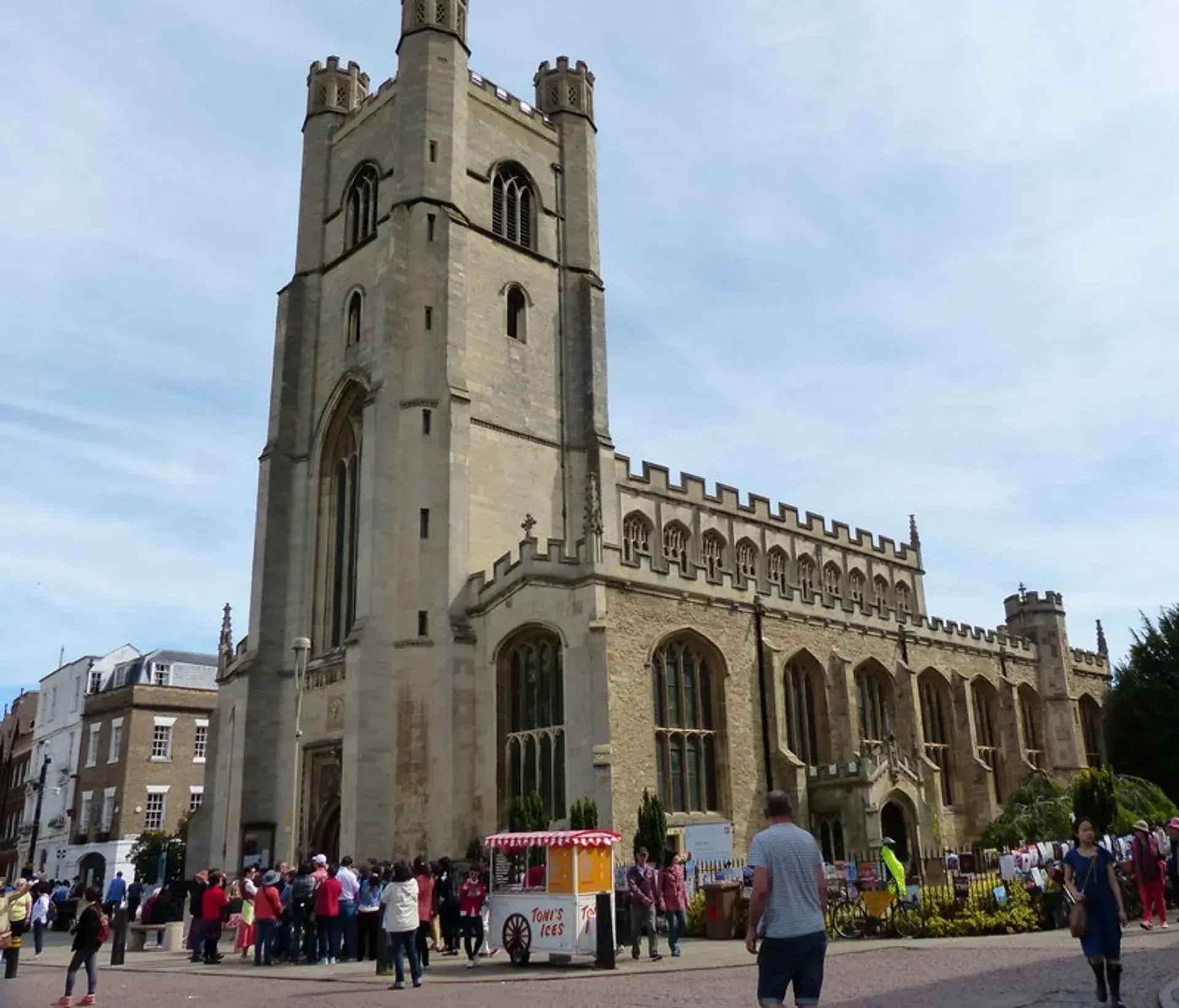
Situated on Bene't Street opposite the Saxon church tower of St Bene't's, The Eagle is widely cited as the second-oldest pub in Cambridge. Corpus Christi College records document an inn on the site named the Eagle and Child as early as 1566. The establishment formally began operating as a commercial coaching inn in 1667.
Constructed around a central carriageway and cobbled courtyard, the inn provided post horses and accommodation for travelers connecting Cambridge to London, Oxford, and East Anglia throughout the 17th, 18th, and early 19th centuries. Following the introduction of the railway to Cambridge in the mid-19th century, long-distance coaching declined, and the premises shifted into a community and academic tavern.
The Tradition of the Open Window
One of the pub's most enduring oddities concerns a second-story window overlooking the inner courtyard, which is kept continuously propped open. According to local folklore, three children perished centuries ago in a nursery fire because the window could not be opened from within. Local superstition maintains that closing the sash causes bad luck or an uncomfortable feeling of suffocation inside the building.
The Eagle Today
Today, The Eagle is a Grade II listed property owned by Corpus Christi College and managed by Greene King. It functions as a full-service commercial pub, serving traditional pub food, cask ales, and a commemorative house ale dubbed Eagle's DNA. The building retains a labyrinthine layout featuring low timber beams, aged wood paneling, front rooms, middle dining lounges, an outdoor courtyard, and the historic RAF Bar.
FAQ
Why is The Eagle famous in the history of science?
On 28 February 1953, scientist Francis Crick announced to lunch patrons at The Eagle that he and James Watson had discovered the double-helix structure of DNA, famously referring to it as the secret of life.
What is unique about the ceiling in The Eagle's RAF Bar?
During World War II, Allied airmen used candle soot, petrol lighters, and lipstick to burn and sketch their names, initials, and squadron numbers into the plaster ceiling of the rear bar.
Why was The Eagle's blue plaque replaced in 2023?
The original 2003 plaque only recognized Francis Crick and James Watson. In 2023, it was replaced to formally credit Rosalind Franklin and Maurice Wilkins for their essential contributions to X-ray diffraction research.
Why is one of the pub's upper windows left open?
A second-story window facing the courtyard remains open due to local folklore concerning three children who died in a historical fire, accompanied by a long-standing superstition that closing the window invites bad luck.