The Fitzwilliam Museum: Cambridge's Art and History
Origins and the Fitzwilliam Bequest
The Fitzwilliam Museum serves as the principal museum of art and antiquities for the University of Cambridge. Its creation began in 1816 with the death of Richard Fitzwilliam, 7th Viscount Fitzwilliam of Merrion. His bequest granted the university an extensive collection of artwork, rare manuscripts, and printed books, accompanied by £100,000 to finance a permanent home for the works.
Because the university initially lacked a purpose-built repository, the bequest was temporarily accommodated at the Perse Grammar School on Free School Lane. In 1842, the items were relocated to the Old Schools while plans for a dedicated museum complex moved forward.
Neoclassical Architecture on Trumpington Street
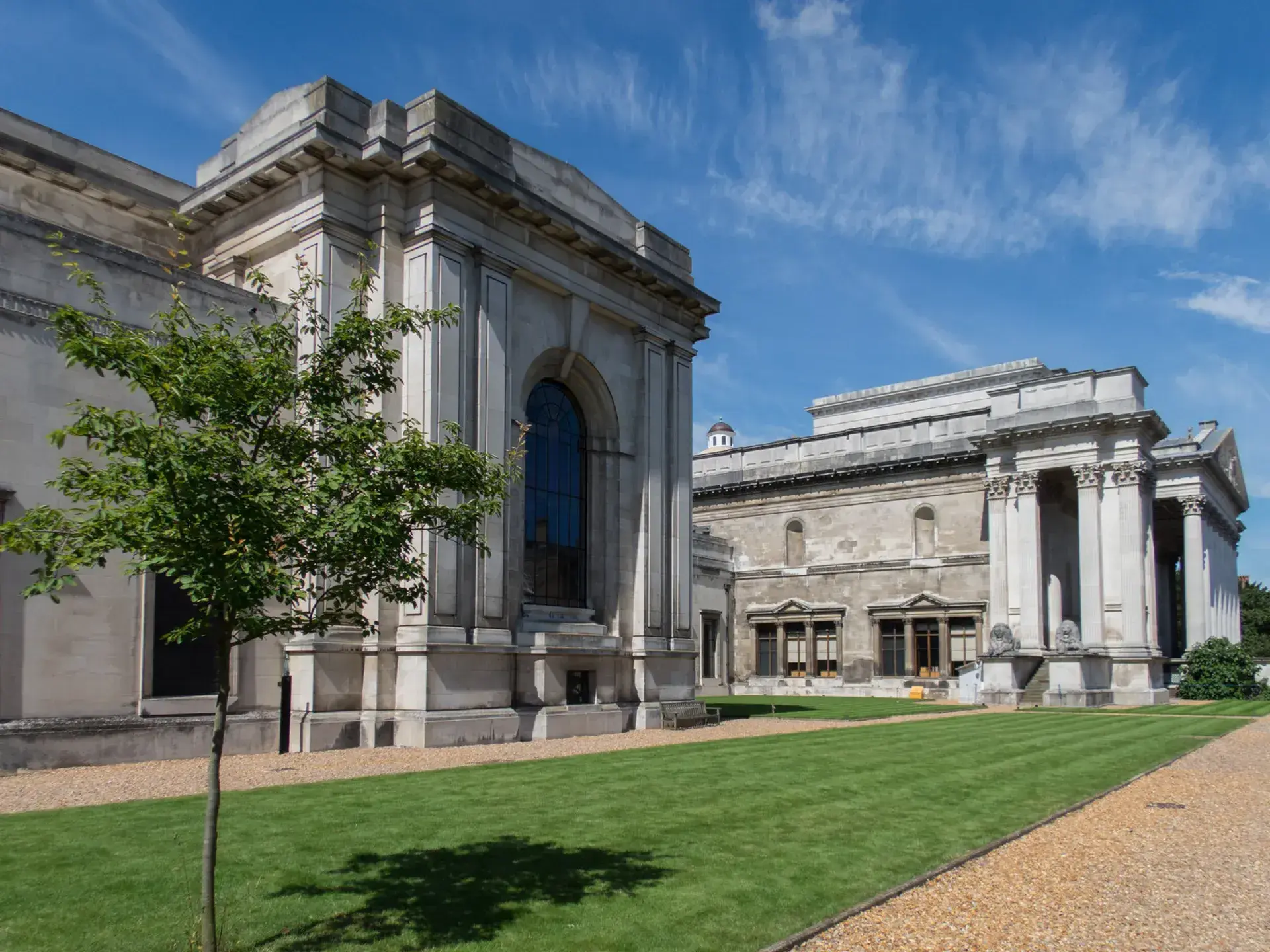
In 1835, architect George Basevi won an open syndicate competition against 26 other entrants to design the monumental Founder's Building on Trumpington Street. Foundation work commenced in 1837, executing a grand Neoclassical design fronted by an eight-column Portland stone Corinthian portico, pediment carvings, and four large stone lions sculpted by William Grinsell Nicholl.
Tragedy struck the project in 1845 when Basevi died in an accidental fall. Architect Charles Robert Cockerell assumed control of construction, allowing the museum to open to the public in 1848. Work on the interior continued over several decades, culminating in 1875 with the completion of a lavish entrance hall designed by Edward Middleton Barry. The building underwent later enlargement between 1924 and 1931, when the Marlay Galleries extension was added through funding provided by art collector Charles Brinsley Marlay and the Courtauld family.
Collections and Notable Curiosities
Today, the Fitzwilliam Museum houses more than 500,000 objects spanning diverse cultures and eras. Its holdings include ancient Egyptian, Greek, and Roman antiquities, medieval illuminated manuscripts, coins, ceramics, and European master paintings.
The galleries have also been the site of unexpected history. In 2006, an accidental mishap occurred when a visitor caught a foot in an untied shoelace on an interior staircase, falling into three 300-year-old Qing dynasty porcelain vases. The impact shattered the vases into hundreds of shards. Museum conservators successfully reassembled the porcelain fragments, and the restored vessels were subsequently returned to public display protected behind glass.
Local Cambridge folklore also surrounds the building's exterior. Legend claims that at the stroke of midnight, the four carved stone lions flanking the entrance steps step down from their plinths to drink from the gutters along Trumpington Street or wander toward Hobson's Conduit before returning through the museum's walls.
Visitor Access and Amenities
Located on Trumpington Street, the museum marks the transition between central Cambridge's medieval colleges—including Peterhouse and Pembroke College—and the broader university museum campus. While several nearby college chapels and historic sites require paid admission, entry to the Fitzwilliam Museum's permanent galleries is completely free to the public.
The museum operates as the flagship venue of the University of Cambridge Museums consortium, offering research facilities and changing temporary exhibitions alongside its core collection. It is open Tuesday through Saturday from 10:00 to 17:00, and Sundays and bank holidays from 12:00 to 17:00, remaining closed on Mondays. Visitor amenities include accessible gallery routes, the Courtyard Kitchen café, and a museum gift shop.
FAQ
Is admission to the Fitzwilliam Museum free?
Yes, admission to the permanent galleries of the Fitzwilliam Museum is free to the public.
What are the opening hours for the Fitzwilliam Museum?
The museum is open Tuesday through Saturday from 10:00 to 17:00, and Sundays and bank holidays from 12:00 to 17:00. It is closed on Mondays.
Who designed the Fitzwilliam Museum building?
The Neoclassical Founder's Building was designed by George Basevi, with construction continued by Charles Robert Cockerell after Basevi's death. The entrance hall was completed in 1875 by Edward Middleton Barry.
What happened to the museum's Qing dynasty vases in 2006?
A visitor tripped over an untied shoelace on a staircase and collided with three 300-year-old porcelain vases, shattering them. Conservators reconstructed the vases, which were later returned to display behind protective glass.