Pineapple Fountain: Charleston's Symbol of Hospitality
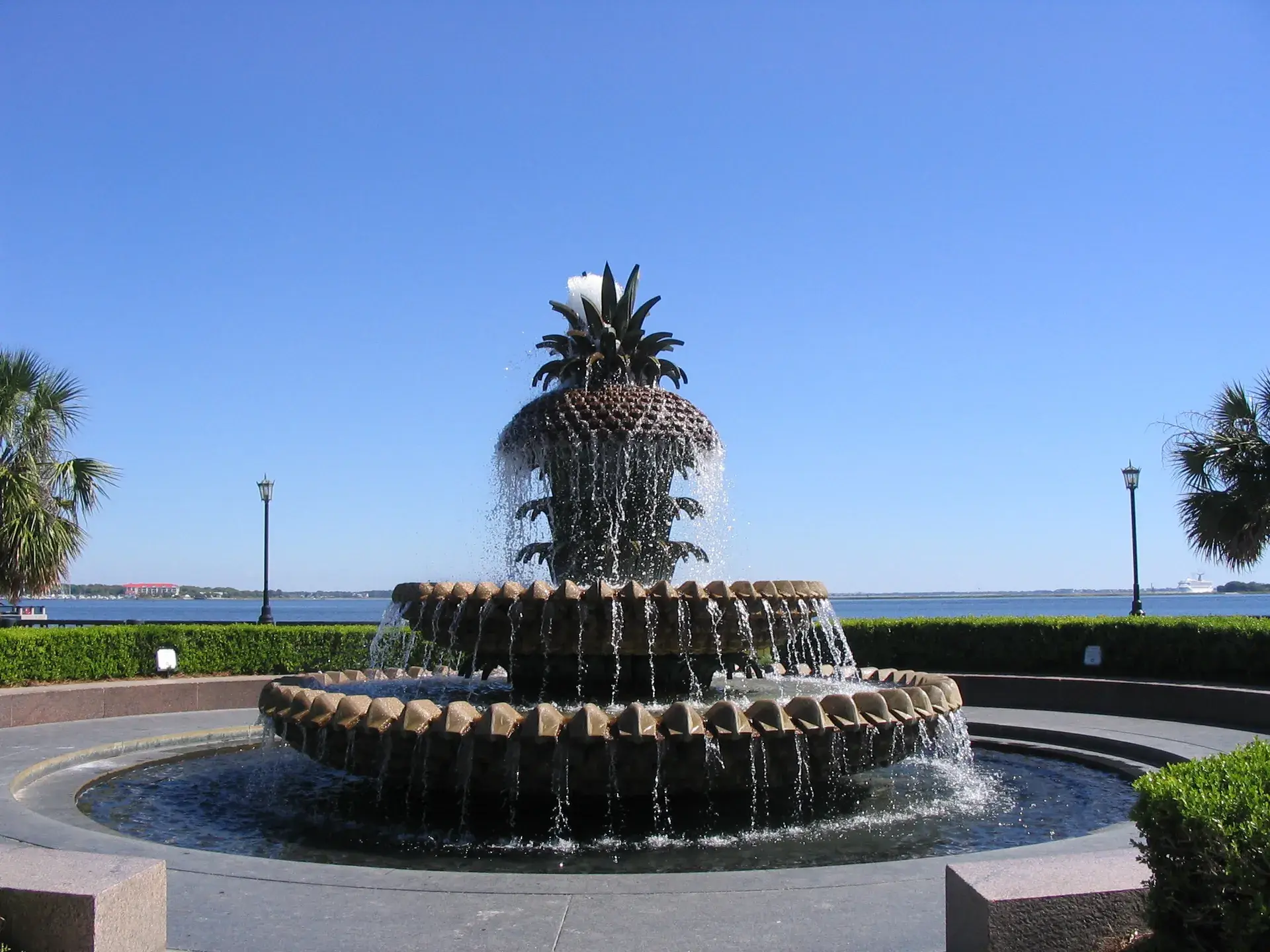
The Pineapple Fountain is a prominent and beloved landmark located in Charleston, South Carolina. As a central feature of the scenic Joe Riley Waterfront Park, this large, tiered fountain serves as an iconic symbol of the city's welcoming spirit and rich history.
A Symbol of Hospitality
The pineapple motif has deep roots in Charleston's colonial past. During that era, the fruit was an exotic and expensive import from the Caribbean. Sea captains, upon returning from long voyages, would place a pineapple outside their homes. This gesture signaled their safe return and served as an open invitation for friends and neighbors to visit and share stories. The pineapple thus became a widespread symbol of hospitality and wealth; historians estimate a single pineapple in the 18th century could be worth the equivalent of $8,000 today. This status as a luxury good was implicitly tied to the transatlantic trade of the time.
From Industrial Decay to Urban Oasis
The site of the Pineapple Fountain and the surrounding park underwent a dramatic transformation. For decades, this stretch of the Cooper River waterfront was a neglected industrial area with abandoned warehouses, a result of a major fire at a steamship terminal in 1955. The revitalization project was a key initiative for former Mayor Joseph P. Riley Jr., who served from 1975 to 2016. Construction on the park began in 1988, fulfilling his vision to reconnect the city with its harbor. In April 2018, the park was officially renamed Joe Riley Waterfront Park in his honor.
Design and Resilience
Designed by landscape architect Stuart O. Dawson of Sasaki Associates, the fountain is crafted from bronze and stone, blending classical design with Charleston's unique character. Its history is intrinsically linked to the city's resilience. In September 1989, just as the park was nearing completion, Hurricane Hugo struck, causing approximately $1 million in damage to the site. The fountain was unveiled in 1990, and its opening in the immediate aftermath of the storm imbued it with an additional layer of symbolism, representing Charleston's determination to rebuild and its enduring hope.
The Fountain Today
Currently, the Pineapple Fountain is a popular gathering place for both locals and visitors. It is a favored backdrop for photography, from casual selfies to engagement and wedding photos. On warm days, children and adults are permitted to wade and splash in its shallow pool for a refreshing break. The surrounding park enhances the experience with scenic walking paths, porch swings, and beautiful views of the Cooper River and Ravenel Bridge. The fountain is also used for community events and is sometimes illuminated in specific colors, such as pink for Breast Cancer Awareness Month. Small weddings are permitted at the fountain with a required permit and fee.
FAQ
Why is a pineapple a symbol of Charleston?
In colonial Charleston, pineapples were a rare, imported luxury. Sea captains would place one outside their home to signal their safe return and invite neighbors to visit, making it a powerful symbol of hospitality.
Can you get in the Pineapple Fountain?
Yes, wading and splashing in the shallow pool of the Pineapple Fountain is a permitted and popular activity, especially on warm days.
When was the Pineapple Fountain built?
The Pineapple Fountain was unveiled in 1990. Its opening came shortly after Hurricane Hugo devastated the area in 1989, making it a symbol of the city's recovery and resilience.
Where is the Pineapple Fountain located?
The Pineapple Fountain is a central feature of Joe Riley Waterfront Park, situated along the Cooper River waterfront in Charleston, South Carolina.