Rainbow Row: Charleston's Historic Pastel Houses
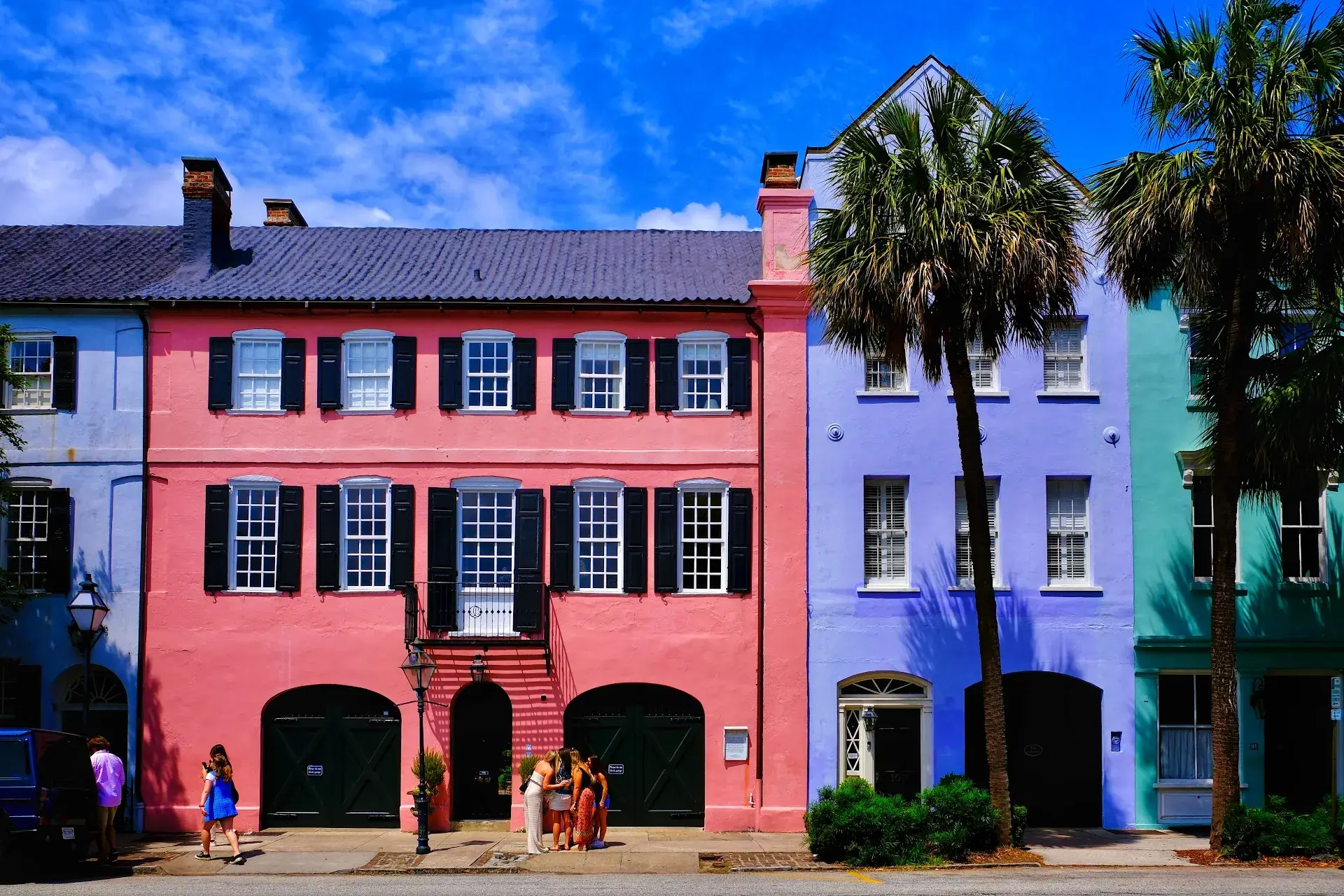
Marvel at Rainbow Row, a postcard-perfect line of thirteen pastel-painted Georgian rowhouses on East Bay Street in Charleston, South Carolina. Recognized as the longest cluster of Georgian row houses in the United States, each facade tells a vibrant story of the city's enduring charm and commitment to preservation.
From Commerce to Disrepair
The origins of Rainbow Row trace back to the 1700s, with the current structures primarily built between 1720 and 1790. Initially, these buildings served as commercial properties for merchants, with shops on the ground floor and living quarters above, situated along the Cooper River waterfront. A devastating fire in 1778 destroyed many of the original buildings, necessitating widespread reconstruction.
Following the Civil War, the area experienced a severe economic decline. The once-bustling commercial hub devolved into near-slum conditions, with the historic houses falling into neglect and abandonment.
A 20th-Century Revitalization
The area's revitalization began in the 1920s, spearheaded by preservationist Susan Pringle Frost. The founder of what is now the Preservation Society of Charleston, Frost purchased six of the buildings to save them from demolition. The most transformative moment came in 1931 when Dorothy Porcher Legge and her husband, Judge Lionel Legge, purchased the houses at 99-101 East Bay Street.
Inspired by Colonial Caribbean architecture, Dorothy Legge painted her section a vibrant "peachy pink." This started a trend, and by 1945, other homeowners had restored and painted their properties in similar pastel hues. The name "Rainbow Row" became common by the 1950s, though some credit a 1980s National Geographic photo spread with popularizing the moniker.
The Truth Behind the Colors
The iconic pastel colors that define Rainbow Row today were not part of the original 18th-century design. They were a deliberate aesthetic choice made during the 20th-century restoration. This fact debunks popular myths that the colors were used to help drunken sailors find their way home or to identify the goods sold by merchants in the shops below.
Rainbow Row Today
Today, the thirteen houses of Rainbow Row are privately owned residences. While the interiors are not open to the public for tours, the street remains one of Charleston's most photographed and beloved landmarks. Local city ordinances are in place to ensure the preservation of the houses' distinctive and historic pastel color schemes. The area also holds a unique place in cultural history, as the rear facades and gardens of houses 93-101 East Bay Street served as the model for the original 1935 stage setting of the opera 'Porgy and Bess.'
FAQ
Why is Rainbow Row painted in pastel colors?
The pastel colors were a 20th-century addition initiated in 1931 by homeowner Dorothy Porcher Legge, who painted her houses pink, inspired by Colonial Caribbean styles. Other owners followed suit, and the colors were also found to help keep the homes cooler. The colors were not for guiding sailors or identifying shops.
Can you go inside the houses on Rainbow Row?
No, the thirteen houses on Rainbow Row are privately owned residences and are not open to the public for tours. Visitors can admire and photograph the exteriors from the street.
When was Rainbow Row built?
The current buildings on Rainbow Row were primarily constructed between 1720 and 1790. They represent the longest cluster of Georgian row houses in the United States.
Discover Charleston like never before
Dive into Charleston hidden stories and secret spots with Ciceru interactive tours.
Explore tour
Audioguide
Quizzes
Maps
Solo
Couples
Groups & families

© Photo by Peter Frost via Google Maps · Google Places