8 Underrated European Cities for a 2026 City Break
Last updated: September 2026
Introduction: what “underrated” means here
“Underrated” is a useful search term, but it is not evidence. A city is not automatically a good recommendation because a travel list calls it an alternative, and “less obvious” does not mean empty, free or universally cheap.
For this guide, a city earns its place when it has a specific cultural reason to visit, enough depth for a two- or three-night break, a centre that works on foot or with practical local transport, and current operational information that a visitor can check. The final selection also avoids building a second list of cities that already dominate alternative-city coverage.
The result is eight destinations with different strengths. They are not ranked. Choose by what you want the trip to do.

Quick answer by traveller need
- For food and porticoes: Bologna.
- For museums, cafés and royal history: Turin.
- For a concentrated medieval centre and easy airport access: Tallinn.
- For art, a historic waterfront and rail access: Ghent.
- For Roman, Islamic, Christian and Mudéjar layers: Zaragoza.
- For old-town architecture paired with contemporary design: Graz.
- For old-city history plus twentieth-century architecture: Wrocław.
- For modernism and a Moravian city centre: Brno.
None is a universal bargain. Treat the value signals below as examples, not a ranking.
1. Bologna: the city where the street itself is the subject
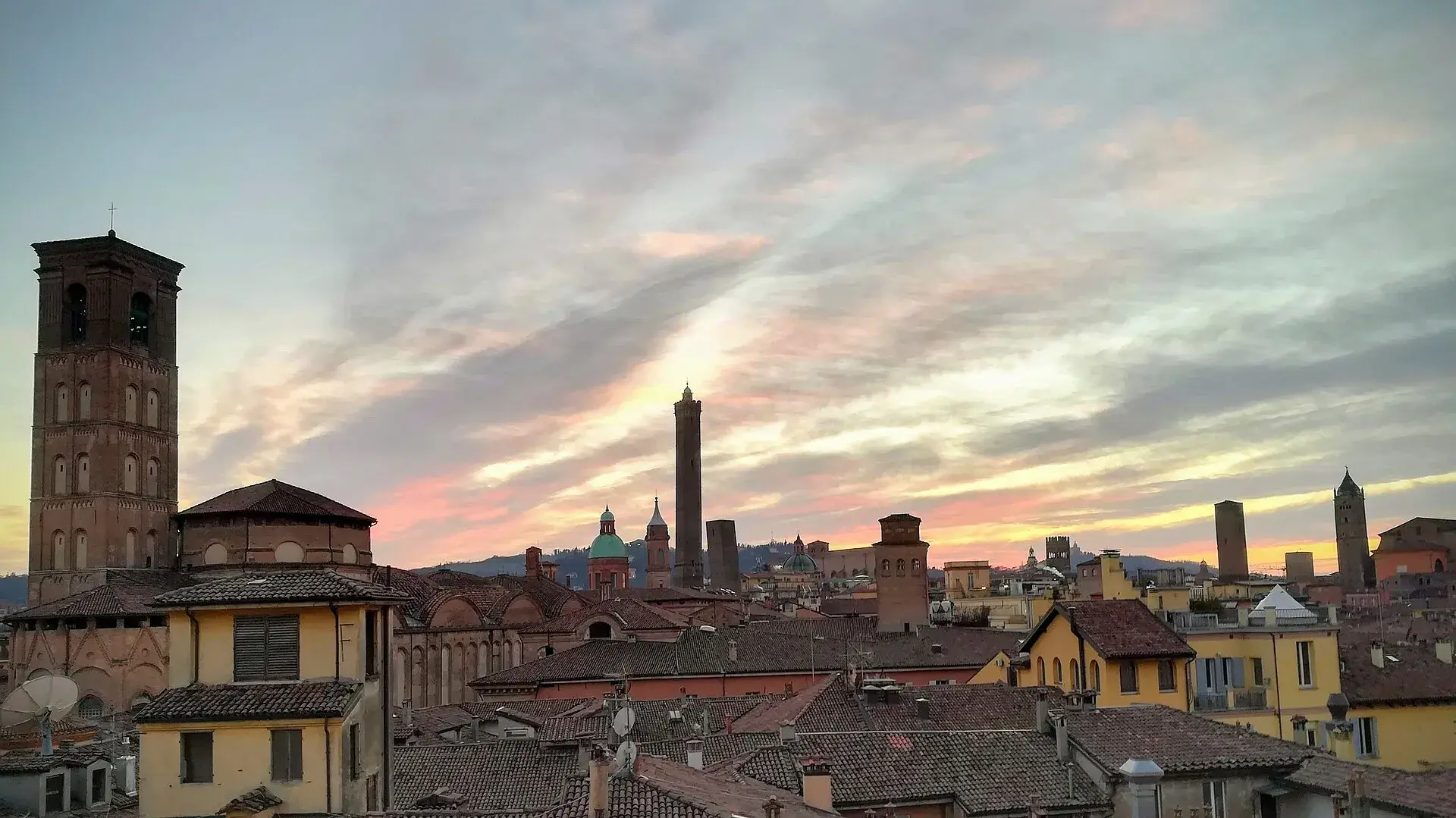
Bologna earns its place through its porticoes. Bologna Welcome records more than 62 kilometres, with 12 components inscribed by UNESCO in 2021. This is a city-scale system that changes how a visitor experiences distance, rain and everyday urban life.
Two nights covers Piazza Maggiore, Santo Stefano, the university quarter, the porticoes and food anchored by tortellini, tagliatelle, ragù and mortadella.
Marconi Express lists €12.80 one way and €23.30 return, with 75 minutes of TPER urban transport included after validation. Check early and late service.
Two nights works for the centre and food. Add a third if San Luca, museums and slower meals are priorities. Bologna Welcome currently marks the Asinelli Tower closed for maintenance, so do not make the trip depend on climbing it.
Best for: food-first travellers, architecture and urban history. Skip it if the Asinelli climb is the whole reason for your visit and the closure is still in place.
See Ciceru's Bologna UNESCO porticoes walking experience, and check its current product details before purchase.
2. Turin: museums, arcades and a café culture with a history
Turin combines Savoy urbanism, the Museo Egizio and a place-specific café and chocolate tradition. Porta Nuova is close to the centre, and the arcades make a long day more manageable in changing weather.
The Museo Egizio is the clearest first-visit anchor: €18, online timed entry and about two hours. The Cinema Museum and Mole, Musei Reali, Palazzo Madama and the Risorgimento Museum serve different interests, but several in one break turn the city into a timetable.
Turin's food narrative is specific: bicerin combines coffee, chocolate and cream; Turismo Torino dates Caffè Al Bicerin to 1763 and the giandujotto to 1865. Vermouth connects the evening to Carpano and 1786, while agnolotti del plin and vitello tonnato anchor a Piedmontese meal.
The official airport information gives the railway journey to Porta Susa as about 30 minutes with a €3.70 fare. In the centre, a digital GTT ticket is €1.90 for 100 minutes, and the digital daily ticket is €3.70. The main one-day plan can be walked.
Two nights works for a first look; three makes the museum and food choices less compressed. The Museo Egizio requires a timed online ticket and does not accept casual late arrival as a safe assumption.
Best for: museums, architecture, political history, cafés and chocolate. Skip it if you want a completely spontaneous museum weekend or only exterior landmarks.
Ciceru's Turin self-guided walking experience is a separate optional product. Verify its current details on the live page.
3. Tallinn: a medieval trading city that remains legible
Tallinn is a capital, but it offers a coherent historic centre rather than a diffuse capital-city checklist. UNESCO describes it as an exceptionally complete and well-preserved medieval northern European trading city, shaped by Hanseatic development from the thirteenth to the sixteenth century.
The lower Old Town, Town Hall Square, Toompea, Kiek in de Kök and the surviving fortifications fit a first visit without long transfers. The contrast between the merchant city and hilltop power centre makes the history easy to read.
Visit Tallinn places the airport about 4 kilometres from the centre. A one-hour ticket is €2 and a day ticket €5.50. About 1.85 kilometres of wall survive, but access is seasonal and the current admission is €5.
Two nights is viable for the medieval core; choose three for museums beyond it. Skip Tallinn if you want a large, dispersed metropolis rather than a trip anchored in one historic centre.
Best for: a first Baltic city break, medieval architecture and compact planning. Skip it if you want a sprawling city rather than a concentrated historic centre.
Ciceru's Tallinn essential-landmarks experience is an optional old-town introduction. Confirm live details when planning.
4. Ghent: medieval power, a working waterfront and a changing altarpiece
Ghent combines a major work of European painting with a compact medieval centre and historic waterfront. The Ghent Altarpiece is the clearest reason to go, and its active restoration programme affects what visitors see in 2026.
The short-break mix includes St Bavo's Cathedral, the altarpiece, the Belfry, Graslei and Korenlei, Gravensteen and Patershol. Altarpiece tickets can sell out at weekends and holidays. Restoration work at the Museum of Fine Arts also changes what is displayed by day.
Ghent works well as a rail-based break: roughly 45 minutes from Brussels Airport to Ghent-Sint-Pieters, then a tram to the centre. CityCard Gent is currently €49 for 48 hours and €55 for 72 hours, including the scheme's listed attractions and transport. That is a value signal, not a general price ranking.
Plan two nights, or three if art is central. Drivers should check the low-emission-zone rules for foreign-plated vehicles. Recheck restoration dates before booking.
Best for: art, medieval urbanism, a historic waterfront and rail arrivals. Skip it if you want a car-first trip or dislike booking around a changing collection.
Ciceru's Ghent medieval art and power experience is a separate option. Check its current product details before purchase.
5. Zaragoza: four historical layers in one inland break
Zaragoza works when you want Roman, Islamic, Christian and Mudéjar layers in one city. The 2026 anniversary of UNESCO recognition for Aragonese Mudéjar gives it a current reason to visit, with La Seo, the Aljafería and San Pablo among the representative sites.
The short-break material includes the Aljafería, La Seo, Basilica del Pilar, the Ebro, Puente de Piedra and the Roman Caesaraugusta museums. Its strength is that different periods remain physically close enough to compare, not an unsupported crowd claim.
Zaragoza Delicias is the rail and long-distance coach hub. The airport bus is currently €1.80. A standard bus or tram trip is €1.70, while the Tarjeta Bus signal is €0.55.
Two nights covers the principal layers. Fiestas del Pilar runs from 10 to 18 October 2026, with the main flower offering on 12 October, so those dates are a festival trip. Zaragoza is not a substitute for a coastal break.
Best for: layered Spanish history, Mudéjar architecture and rail travellers. Skip it if beaches or a coastal atmosphere are the main objective.
The Zaragoza self-guided old-town experience is an optional starting point for the historic core. Check current details before purchase.
6. Graz: UNESCO history with a deliberate design contrast
Graz is not best understood as a smaller Vienna. Its case is the contrast between the UNESCO historic centre, Schlossberg and Styrian Armoury, and contemporary design at Kunsthaus and Murinsel. Graz has held UNESCO City of Design status since 2011.
The central Old Town Tram is free within its defined zone, while ordinary buses are excluded. Graz Card pricing is currently €32 for 24 hours, €42 for 48 hours and €47 for 72 hours. Rail from Vienna is roughly 2.5 hours.
Two nights is enough for the central argument; add a third for Eggenberg. Many Universalmuseum Joanneum institutions commonly close on Monday, but check each venue.
Best for: architecture, design and museum-light walking. Skip it if Monday is your only museum day or you want one historic period without modern contrasts.
Ciceru's Graz old town and Schlossberg experience is an optional structured introduction. Confirm live details.
7. Wrocław: old-city reconstruction, islands and twentieth-century architecture
Wrocław gives a short break two urban stories: the Rynek, Town Hall, Ostrów Tumski and the Oder, plus Centennial Hall and Szczytnicki Park outside the core.
The bronze-dwarf trail has more value as political-memory material than as a scavenger hunt. Visit Wrocław connects it to the anti-communist Orange Alternative and its use of humour and dwarf imagery against communist absurdities.
Line 106 links Wrocław Airport with the main rail and bus area in around 40 to 50 minutes, depending on traffic. Municipal fares list PLN 4.60 for a standard ticket and PLN 15, PLN 26 or PLN 32 for 24-, 48- or 72-hour passes.
Plan two or three nights. Centennial Hall's Visitor Centre is open Tuesday to Sunday, but events can change access. Current admission is PLN 25 for the exhibition or PLN 30 including Hall access, subject to availability.
Best for: Central European history, twentieth-century architecture and urban photography. Skip it if you want to stay entirely inside the historic centre.
The Wrocław self-guided city experience can support a first pass through the centre. Verify live details.
8. Brno: modernism, Moravian history and a real booking constraint
Brno's strongest reason is Villa Tugendhat, Mies van der Rohe's UNESCO-listed modernist house, set against a historic Moravian centre. 2026 marks 25 years since the villa's inscription.
The wider break can combine the villa, Špilberk, the cathedral and Petrov, Old Town Hall, Cabbage Market and public art. If the villa is the reason for travelling, secure its interior ticket in advance.
Brno Airport advertises 34 summer destinations, but only London Stansted, Milan Bergamo and Málaga are scheduled; most others are charter routes. Public transport reaches the main station in about 20 to 26 minutes, and the 24-hour city ticket is CZK 90.
Two nights works for the centre and one major booking; add a third for museums and underground sites. Villa Tugendhat is closed on Mondays, and its current price was not stable enough to quote safely here.
Best for: modernist architecture and Czech repeat visitors. Skip it if you have not secured the villa or if you interpret “34 destinations” as 34 scheduled flights.
The Brno old-town, cathedral and Špilberk experience is an optional city introduction. Check live details.
How to choose between the eight
Choose by the experience you want, not by the adjective on a list:
- Food: Bologna for regional pasta and a food culture woven into the centre; Turin for cafés, chocolate, vermouth and Piedmontese dishes.
- History: Zaragoza for Roman, Islamic, Christian and Mudéjar layers; Tallinn for the coherence of a surviving medieval trading city.
- Architecture: Graz for old and new together; Brno for modernism; Bologna for architecture experienced as daily urban infrastructure.
- Waterfront or landscape: Ghent for historic canals and quays; Wrocław for the Oder and its islands; Graz for the vertical cityscape of Schlossberg.
- Access: Tallinn has an airport close to the centre; Turin has a direct airport rail link; Ghent works efficiently from Brussels Airport by train. Brno's airport transfer is short, but its scheduled flight network is narrower than the headline destination count suggests.
- First two-night break: Bologna, Tallinn, Ghent and Zaragoza offer the clearest immediate proposition. Turin, Graz, Wrocław and Brno reward a more specific interest in museums, design, modernism or twentieth-century architecture.
For seasonal planning, see the Europe in Autumn guide.
Practical booking notes
Book the attraction that makes the destination non-negotiable, such as the Museo Egizio, Ghent Altarpiece or Villa Tugendhat. Compare any city card with the admission slots you can actually use.
Check airport transport separately from city-centre transport. A cheap local day ticket does not prove that an airport transfer is cheap.
Frequently asked questions
Are these cities genuinely underrated?
That is an editorial judgement, not a measurable ranking. The selection means less obvious than the standard European shortlist, while still having a specific reason to visit and enough depth for a short break. It does not mean unknown, empty or cheap.
Which city is best for a first two-night trip?
Bologna, Tallinn, Ghent and Zaragoza have the clearest compact propositions. The best choice still depends on whether food, medieval history, art or layered architecture is your priority.
Which city is best for food?
Bologna is the strongest food-first choice in this selection. Turin is a better fit if café traditions, chocolate, vermouth and Piedmontese dishes matter more than a pasta-led trip.
Before you go
Choose the city by its defining experience, reserve any fixed-time venue, and recheck transport and closure information. Refresh this list before the 2027 planning season, because prices, events, flight schedules and product links change.