What to Eat in Berlin: Local Dishes and Where to Find Them
Last updated: October 2026
Intro
Berlin's food is immigrant food, and the city is not shy about it. The dishes worth queueing for are the Currywurst, the Döner, the Vietnamese and Arabic cooking of Lichtenberg and Neukölln, and one very local jam doughnut. The old Berlin plates (Eisbein, Königsberger Klopse, Buletten) are still on pub menus, but they are not the main event. Some famous names have changed since most lists were written: Mustafa's kebab stand moved across the road in 2025, and the Rogacki deli on Wilmersdorfer Straße has closed. Opening hours below were checked on each venue's own site in October 2026.
For a walk that fits between meals, Ciceru has a self-guided route in its app with a story and a quiz question at each stop, plus a free 500 MB global eSIM. The Berlin Through the Ages walk costs €7.

⚡ Quick answer
- Eat first: a Currywurst at a standing counter, then a Döner, then a Pfannkuchen (the Berlin word for the jam doughnut that the rest of Germany calls a Berliner)
- Best market for a first visit: Markthalle Neun in Kreuzberg, Street Food Thursday from 17:00 to 22:00
- Cheapest good meal: a Döner, with Berlin prices reported from about €3.50 to €8.50, so the district matters more than the shop
- Skip: the Currywurst Museum (closed since 2018) and anywhere with a multilingual photo menu beside a sight
- Check: Konnopke's is shut Sunday and Monday, and many Spätis are closed on Sundays
🥨 What Berlin actually eats
Say it plainly: the Berlin dish most visitors eat most often has Turkish roots, and much of the best cooking beyond it is Vietnamese or Arabic. The German government's portal deutschland.de quotes the author Eberhard Seidel calling the Döner "neither Turkish nor German", a hybrid that grew out of decades of immigrant labour. That is a better description of Berlin's table than any list of pork dishes.
The older local kitchen still turns up in pubs and traditional restaurants. Visit Berlin lists Buletten (meatballs, traditionally with potato salad), Königsberger Klopse (meatballs in a sauce, a Sunday favourite) and Eisbein with pea puree ("the classic of Berlin cuisine", as it puts it). They are sit-down dishes, not street snacks.
🌭 Currywurst: the standing-counter classic
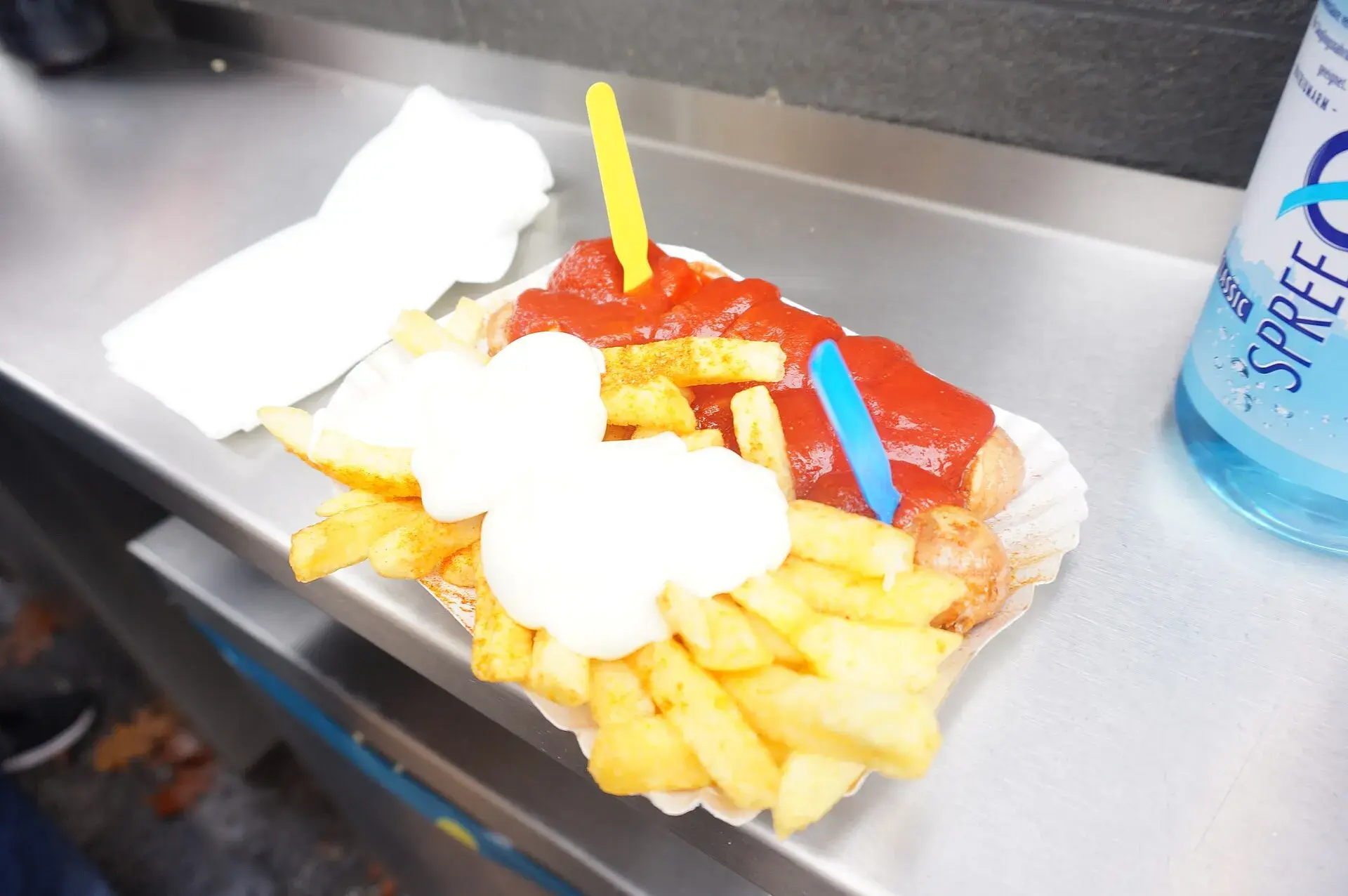
Berlin credits Herta Heuwer with inventing it in Charlottenburg on 4 September 1949. Hamburg and a Lower Saxony castle make competing claims, so call it Berlin's dish with an argument attached.
Eat it standing up, with fries and a roll, from a counter rather than a restaurant:
- 📍 Konnopke's Imbiss, Schönhauser Allee 44B, under the elevated railway, Prenzlauer Berg. Founded in 1930 and selling Currywurst without casing, the East Berlin style, since 1960
- 🕐 Tuesday to Friday 11:00 to 18:00, Saturday 12:00 to 19:00. Closed Sunday and Monday
- 📍 Curry 36, Mehringdamm 36, Kreuzberg, open since 1980
- 🕐 Mehringdamm 09:00 to 05:00 daily. Curry 36 also has counters at Bahnhof Zoo (08:00 to 05:00), Hauptbahnhof (08:00 to 22:00) and Warschauer Straße (09:00 to 23:00)
Neither site publishes a menu with prices, so ask at the counter. "With or without" means with or without casing.
🍩 The dish everyone gets wrong
Order a Pfannkuchen in Berlin and you get a round, deep-fried, jam-filled doughnut. The same pastry is a "Berliner" elsewhere in Germany. The thin pancake is an Eierkuchen here. Bread rolls are Schrippen, not Brötchen. Get these three words right at a bakery and the morning goes smoothly.
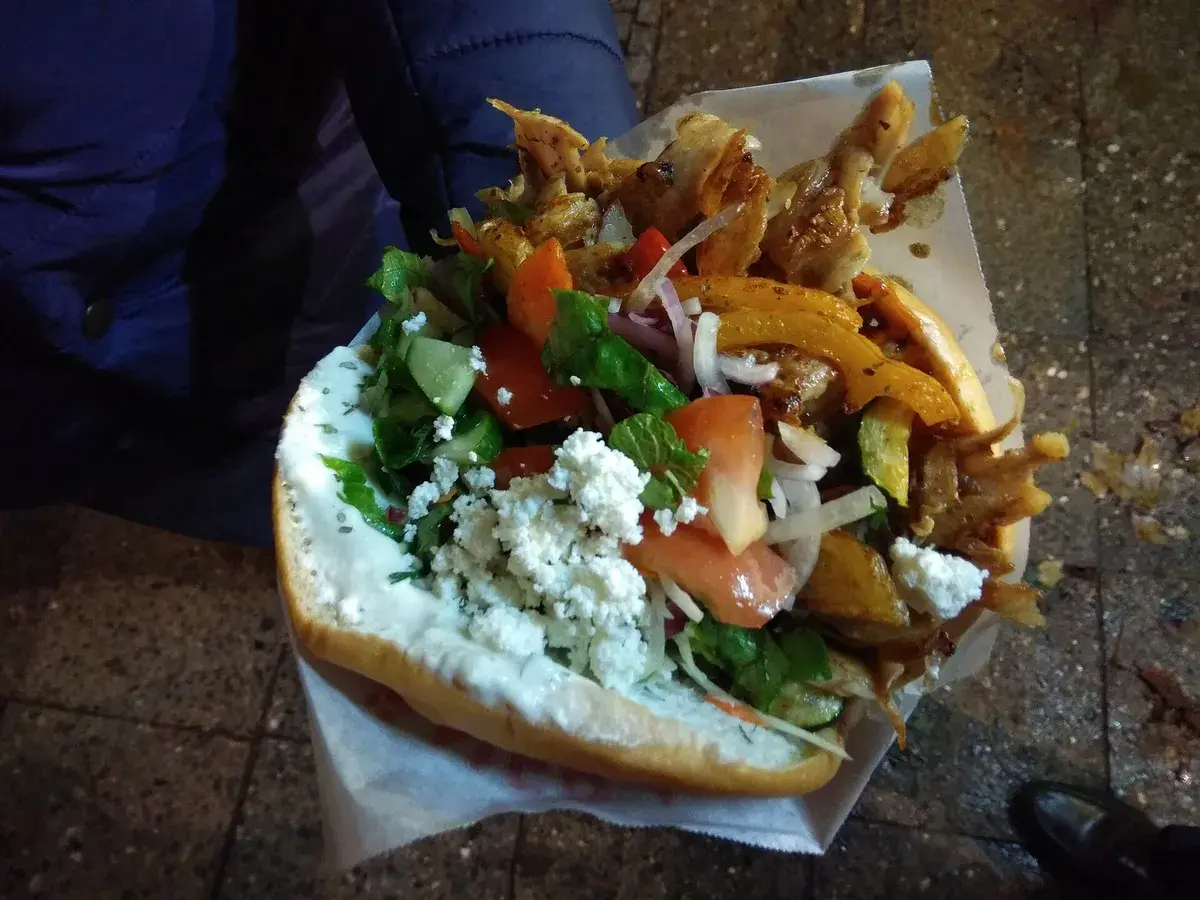
🥙 Döner: the disputed Berlin invention
Two origin stories compete. Berlin.de, citing the European association of Turkish Döner makers, credits Kadir Nurman, who sold meat in bread near the zoo in 1972. Visit Berlin gives the credit to Mehmet Aygün at the Hasir restaurant in 1971. The association's own chairman has argued that the Döner is German. Treat the origin as disputed, and the dish as Berlin's own either way.
Visit Berlin counts more than 1,000 Döner outlets in the city, and deutschland.de has put it nearer 1,600 sales points. Prices have gone against the national mood. Nationally the average passed €7 in 2025, but ZDF reported in March 2026 that Berlin prices were slipping by 50 cents to €1 for chicken Döner, with new shops competing. A crowd-sourced price tracker reported in June 2026 that Berlin ran from €3.50 to €8.50, averaging a little over €7, with the cheapest in Neukölln. No first-party price list exists, so treat that as a rough guide and read the board before you order.
Mustafa's Gemüse Kebap (vegetables and chicken, famous for queues) moved in July 2025 into a unit across the road from its old kiosk at the Mehringdamm U-Bahn exit. Its own site gives Mehringdamm 33 and takeaway only. Hours shown there run from 10:00 to 23:30 on most days, from 13:00 on Fridays, with later nights on Friday and Saturday. Expect a queue anyway.
🛒 Markets and standing counters
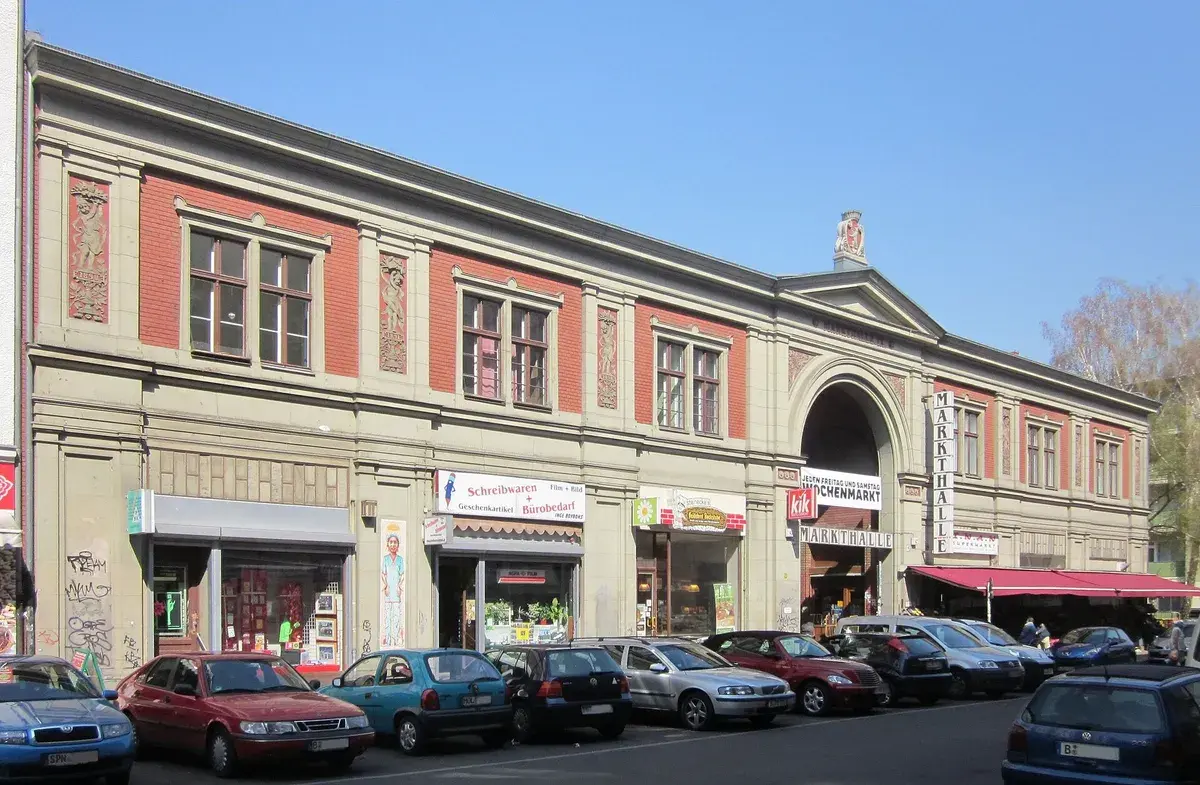
- 📍 Markthalle Neun, Eisenbahnstraße 42/43, Kreuzberg. 🕐 Monday to Wednesday 08:00 to 20:00, Thursday 08:00 to 22:00, Friday and Saturday 08:00 to 20:00, closed Sunday. Street Food Thursday runs 17:00 to 22:00. Stalls open at different times, so go at lunch on a weekday for the full line-up
- 📍 Maybachufer market (the Turkish market), Maybachufer, Neukölln. 🕐 Tuesday and Friday 11:00 to 18:30. Produce, olives, cheese, bread and street food by the canal. Neukölln's district page confirms the days and hours
- 📍 Rogacki pop-up at Markthalle Neun. The 100-year-old fish and deli counter has closed its Charlottenburg shop and lists the hall as a pop-up location, with press reporting an opening on 2 October 2026. Ask the hall for dates. A new permanent home is planned for 2028
📍 Three neighbourhoods to eat in
Kreuzberg. Mehringdamm has Mustafa's and Curry 36 within a few doors of each other, and Markthalle Neun is also in Kreuzberg. It is the best single area for a first food day.
Neukölln. Maybachufer on a market day, then Sonnenallee, which Visit Berlin describes as a street for Arabic cooking. Its listing names Azzam at Sonnenallee 54 for Lebanese food and hummus. The Döner here is among the cheaper in the city.
Lichtenberg. The Dong Xuan Center, Herzbergstraße 128 to 139, is Berlin's largest Asian market, with six halls and restaurants. Berlin.de lists it open 10:00 to 20:00 every day except Tuesday, a listing last updated in October 2024, so confirm by phone on 030 551 520 38 if you are travelling out for it.
🚩 Where tourist menus start
No official list exists, so use signals. A menu translated into five languages with photos of every dish, a waiter outside inviting you in, and a Currywurst, a schnitzel and a pizza on one page all point the same way. These cluster around the big sights, Alexanderplatz and the main shopping streets, and the price of the same plate drifts up with the foot traffic.
Walk two streets away from the sight and look for a short menu, a handwritten board and a room full of locals. Read the prices on the door before you sit.
☕ Coffee and the local rules
The Barn runs ten cafés across Berlin, including Auguststraße 58 in Mitte (08:00 to 17:00 Monday to Friday, 09:00 to 18:00 Saturday, 10:00 to 18:00 Sunday, per its own site). Cafés open late and close early, usually by 18:00 or 19:00, so do not plan an evening coffee.
A few rules that save awkwardness:
- Tipping is voluntary. Sparkasse says 5 to 10% of the bill is customary, and many people now simply round up. Tell the server the total you want to pay, or add it at the terminal
- Cash. Some small places may prefer it, so check before you order, and carry some
- Sundays. Berlin's opening law lets some Spätis open on Sundays, from 13:00 to 20:00 for tourist goods or 07:00 to 16:00 for baked goods and dairy. Mixed-stock Spätis must stay shut. Buy your Sunday drinks on Saturday. More on that in Ciceru's guide to what is closed in Germany on Sundays
🚫 What to skip
- The Currywurst Museum. It opened in August 2009 and closed on 21 December 2018, after its lease ended. Some lists still send people there
- Rogacki on Wilmersdorfer Straße. Closed. Ask Markthalle Neun about the Rogacki pop-up
- Mustafa's old kiosk. It carries a sign pointing you across the road
- Currywurst or Döner beside a sight at a sit-down price. The same food costs less two streets away
❓ FAQ
What is the most famous food in Berlin?
Currywurst and Döner. Berlin credits Herta Heuwer with the Currywurst in 1949, and the Döner's invention is disputed between Kadir Nurman (1972) and Mehmet Aygün (1971).
Is Döner cheap in Berlin in 2026?
It can be. A June 2026 crowd-sourced tracker reported €3.50 to €8.50, with an average a little over €7. ZDF reported Berlin prices falling in 2026. Neukölln tends to be cheaper than the centre.
What should I order for breakfast in Berlin?
Ask for Schrippen (bread rolls) at a bakery or a Pfannkuchen if you want something sweet. In Berlin, a Pfannkuchen is the jam doughnut, and an Eierkuchen is the thin pancake.
✅ Before you go
Check opening days before you cross the city: Konnopke's is shut Sunday and Monday, Markthalle Neun is closed Sunday, and Maybachufer runs only on Tuesday and Friday. Carry some cash, and read the price board before ordering. For the wider picture, start with Berlin Explained, and for what food costs against everything else, see Berlin on a Budget. To walk between stops, the 4 km Berlin Through the Ages walk in the Ciceru app takes about 2 hours, and the Berlin destination page has the wider guide.