Tarquinia Archaeological Museum: Palazzo Vitelleschi
The Architecture and History of Palazzo Vitelleschi
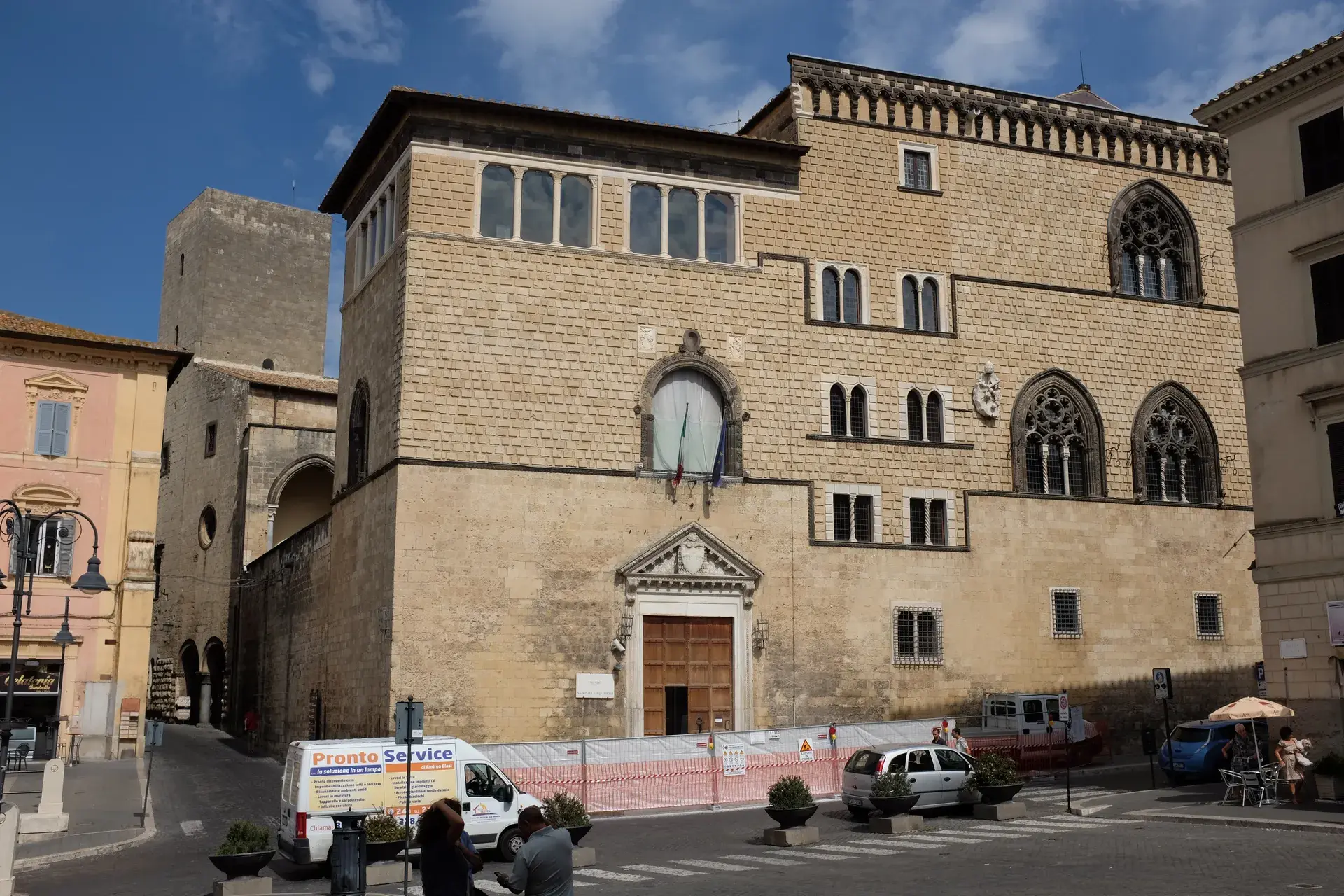
Positioned on Piazza Cavour at the convergence of Corso Vittorio Emanuele, Palazzo Vitelleschi serves as the primary eastern entry point into the historic walled center of Tarquinia (historically known as Corneto). Commissioned by Cardinal Giovanni Vitelleschi, a military prelate and native of Corneto who suppressed Roman civic rebellions for Pope Eugene IV, the fortified palace was constructed between 1436 and 1439. The design incorporated pre-existing medieval houses and created an architectural transition between the late Italian Gothic and early Renaissance styles. Vitelleschi built the residence to assert his authority after securing bishopric status for the town in 1435, but his tenure was cut short by his arrest and death in Rome's Castel Sant'Angelo in 1440.
Following Vitelleschi's death, the palace functioned as a papal stopover and retreat before passing to Florence's Soderini family. In subsequent centuries, the building was leased out as a travelers' inn and hotel. In 1900, the Municipality of Corneto acquired the property, later ceding it to the Italian state in 1916 to establish a dedicated museum. Opened to the public in 1924, it united municipal discoveries with the 19th-century private collection of the Counts Bruschi-Falgari. Today, the building houses the Museo Archeologico Nazionale di Tarquinia, operating under the autonomous Parco Archeologico di Cerveteri e Tarquinia (PACT), a branch of the Italian Ministry of Culture. The upper level still preserves Cardinal Vitelleschi's private chapel and his frescoed study, or studiolo, decorated with 15th-century paintings.
Etruscan Collections Across Three Levels
The museum safeguards archaeological material spanning Etruscan civilization from the 9th to the 1st century BC, excavated from the ancient settlement of Tarchna and the adjacent Monterozzi necropolis. It functions as the indoor counterpart to the outdoor necropolis by housing the fragile grave goods, architectural elements, and paintings discovered throughout the territory.
The ground floor contains an extensive collection of monumental stone sarcophagi, including specimens from the prominent Partunu family, such as the Sarcophagus of the Magistrate and that of Laris Partunu. The first floor displays chronological arrangements of ceramics tracing developments from the Villanovian and Orientalizing periods through to classical Etruscan and imported Greek wares. Among these holdings is Attic Greek pottery, highlighted by a 6th-century BC kylix crafted by Oltos and Euxitheos.
The Winged Horses Relief
The top floor houses the museum's signature masterpiece, the 4th-century BC high-relief terracotta plaque known as the Winged Horses (Cavalli Alati). Originally created as an architectural adornment for the pediment of the Ara della Regina temple on the Civita plateau, the relief was recovered during 1930s excavations directed by Pietro Romanelli. The artifact had shattered into approximately 100 fragments before specialists reconstructed it. Displayed in the upper gallery, the sculpture features visible structural repair seams, ancient kiln firing fissures, and surviving traces of ochre and reddish-brown paint across the horses' raised musculature.
Rescued Monterozzi Wall Paintings
In addition to architectural terracottas and gold ornaments, the top floor features detached original tomb paintings. During the 1950s and 1960s, conservators removed wall paintings directly from subterranean rock tombs in the Monterozzi necropolis, including the famous frescoes from the Tomb of the Triclinium. The murals were transferred to prevent irreversible deterioration caused by fluctuating humidity and subterranean microclimates, allowing these ancient Etruscan artworks to be permanently preserved in a controlled indoor environment.
FAQ
Where is the National Archaeological Museum of Tarquinia located?
The museum is situated in Palazzo Vitelleschi on Piazza Cavour, located at the eastern entrance to Tarquinia's walled historic center where the square meets Corso Vittorio Emanuele.
What architectural styles are present in Palazzo Vitelleschi?
Built between 1436 and 1439, Palazzo Vitelleschi represents a transitional architectural blend of late Italian Gothic and early Renaissance styles, incorporating older medieval houses into its fortified design.
What is the history of the Winged Horses relief?
Dating to the 4th century BC, the terracotta relief originally adorned the Ara della Regina temple. Archaeologists uncovered it on the Civita plateau during the 1930s in roughly 100 fragments before reconstructing it for display.
Why were tomb frescoes moved into the museum?
During the 1950s and 1960s, original wall paintings, including those from the Tomb of the Triclinium, were detached from subterranean tomb walls to protect them from humidity-induced decay and microclimate changes.