Santa Maria in Castello: Tarquinia Romanesque Gem
The Medieval Crown of Corneto
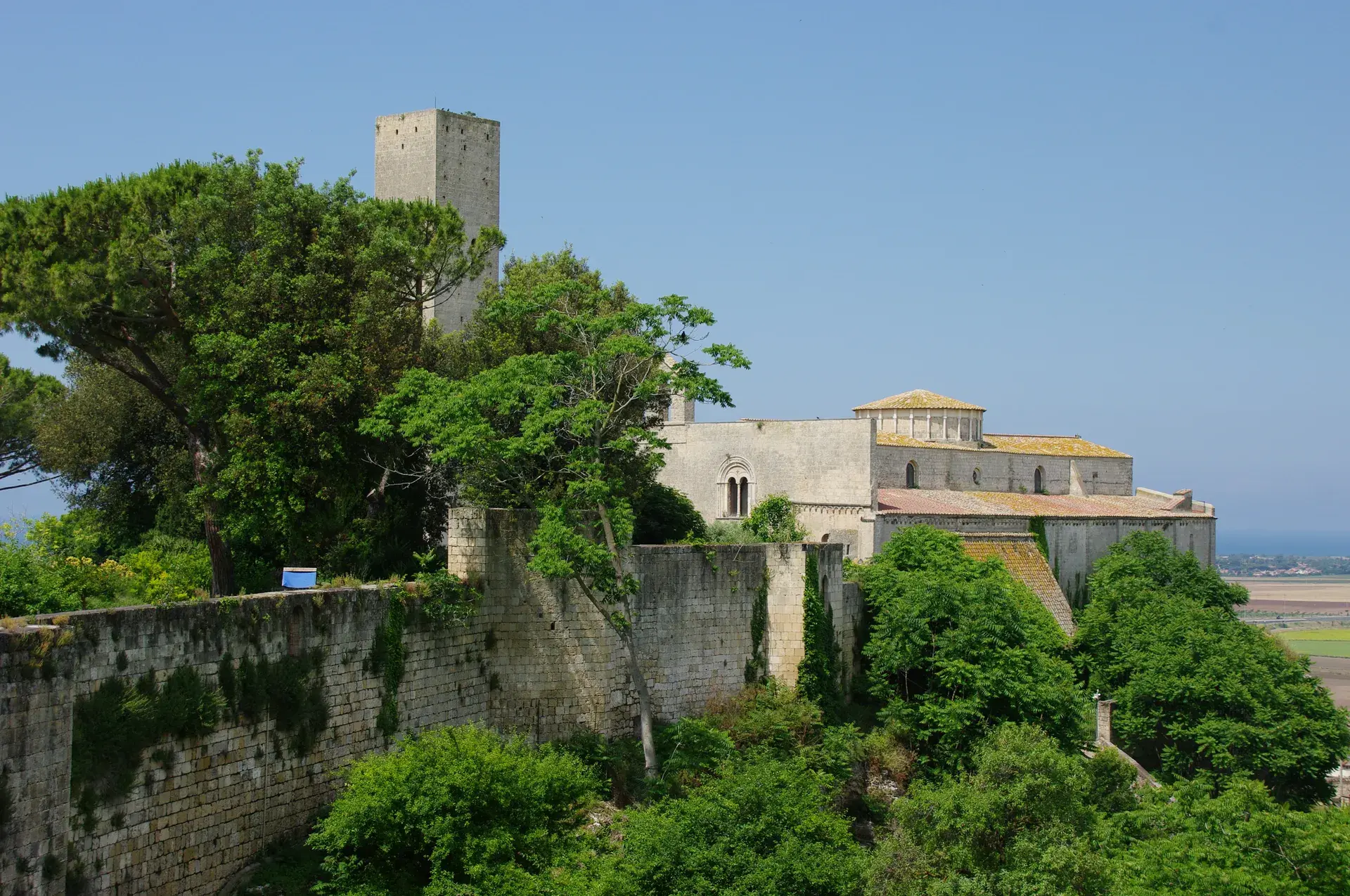
Perched on an exposed, wind-swept rocky cliff overlooking the Marta River valley down toward the Tyrrhenian Sea, Santa Maria in Castello marks the western edge of Tarquinia's historic promontory. While the town is internationally recognized for its subterranean Etruscan necropolises, this monumental church represents the height of its medieval identity under the name Corneto.
Construction began in 1121 on the grounds of an earlier chapel known as Santa Maria ad Rupes. The ambitious project coincided with the 12th-century economic peak of the medieval commune, driven by maritime alliances with Genoa, Pisa, and Venice. Standing at the core of the Castrum Cargnetum, the church was consecrated in 1208 and served as the town cathedral for over two centuries.
Architectural Design and Sacred Furnishings
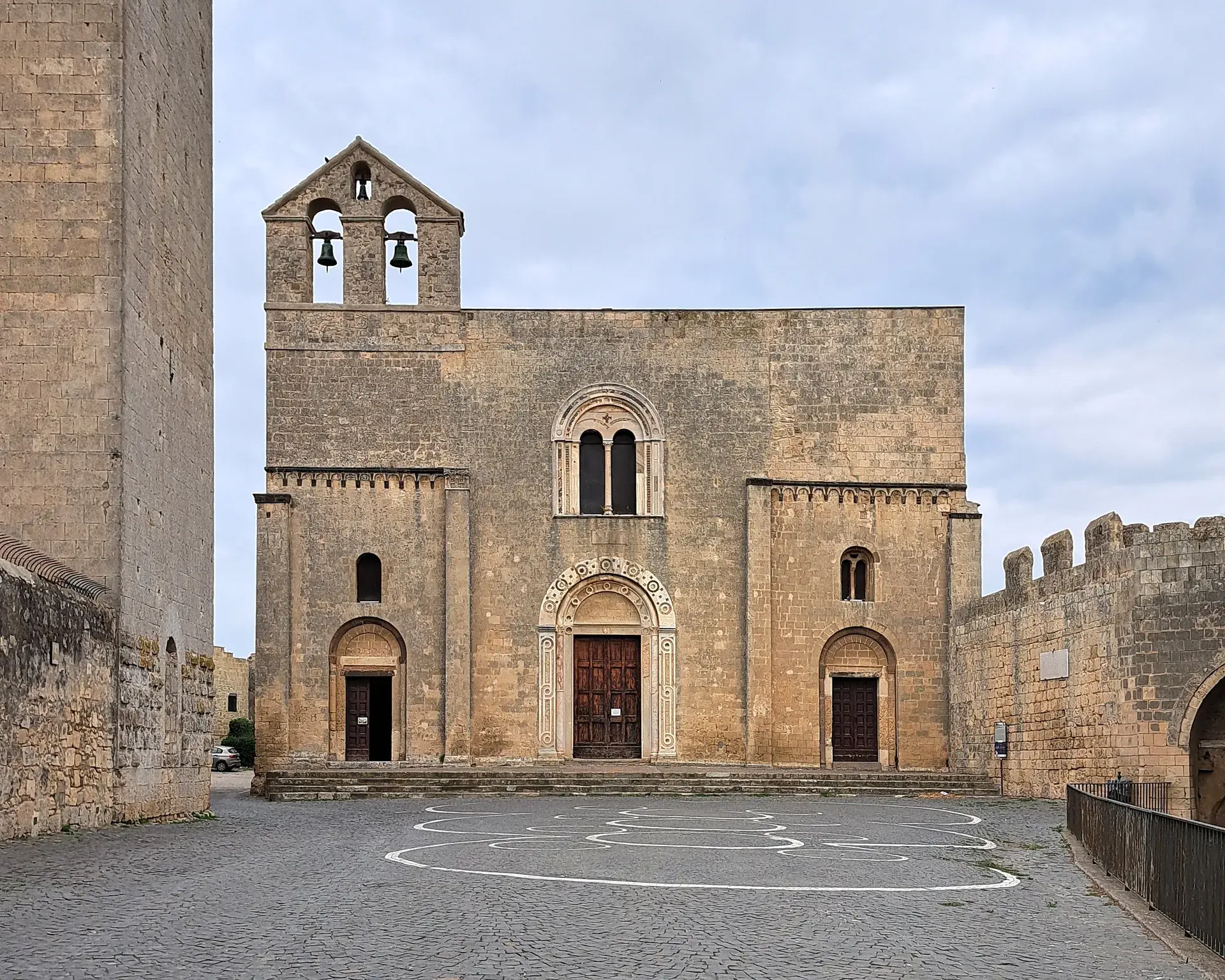
Santa Maria in Castello is an exemplar of the Lazio Romanesque style, blending architectural elements from Lombard, Tuscan, and Arab traditions. The exterior features a tripartite, flat-topped facade with three entryways. Its central portal is decorated with delicate Cosmatesque marble and mosaic inlays, signed by the marble masters Nicola and Pietro di Ranuccio. An 18th-century sail-shaped bell gable (campanile a vela) rises on the left side of the roofline, an addition that disrupts the original Romanesque symmetry.
Inside, three naves are divided by massive stone piers supporting round arches and bare cross vaults. The hollow stone interior produces long, resonant acoustic reverberations across the pale masonry. Surviving medieval furnishings include an octagonal immersion baptismal font, a carved ciborium, and an elevated marble ambo signed and dated to 1208 by Giovanni di Guittone. Remaining segments of the floor and portal displays showcase geometric bands of red porphyry and green serpentine.
Repurposed Antiquity and Historic Graffiti
Builders incorporated ancient Etruscan and Roman spolia directly into the church's masonry. Among the most notable reused artifacts is a carved Etruscan sarcophagus fragment inscribed with the name of Larth Velchas, which was laid upside down to serve as an interior step.
Traces of subsequent eras remain visible on the interior stonework. Centuries of visitors carved graffiti directly into the columns and the 1208 ambo. Among these etchings is an inscription left in 1935 by a Fascist-era lieutenant, recording his visit to what he termed a "now no longer sacred place."
The Resecata and Modern Revival
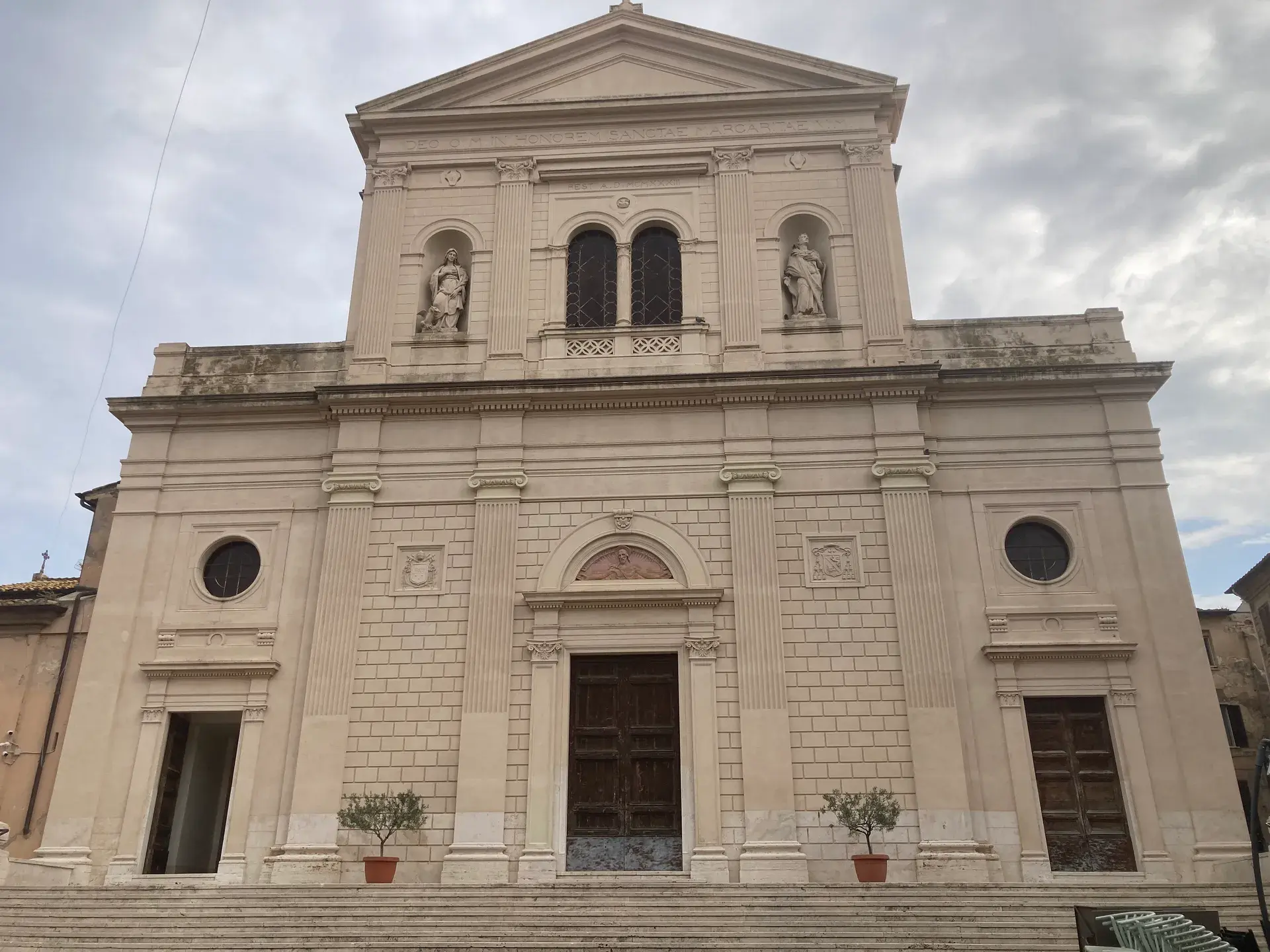
The decline of Santa Maria in Castello began in 1435 when Pope Eugene IV transferred cathedral status to the church of Santa Margherita. In 1437, the town constructed the Resecata, a defensive fortification line that physically isolated the castle quarter outside Corneto's primary protective walls. Following this severance, a local custom required bankrupt merchants to strike their buttocks three times against a stone pillar in the public square before being formally exiled beyond the Resecata into the castle district.
Religious orders, including the Carmelites and Conventuals, occupied the complex periodically until Napoleonic decrees forced its abandonment in 1809. An earthquake in 1819 brought down the central dome, shattering large sections of the Cosmatesque floor below. Deconsecrated and neglected for much of the 19th and early 20th centuries, the building underwent restoration and was declared an Italian national monument in 1975. Today, Santa Maria in Castello operates as a venue for cultural exhibitions and musical concerts, while also hosting occasional religious ceremonies and Sunday Catholic services.
FAQ
When was Santa Maria in Castello built?
Construction began in 1121 on the site of an earlier chapel called Santa Maria ad Rupes, and the church was consecrated in 1208.
Why was the church separated from the main town of Corneto?
In 1437, the construction of the Resecata defensive fortification severed the castle quarter from the rest of the commune, leaving the former cathedral outside the main defensive walls.
What ancient artifacts were reused in the church's construction?
Builders repurposed Roman and Etruscan materials, including an upside-down Etruscan sarcophagus fragment inscribed with the name Larth Velchas used as an interior step.
What is the current function of Santa Maria in Castello?
Declared an Italian national monument in 1975, the church serves as a cultural site for tourist visits, exhibitions, and musical concerts, while also holding occasional sacred ceremonies and Sunday Catholic services.