Palazzo Comunale in Tarquinia: History & Architecture
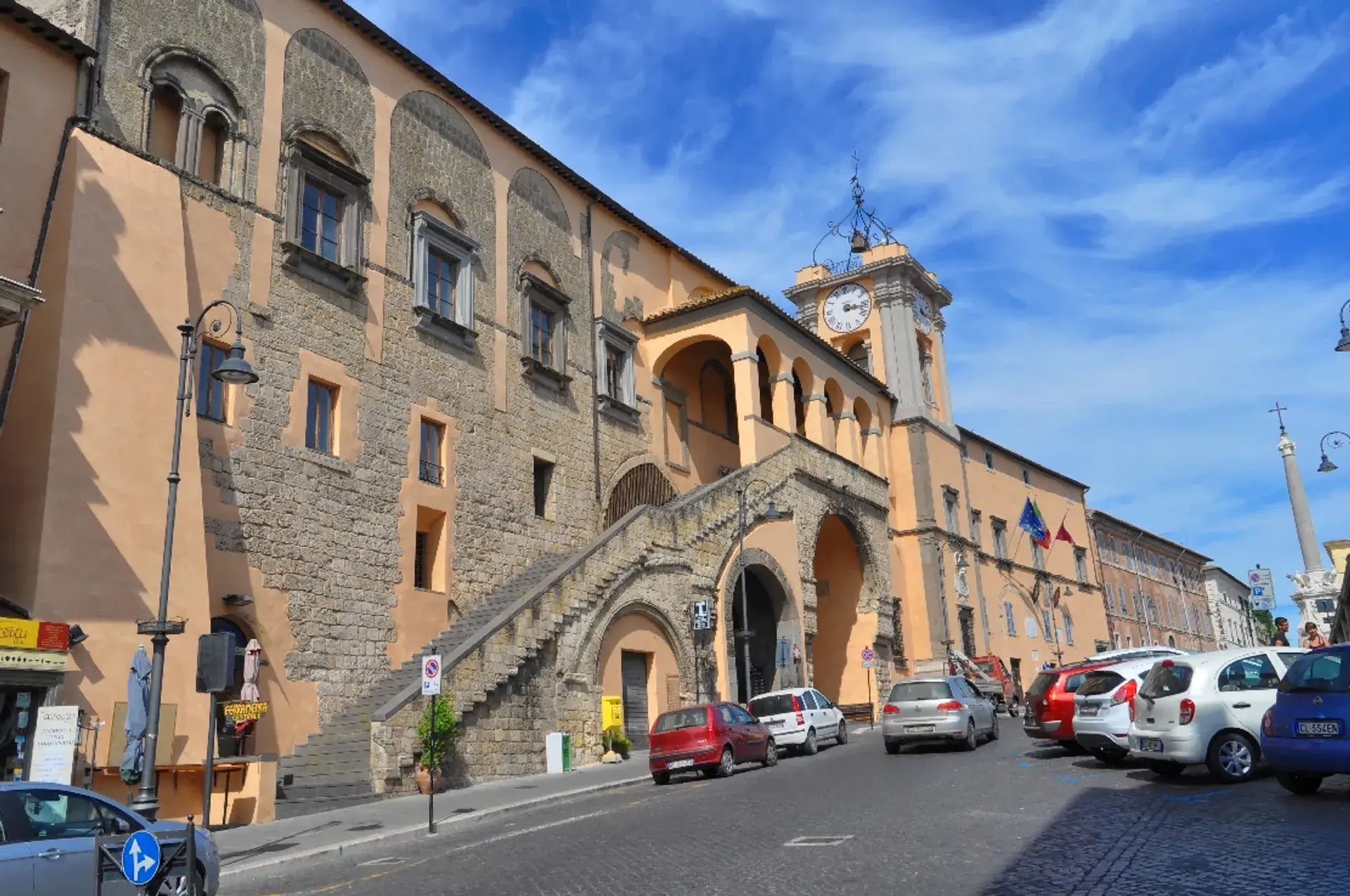
Standing on Piazza Giacomo Matteotti, the Palazzo Comunale serves as the civic heart and municipal headquarters of Tarquinia. Opposite the square's 1724 monumental fountain, the building provides a civic counterweight to the town's major religious landmarks, including the Duomo and Santa Maria in Castello. Built directly along the trace of the town's earlier eleventh- to twelfth-century defensive perimeter, the structure physically marks the transition between the ancient fortified core and subsequent medieval urban expansions.
Medieval Origins and Reconstruction
The palace was established during the thirteenth century, with significant structural work documented around 1260 as the medieval town of Corneto expanded outward. A devastating fire in 1476 gutted large parts of the complex, prompting an extensive period of redesign. In 1510, papal authorities commissioned the renowned architect Donato Bramante to draft reconstruction plans, although his direct supervision concluded before substantial execution took place.
Subsequent sixteenth-century building campaigns reshaped the western portions of the palace, modifying the tower and creating the current profile facing Piazza Giacomo Matteotti. Further interior transformations occurred over the centuries, including the conversion of a wing into a municipal theater that operated from the seventeenth century through the 1940s.
Architectural Features and the Civic Measure
The complex showcases an integration of Romanesque and Gothic architectural forms typical of the Viterbo region. Its exterior masonry primarily combines blocks of local, porous yellowish macco stone with volcanic peperino detailing around openings and transitions.
Key architectural elements define the exterior:
- The Civic Tower: A square tower (torre civica) rising from a fortified core dating back to the tenth and eleventh centuries.
- Exterior Loggia: An elevated loggia positioned over a wide round arch, bearing an inscription from the year 1366.
- Pedestrian Underpass: A low, stone-vaulted tunnel cutting beneath the palace, providing a direct pedestrian route between Piazza Matteotti and Via di San Pancrazio.
- The Merchant's Measure: Embedded directly into the stone facade is a calibrated historic iron rod, originally installed as an enforceable legal standard of measurement to arbitrate marketplace disputes in the piazza.
Historic Interiors and Art Collections
Inside, the palace preserves notable decorative cycles and modern civic spaces. The former council hall, known as the Sala degli Affreschi, was elaborately decorated between 1629 and 1636 by painter Camillo Donati and collaborating artists. The wall paintings depict a mythical civic genealogy linking the foundation of Corneto to King Corythus, alongside representations of Romulus and Remus. The frescoes also commemorate significant civic milestones, such as the 1436 decree by the Roman Senate granting Roman citizenship to the town's inhabitants.
The current council chamber (Sala Consiliare) was created during the 1960s within the space previously occupied by the historic municipal theater. Characterized by open timber roof trusses, the chamber displays three monumental pastel works collectively titled Perché le vittime vincano. Created in 1974 and donated in 1975 by Chilean Surrealist artist Roberto Sebastián Matta, who lived and worked in the surrounding area, the pieces stand alongside the building's earlier historical heritage.
Current Civic Role
The Palazzo Comunale remains the active administrative center for the Municipality of Tarquinia, housing the Mayor's office and municipal offices. The Sala Consiliare regularly hosts Tarquinia City Council meetings, civil marriage ceremonies, academic conferences, public assemblies, and annual cultural gatherings, including events associated with the Premio Cardarelli.
FAQ
What is the purpose of the iron rod embedded in the facade?
The calibrated iron rod served as an official, legally enforceable standard of measurement used by merchants in the marketplace to resolve trade disputes.
What stories are depicted in the frescoes of the Sala degli Affreschi?
Painted between 1629 and 1636 by Camillo Donati and other artists, the frescoes depict Tarquinia's foundation myth tracing back to King Corythus, alongside the 1436 decree granting Roman citizenship to the town's residents.
Did Donato Bramante design the Palazzo Comunale?
Papal authorities commissioned Donato Bramante in 1510 to create reconstruction plans following a fire in 1476, but his direct involvement ended before significant work could be executed under his direction.
What modern artwork is housed inside the council chamber?
The Sala Consiliare contains three large pastel artworks titled 'Perché le vittime vincano', created in 1974 and donated to the town in 1975 by Chilean Surrealist artist Roberto Sebastián Matta.