Aqueduto de São Sebastião: Coimbra's Historic Arches
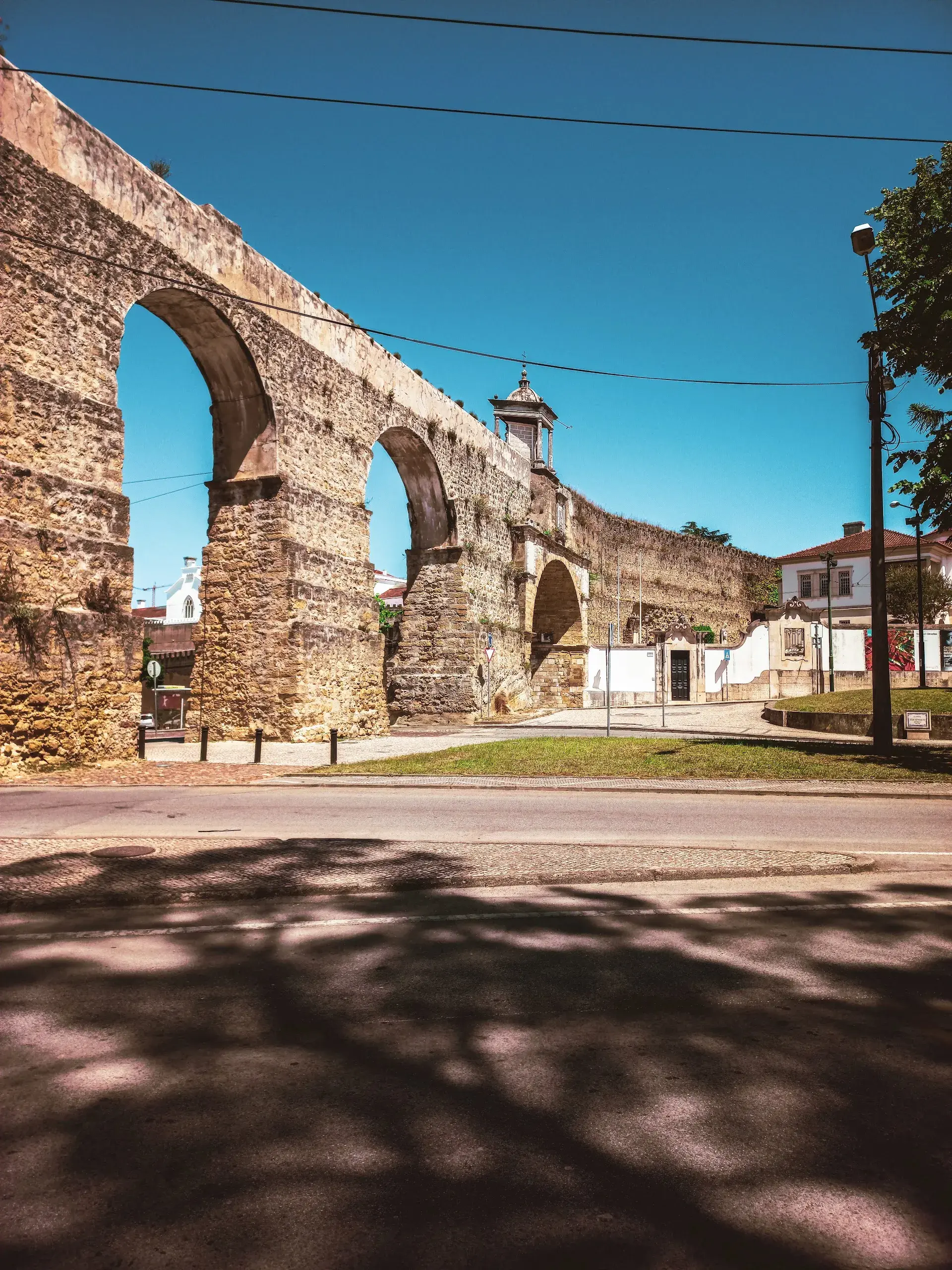
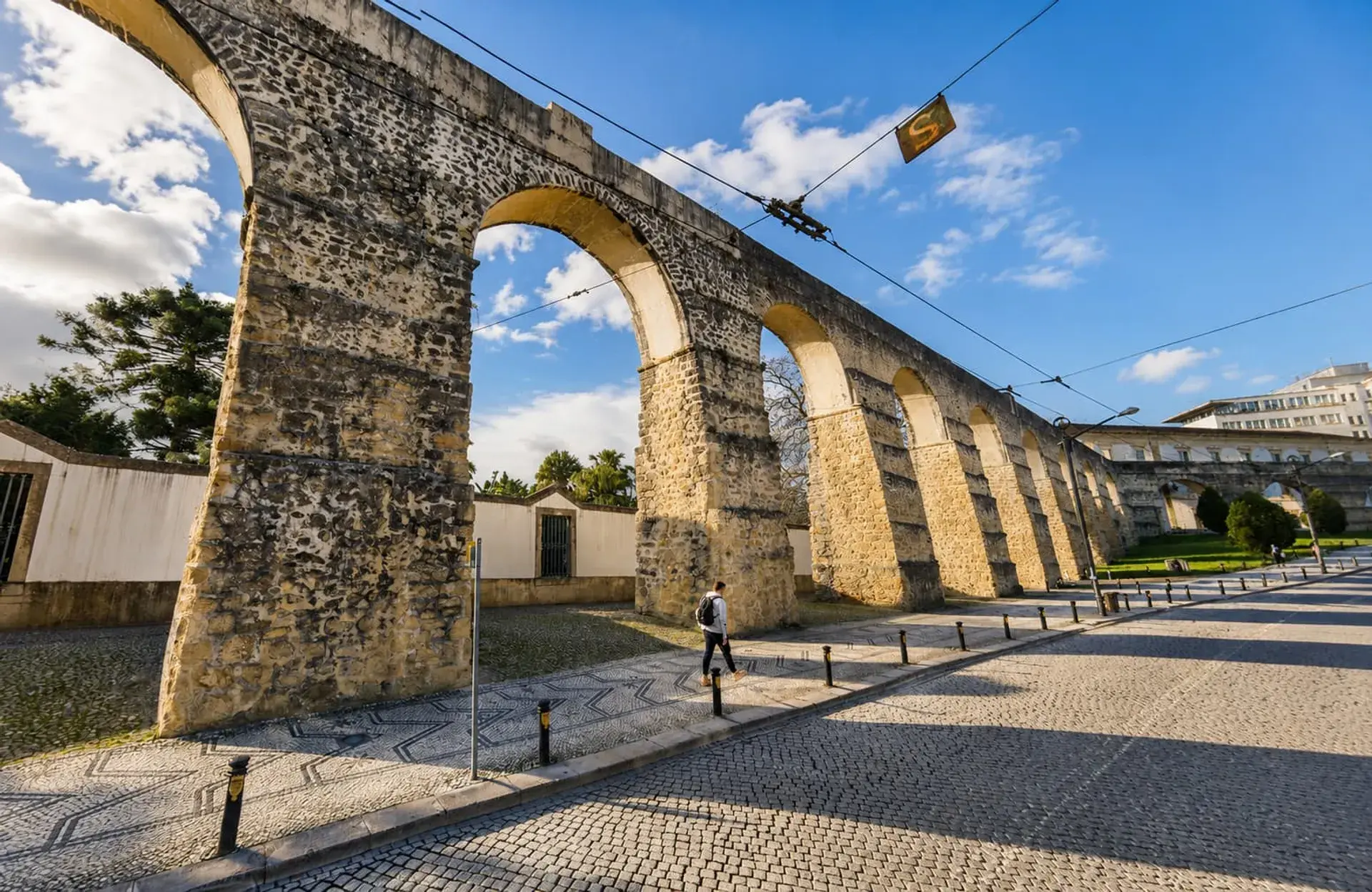
Gaze up at the monumental stone arches of the Aqueduto de São Sebastião, cutting dramatically through the greenery with ancient Romanesque and Mannerist engineering. Known officially as the Aqueduto de São Sebastião and commonly referred to as the Arcos do Jardim, this striking Renaissance aqueduct stands as a testament to Coimbra’s historical resilience and architectural ingenuity.
A Renaissance Marvel on Roman Foundations
The current structure was rebuilt beginning in 1570 during the reign of King Sebastião. Its Renaissance design is widely attributed to the Italian architect Filippo Terzi. However, the aqueduct rests upon much older foundations. It follows the original route of the ancient Roman aqueduct that once supplied water to the historic city of Aeminium.
Spanning approximately one kilometer, the monument features 20 to 21 arched bays. These impressive stone arches eventually transition into an underground conduction system that was designed to channel water directly toward the university hill.
Protection from Plague and Thirst
The aqueduct was commissioned to secure a reliable supply of fresh water from outlying royal springs directly to the growing Upper Town, its academic colleges, and the University of Coimbra.
During its planning and construction in the late 1560s, a severe plague struck the city. In response, the aqueduct was given a double dedication to Saint Sebastian and Saint Roch. Both saints were revered as spiritual protectors against epidemics, intertwining the city's need for physical nourishment with a plea for divine preservation.
Architectural Details of the Arcos do Jardim
The primary monumental arch, which crosses the road, was deliberately constructed obliquely rather than in a straight line. This unique angle was engineered specifically to align with the pre-existing roadway beneath it.
Atop this central arch sits a classical trapezoidal templete, complete with Doric columns, a brick dome, and a lantern. The arch is heavily adorned with Renaissance stone carvings, Latin commemorative inscriptions from 1570, the Portuguese royal coat of arms, and an armillary sphere. Exterior statues of the aqueduct’s protectors face outward, with Saint Sebastian on the south side and Saint Roch on the north. Recent restoration work even revealed traces of historical polychrome paint on the aqueduct's carved lettering, cornices, and the mantles of the saint figures.
An Active Urban Monument
Classified as a National Monument since 1910, the Aqueduto de São Sebastião remains an active urban thoroughfare. Vehicular and pedestrian traffic along Calçada Martim de Freitas flows continuously beneath its arches.
Accessible 24 hours a day as an outdoor monument, the structure serves as a highly visible border in the city. It marks the scenic transition zone between Coimbra’s academic hilltop, known as the Alta, and the lush landscape of the adjacent Botanical Garden.
FAQ
Who built the Aqueduto de São Sebastião?
The current Renaissance aqueduct was rebuilt beginning in 1570 by King Sebastião, with its design attributed to Italian architect Filippo Terzi. It was constructed over the foundations of an ancient Roman aqueduct.
Why is the aqueduct dedicated to Saint Sebastian and Saint Roch?
The aqueduct was dedicated to these two saints because they were revered as protectors against epidemics. This dedication was a direct response to a plague outbreak that hit Coimbra in the late 1560s.
Where is the Aqueduto de São Sebastião located?
The aqueduct is located in Coimbra, passing over Calçada Martim de Freitas. It serves as a visible border between the University of Coimbra's Upper Town (Alta) and the city's Botanical Garden.
Gallery