Monastery of Santa Cruz: Coimbra's Royal Pantheon
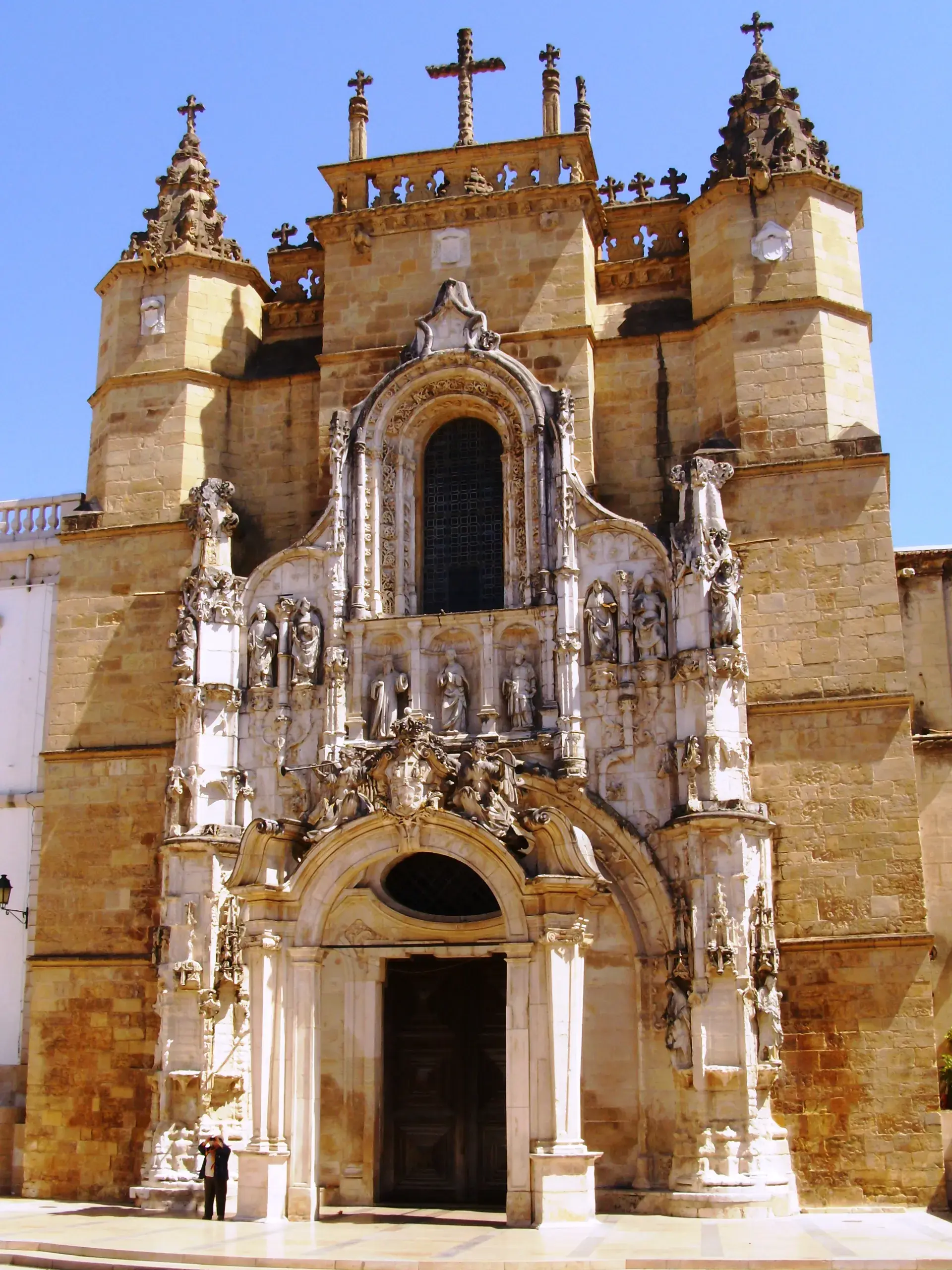
Portugal's first kings do not rest in Lisbon, but rather in the lower town of Coimbra. The Monastery of the Holy Cross (Mosteiro de Santa Cruz), located on Praça 8 de Maio in the Baixa district, serves as a Portuguese National Pantheon. Founded in 1131 by the Order of Canons Regular of Saint Augustine with the support of King Afonso Henriques, the monastery was consecrated in 1228. Today, it stands as a prominent historical landmark and the final resting place of Portugal's first two monarchs, King Afonso Henriques and King Sancho I.
A Royal and Intellectual Foundation
During the 12th century, Coimbra operated as a strategic frontier and royal capital. King Afonso Henriques utilized the monastery to house his royal archives and chancellery, drawing diplomatic legitimacy from the Augustine canons. The site quickly became an intellectual powerhouse in early Portugal, featuring a highly influential scriptorium and school. Around 1210, Fernando de Bulhões—who would later become venerated as Saint Anthony of Padua—entered the monastery and studied theology there before joining the Franciscan Order.
Manueline and Renaissance Remodeling
Very little survives of the original Romanesque structure. The current appearance of the complex is the result of an extensive 16th-century remodeling campaign ordered by King Manuel I. Architects Diogo de Boitaca and Diogo de Castilho oversaw the transformation, introducing elaborate Manueline and Renaissance elements. French sculptor Nicolau de Chanterene contributed significant artistic details, carving the weathered Ançã limestone of the main portal, the pulpit, and the elaborate new mausoleums for the first kings in the chancel.
Artistic Details of the Interior
Inside the church nave, 18th-century blue-and-white azulejo tile panels line the walls. A prominent red-and-gold Baroque organ case and intricately carved high wooden choir stalls visually dominate the space. The 16th-century wooden stalls feature detailed carvings of Portuguese ships from the Age of Discovery, installed shortly after Vasco da Gama's successful voyage to India to commemorate maritime exploration.
Civic Transformations and Modern Uses
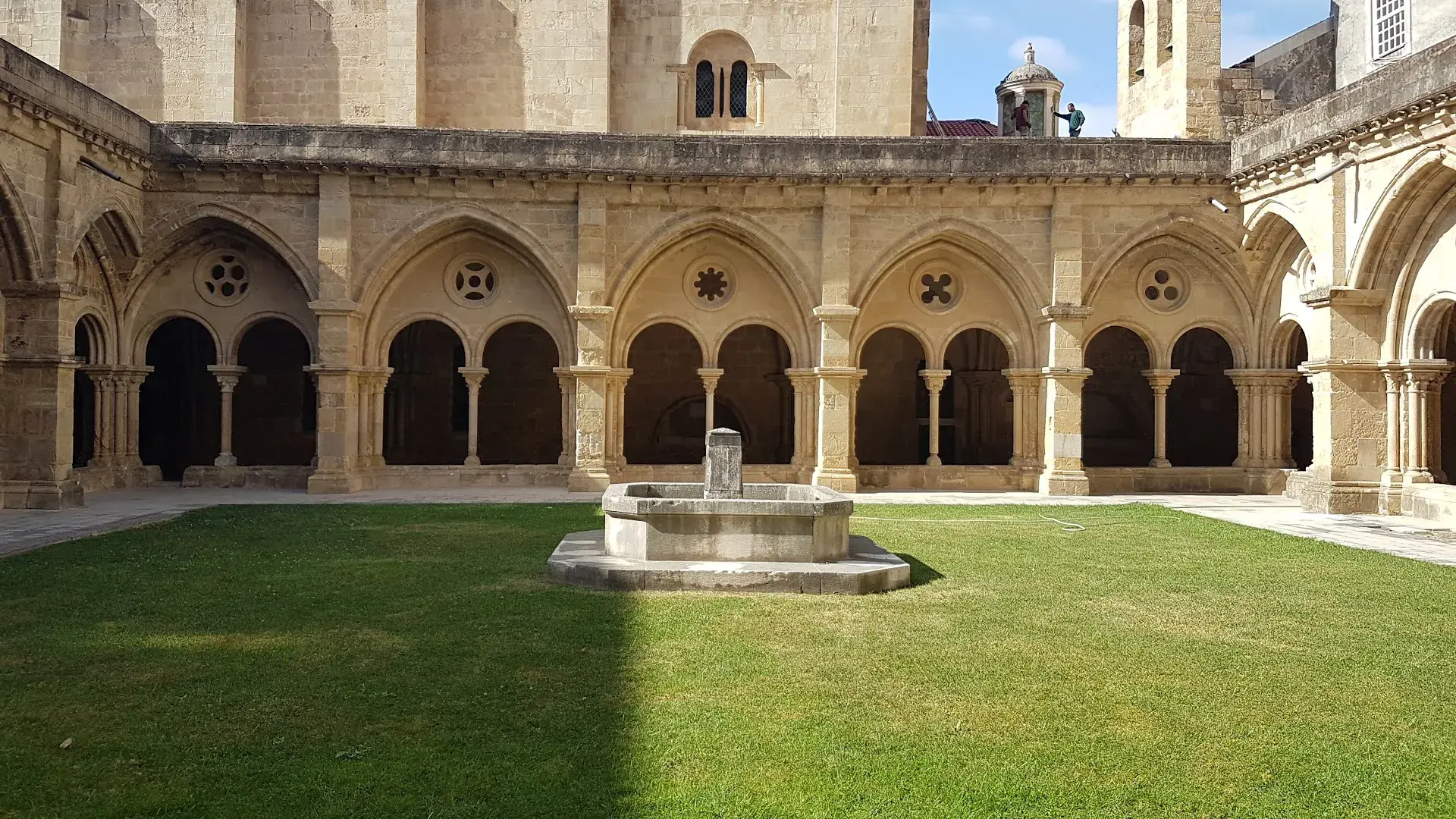
Following the 1834 secularization of religious orders in Portugal, the monastery's vast urban territory was dissolved and repurposed for civic use. Today, sections of the former monastic complex accommodate the Coimbra City Hall and the regional cultural directorate. The adjacent Café Santa Cruz, a classic local gathering spot, is housed within a former auxiliary chapel and features vaulted Gothic stone ceilings and stained glass. Just behind the church lies the Jardim da Manga, originally the central courtyard and fountain of a Renaissance cloister designed by sculptor João de Ruão.
The complex continues to function as an active Catholic parish church, a national pantheon, and a museum of sacred art. The church nave is open to the public, while the Cloister of Silence, the high choir, and the reliquary sanctuary require a ticket. Designated a National Monument in 1910, the monastery firmly anchors Coimbra's classic historical route.
FAQ
Who is buried at the Monastery of the Holy Cross?
The monastery serves as a Portuguese National Pantheon and houses the elaborate Renaissance tombs of Portugal's first two monarchs: King Afonso Henriques and King Sancho I.
Do you need a ticket to enter the Monastery of Santa Cruz?
The main church nave is open to the public without a ticket. However, a ticket is required to access other areas of the complex, including the Cloister of Silence, the high choir, the chapter house, the sacristy, and the reliquary sanctuary.
Which famous historical figures studied at the Monastery of the Holy Cross?
Fernando de Bulhões, who is better known today as Saint Anthony of Padua or Saint Anthony of Lisbon, studied at the monastery's highly influential school around 1210 before joining the Franciscan Order.