New Cathedral of Coimbra: History & Architecture
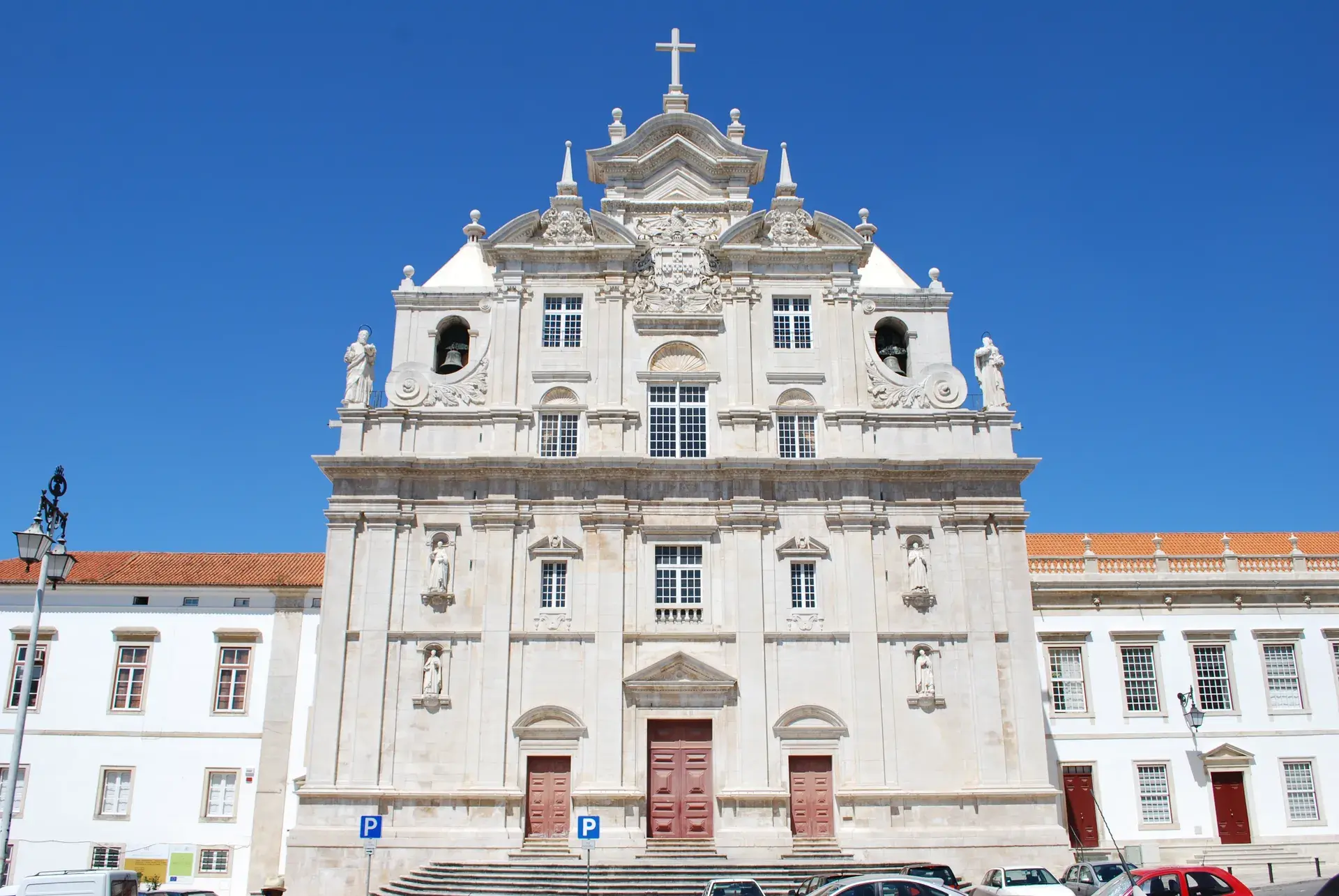
Take in the imposing 17th-century facade of the New Cathedral of Coimbra, showcasing a striking blend of Mannerist and Baroque architectural details. Anchoring the northern boundary of Largo da Sé Nova in the Alta de Coimbra, the New Cathedral (Sé Nova de Coimbra) provides a spacious, modern counterpoint to the city's fortress-like medieval Old Cathedral.
A Jesuit Foundation
The structure originally began in 1598 as the Church of the College of Jesus. Designed largely by architect Baltazar Álvares, it was consecrated in 1640. The Society of Jesus had established their first Portuguese college in Coimbra during the 1540s. The facility was designed to educate theology scholars, including the famed orator Father António Vieira, and to train missionaries dispatched throughout the Portuguese Empire across Brazil, Africa, and Asia.
The architectural blueprint of Coimbra's Jesuit church proved highly influential. It served as the direct structural model for 17th-century colonial churches built across the Portuguese Empire, most notably the Cathedral Basilica of Salvador in Bahia, Brazil.
The Expulsion and a New Cathedral
In 1759, Prime Minister Sebastião José de Carvalho e Melo, known as the Marquis of Pombal, banned the Jesuit Order from Portugal and confiscated their estates. The massive church was left vacant. By 1772, finding the 12th-century Old Cathedral (Sé Velha) cramped, dark, and damp, the diocese officially transferred its seat to this spacious former Jesuit building, renaming it the Sé Nova.
During this transition, key interior furnishings were physically relocated from the Old Cathedral to the new site. These imported relics included a 17th-century set of wooden choir stalls and an elaborate 16th-century Manueline baptismal font carved by Pêro and Filipe Henriques. Concurrently, Pombaline educational reforms transferred the adjoining collegiate buildings to the University of Coimbra to house modern scientific facilities.
Architectural Contrasts
The cathedral's exterior is defined by a sharp two-tiered architectural contrast. The lower level of the facade features rigid, flat, geometric Mannerist stonework. The upper register, completed later into the 18th century, boasts dynamic, voluted Baroque embellishments.
Inside, the space opens into a broad single nave covered by a heavy stone barrel vault. Lateral chapels lead to a domed crossing illuminated by an overhead cupola. The transept and main chancel are heavily decorated with expansive 17th- and 18th-century gilded wood carvings (talha dourada) in the Portuguese "national style."
Enduring Legacy and Academic Rites
Curiously, despite the state-enforced expulsion of the Jesuit order, the cathedral's facade retains statues of four prominent Jesuit figures in its niches: Ignatius of Loyola, Francis Xavier, Francis Borgia, and Aloysius Gonzaga.
Today, the building functions as an active Catholic cathedral holding regular masses and episcopal ceremonies. Included within the UNESCO World Heritage listing "University of Coimbra – Alta and Sofia," the cathedral is also deeply intertwined with local academic traditions. It serves as a primary venue for major University of Coimbra student rites, most notably the solemn Bênção das Pastas (Blessing of the Folders) during the annual Queima das Fitas festivities.
FAQ
Why is it called the New Cathedral of Coimbra?
The diocese officially transferred its episcopal seat to this spacious building in 1772 because the 12th-century Old Cathedral had become too cramped, dark, and damp. The building was originally constructed as a Jesuit church in 1598.
What architectural styles are featured in the New Cathedral of Coimbra?
The cathedral exhibits a distinct blend of styles, characterized by a flat, geometric Mannerist lower facade and a dynamic Baroque upper register. The interior features a stone barrel-vaulted nave and elaborate 17th- and 18th-century gilded wood altarpieces.
Are there artifacts from the Old Cathedral inside the New Cathedral?
Yes. When the bishop relocated the seat in 1772, several important furnishings were moved from the Old Cathedral, including an elaborate 16th-century Manueline baptismal font and 17th-century wooden choir stalls.
How does the cathedral connect to the University of Coimbra today?
Aside from being adjacent to university facilities and part of the same UNESCO World Heritage listing, the cathedral hosts major student rites, particularly the Bênção das Pastas (Blessing of the Folders) during the annual Queima das Fitas festival.