Praça da República: Coimbra's Historic Student Hub
Praça da República stands as the undisputed epicenter of Coimbra's vibrant university culture and a former staging ground for national student revolutions. Serving as a transitional threshold, it connects the monumental academic core atop the hill, known as the Alta, with the lower 19th-century residential avenues and commercial zones of the Baixa.
A Hub of Student Life and Nightlife
Residents and students frequently refer to the space simply as "A Praça." It operates around the clock as the central outdoor gathering space and nightlife crossroads for the city. Local student custom dictates that evening gatherings, known as convívios, naturally begin around 11:00 PM at the square before dispersing to nearby bars and university repúblicas (traditional student residences).
The ambient soundscape frequently mixes the clash of cutlery and beer glasses at outdoor metal café tables, such as those at Café Cartola, with student chatter and acoustic guitar music. Throughout the academic year, the plaza also serves as a primary open-air setting for university initiation rites, known as praxes.
Historical Evolution and Resistance
Laid out during the 19th-century urban expansion into the former agricultural estates of the Santa Cruz Monastery, the area was originally named Praça D. Luís. It was renamed following the October 5, 1910 establishment of the Portuguese First Republic.
During the Estado Novo dictatorship, the square and surrounding student housing became a focal point for intellectual dissent. This culminated in the 1969 Academic Crisis, when students occupied the space to strike against government repression.
Architectural and Topographical Curiosities
The square features traditional Portuguese black-and-white stone mosaic pavement, known as calçada portuguesa. Flanking the plaza are multi-story buildings featuring late 19th- and early 20th-century revivalist facades, alongside mid-century modern structures.
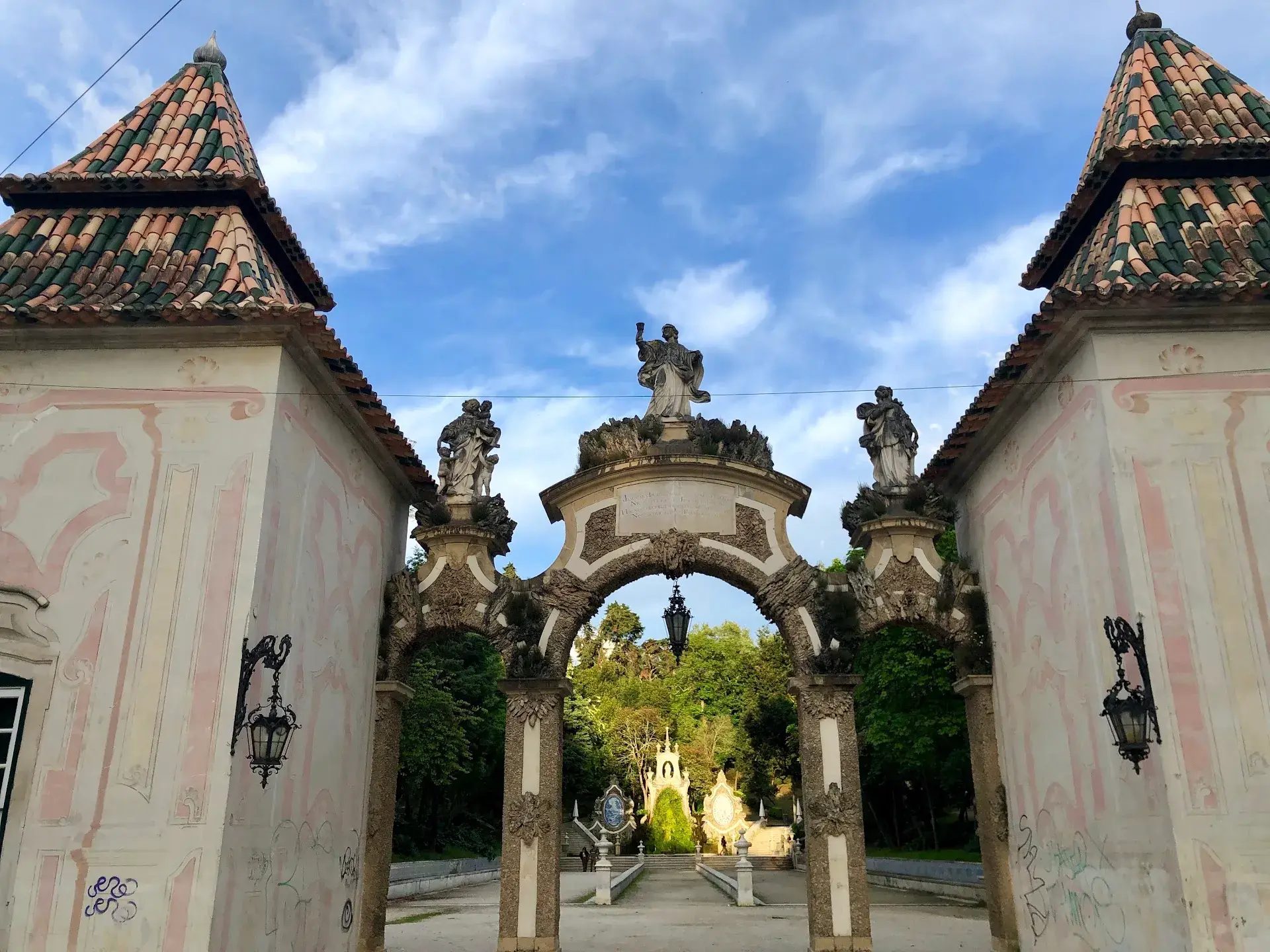
A surprising topographical detail lies at the edge of the adjoining Parque de Santa Cruz, or Jardim da Sereia. Modern road leveling artificially elevated the square's grade, burying the original 13 steps that once led up to the garden's monumental 18th-century entryway. Today, the lower portions of the flanking gate pavilions remain partially below the modern street level.
Cultural Institutions
Praça da República is home to key institutional buildings, including the Associação Académica de Coimbra (student association) and the Teatro Académico de Gil Vicente (TAGV). Designed by architects Alberto José Pessoa and João Abel Manta, the mid-century modern theater opened in 1961. The complex maintains an active, year-round program of theater performances, dance, and film screenings, cementing the square's role as a cultural anchor outside the historic university courtyard.
FAQ
Why is Praça da República important to Coimbra's students?
It is the central gathering place for university life, hosting academic initiation rites (praxes) and serving as the starting point for evening social gatherings (convívios). It also houses the student association building.
What is the history behind Praça da República's name?
Originally laid out in the 19th century as Praça D. Luís, it was renamed to Praça da República to mark the establishment of the Portuguese First Republic on October 5, 1910.
What happened at Praça da República during the 1969 Academic Crisis?
During the Estado Novo dictatorship, the square was a center for political dissent. In 1969, students occupied the plaza and led mass strikes against government repression.
What happened to the steps of Jardim da Sereia?
Modern road elevation changes raised the street level of Praça da República, burying the original 13 steps that once led up to the monumental 18th-century entryway of the adjoining Jardim da Sereia.
Discover Coimbra like never before
Dive into Coimbra hidden stories and secret spots with Ciceru interactive tours.
Explore tour
Audioguide
Quizzes
Maps
Solo
Couples
Groups & families

© Photo by javier de la fuente gonzalez via Google Maps · Google Places