Cadaval Palace Church: Evora's Blue-Tiled Chapel
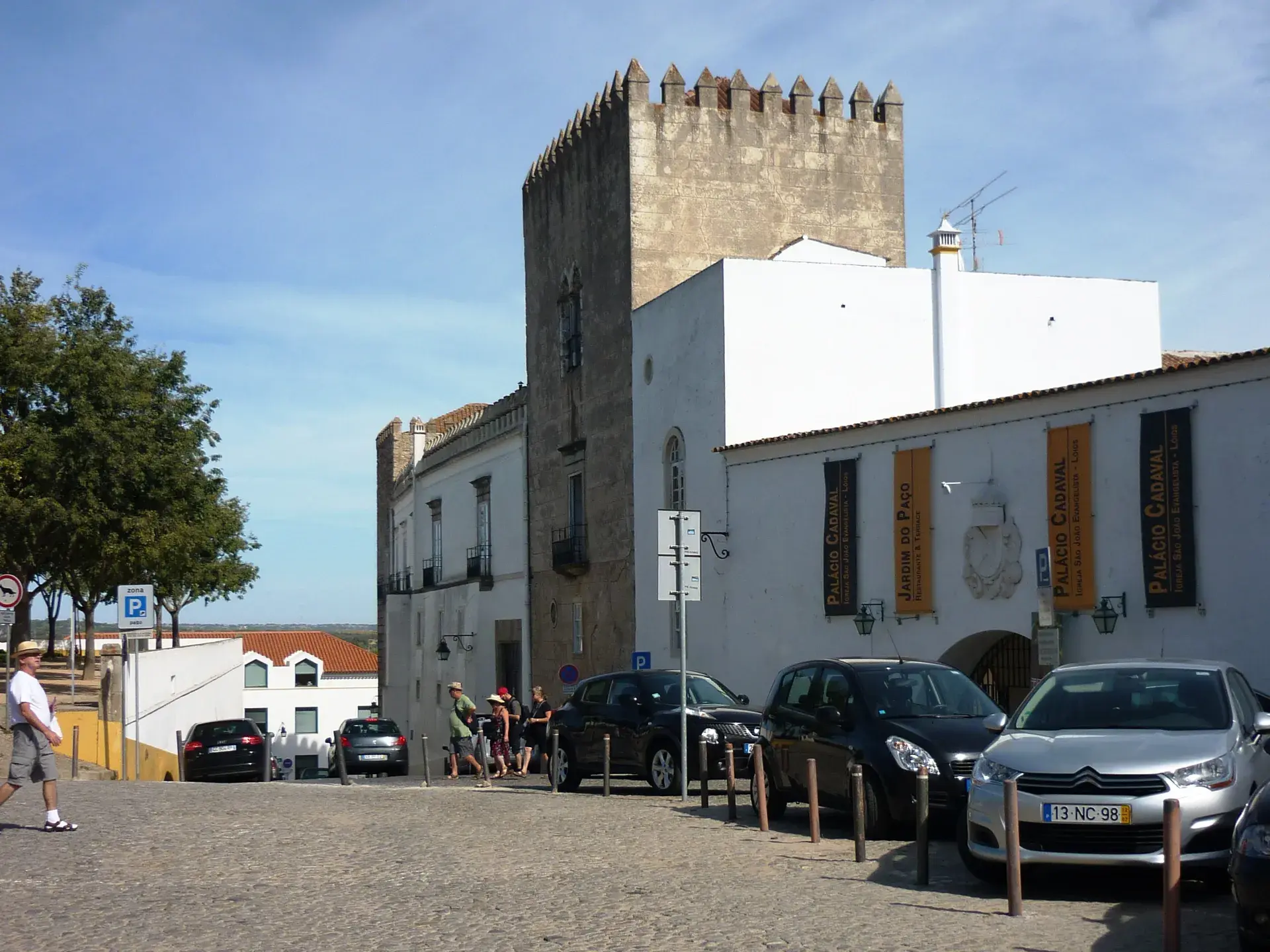
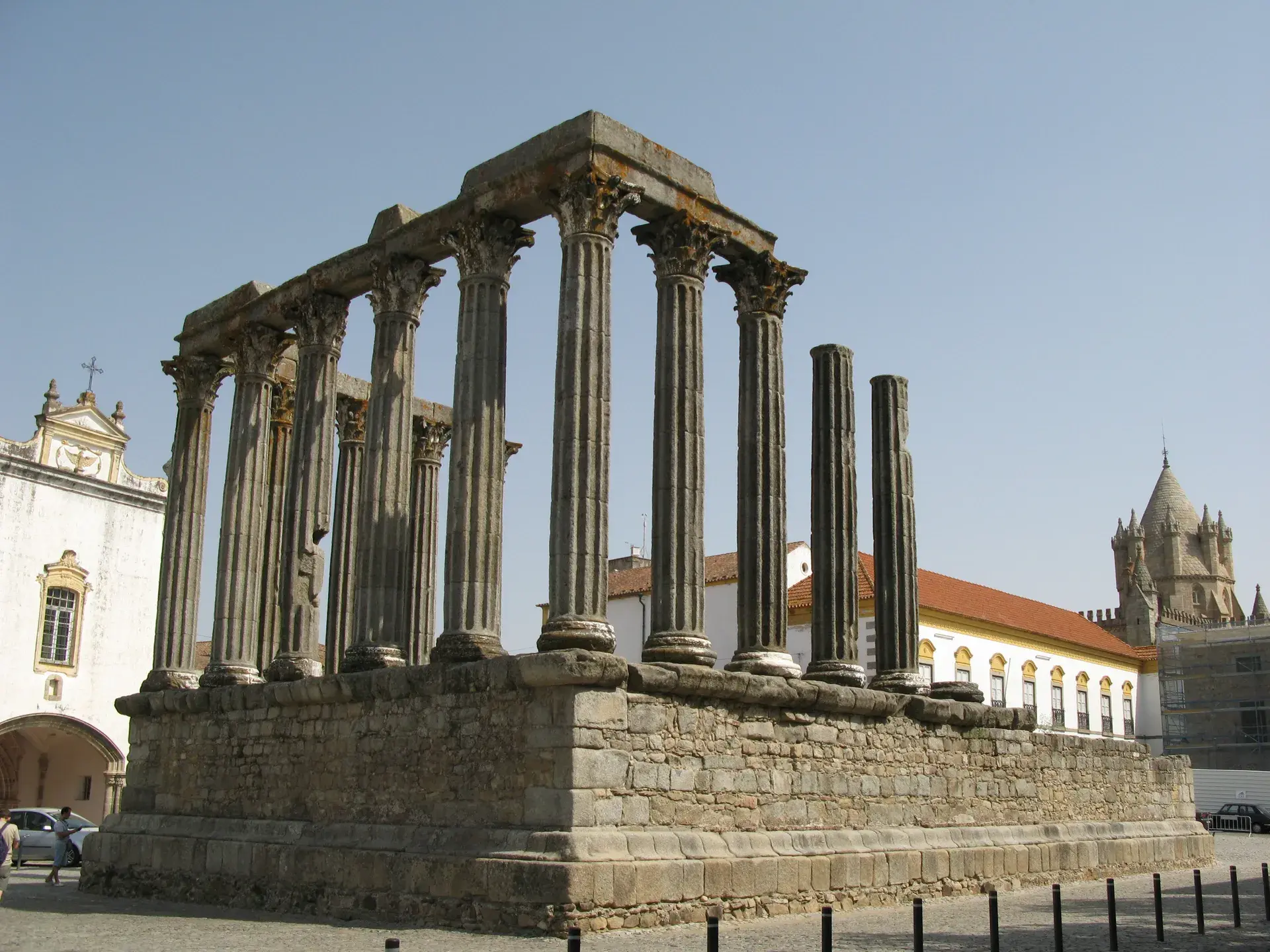
Enter a private ducal chapel where aristocratic power is displayed in stunning wall-to-wall blue tiles, while the bones of former monks rest quietly beneath the floor. Occupying Largo Conde de Vila Flor in Evora's historic acropolis, the Church of Saint John the Evangelist stands alongside the Roman Temple and Evora Cathedral. It represents the city's transition from ancient Moorish fortifications to early-modern aristocratic power.
Architectural Splendor and Blue Tiles
Founded in 1485 by Dom Rodrigo Afonso de Melo under the authorization of King João II, the church blends late Gothic, Mudéjar, and Baroque architectural elements. The exterior features a 15th-century Gothic portico, while the interior holds the site's most famous characteristic. The entire nave is encased in striking blue-and-white azulejo panels created in 1711 by master painter António de Oliveira Bernardes. These tiles depict the life of Saint Lawrence Justinian. Natural light from high Gothic windows reflects off the glossy, cobalt-blue and white ceramics, creating an immersive, cool-toned environment. This blue expanse is highly contrasted by intricately carved golden talha dourada (gilt woodwork) on the altarpieces.
A Ducal Pantheon
Commonly known as Igreja dos Lóios, the church serves continuously as the private pantheon for the Dukes of Cadaval. The name "Lóios" is a Portuguese corruption of Saint Eligius, the patron saint of the religious order that once managed the adjoining convent. High on one wall, a 17th-century covered balcony allowed the Cadaval family direct access to church services straight from their neighboring palace living quarters. The church remains the private property of the family today, though it is open for ticketed cultural visits alongside the Cadaval Palace.
Subterranean Secrets and Restorations
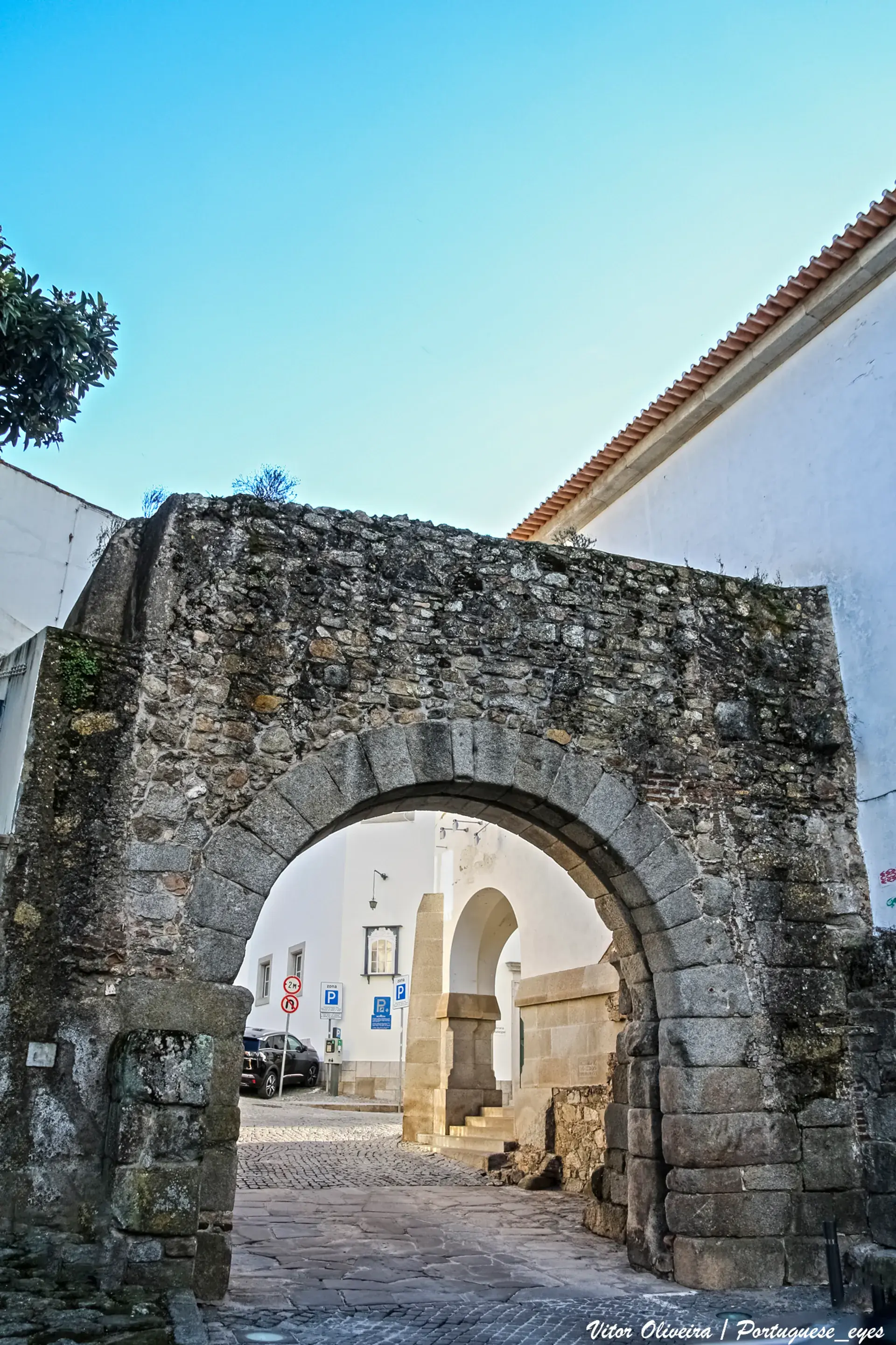
The complex was built over the ruins of Evora's former Moorish fortress, which fell during the 1383-1385 Portuguese crisis. Today, metal grates in the nave floor reveal an ancient Moorish cistern beneath the church. Beside it lies an ossuary filled with the stacked bones and skulls of monks who formerly inhabited the convent. Throughout its history, the building has endured significant changes. Following severe damage from the 1755 earthquake, the church received extensive Baroque repairs. Later, a major restoration took place in 1957 and 1958, overseen by the 10th Duke of Cadaval.
FAQ
Who owns the Cadaval Palace church?
The Church of Saint John the Evangelist remains the private property of the Dukes of Cadaval family. It serves as their private pantheon and is open to the public for ticketed visits.
What is beneath the floor of the Cadaval Palace church?
Metal floor grates in the church's nave reveal an ancient Moorish cistern and an ossuary filled with the stacked bones and skulls of monks who once lived in the adjoining convent.
Why is the church commonly called Igreja dos Lóios?
The term "Lóios" is a historical Portuguese colloquial corruption of Saint Eligius (Santo Elói). He was the patron saint of the religious order that managed the convent attached to the church.