Giraldo Square Fountain: Évora's Historic Heart
To build the Renaissance square seen today, the city of Évora dismantled an ancient Roman arch and turned a medieval market into a stage for royal executions. Today, Praça do Giraldo serves as the central geometric heart of the walled historic center. Classified as a Portuguese National Monument in 1910, this elongated square operates as Évora's primary pedestrian meeting point and civic living room.
The Renaissance Fountain
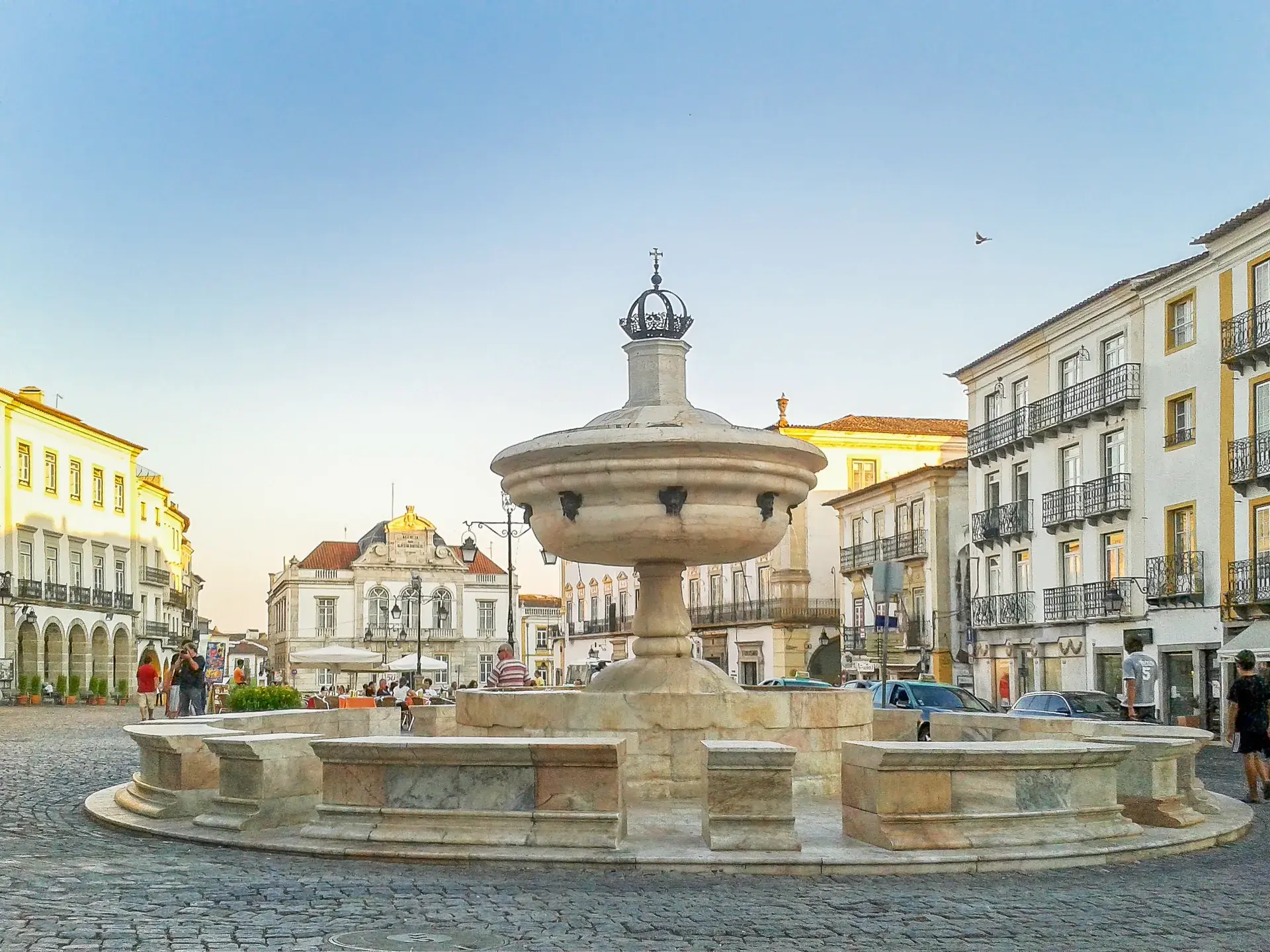
The focal point of the square is the Chafariz da Praça do Giraldo, sometimes called the Fonte Henriquina. Designed by royal architect Afonso Álvares and constructed from brilliant white marble between 1570 and 1571, the Renaissance structure contrasts sharply against the dark granite patterns of the traditional Portuguese calçada cobblestone paving.
Water continuously trickles into the central basin from exactly eight carved mask spouts. These human and mythical faces were intentionally designed to symbolize the eight principal streets radiating outward from the square across the old town. A popular local legend claims that King Philip III of Spain visited in 1619 and declared the fountain so majestic that it deserved to be crowned. In reality, the ornate bronze crown topping the monument was part of its original design.
A Dark and Dramatic History
Originally known in the 13th and 14th centuries as Terreiro or Praça de Alconchel, the area began as a medieval market and bullfighting venue. It was eventually renamed to honor Geraldo Geraldes, known as Gerald the Fearless. After capturing Évora from Moorish rule in 1165–1167 via a stealth assault, he was appointed governor. His legacy lives on in the municipal coat of arms, which depicts the knight on horseback above severed heads.
Beneath its current beauty, the square holds a grim history. In 1483, King João II ordered the public beheading of Fernando II, Duke of Braganza, for treason in this exact location. From the 16th to 18th centuries, the square functioned as the staging ground for public executions and autos-da-fé conducted by the Évora tribunal of the Portuguese Inquisition.
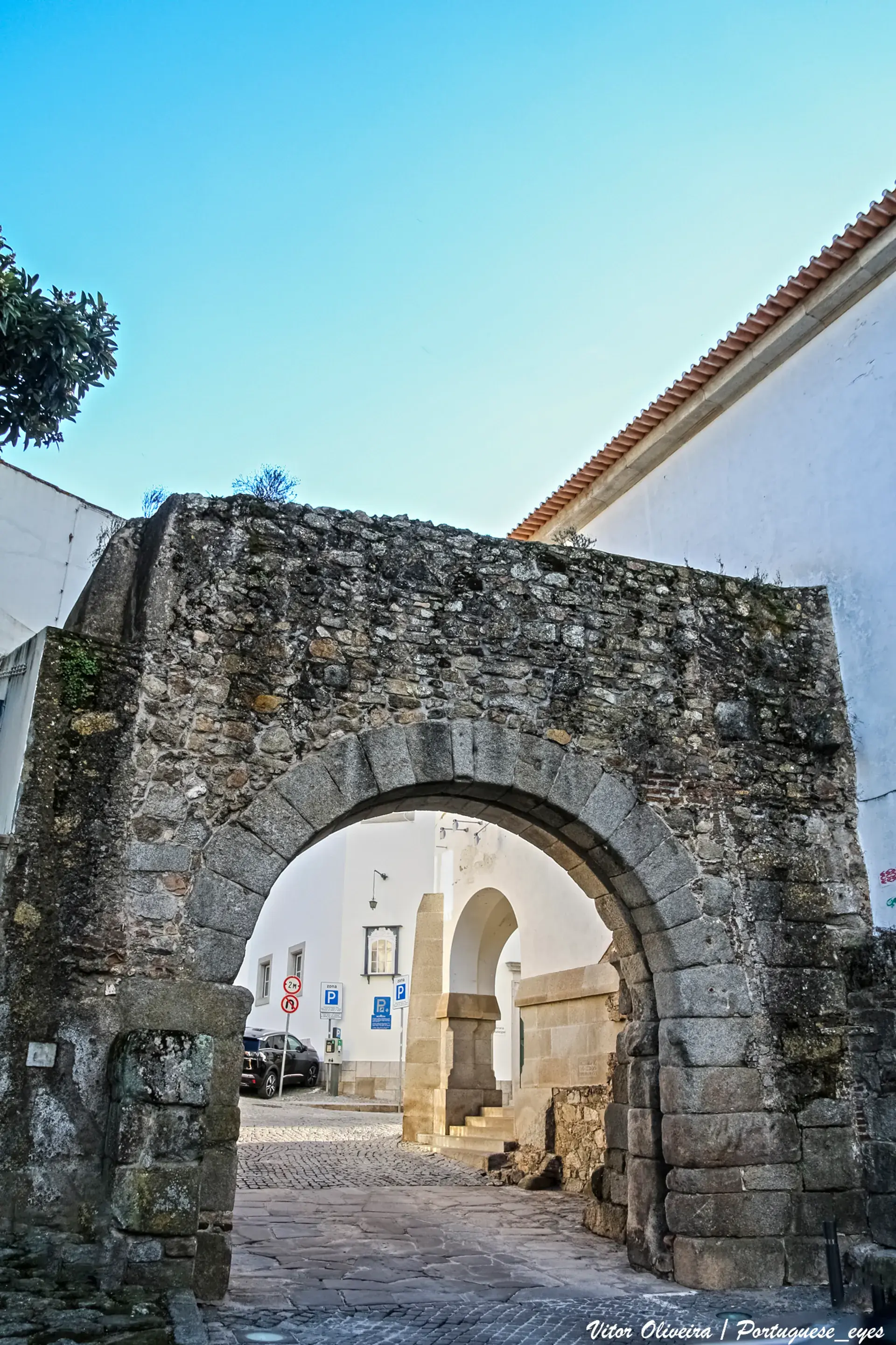
During a major 1570s urban redesign, an ancient Roman triumphal arch and a 1537 aqueduct fountain adorned with marble lions were intentionally dismantled. This destruction cleared the perspective for the new white marble fountain and the 16th-century Renaissance Igreja de Santo Antão located at the square's northern end.
Évora's Living Room Today
Locals gather under the continuous 16th- to 18th-century stone arcades that border the square. The echo-filled vaulted walkways provide shade for artisan retail, pastry shops, the municipal tourist information office, and bustling outdoor café terraces like Café Arcada. Functioning as a central orientation anchor, the square seamlessly connects the northbound path toward the Cathedral of Évora and Roman Temple with the southbound streets leading to the Chapel of Bones.
FAQ
Why does the Giraldo Square Fountain have exactly eight spouts?
The eight carved marble mask spouts were intentionally designed to symbolize the eight principal streets that radiate outward from Praça do Giraldo across the old town.
Who is Praça do Giraldo named after?
The square is named after Geraldo Geraldes, also known as Gerald the Fearless, a knight who captured Évora from Moorish rule between 1165 and 1167.
When was the fountain in Praça do Giraldo built?
The white marble Renaissance fountain was constructed between 1570 and 1571 by royal architect Afonso Álvares.
What happened during the Inquisition in Praça do Giraldo?
From the 16th to 18th centuries, the square was used by the Évora tribunal of the Portuguese Inquisition as a staging ground for public executions and autos-da-fé.