Igreja de São Miguel do Castelo: Guide & History
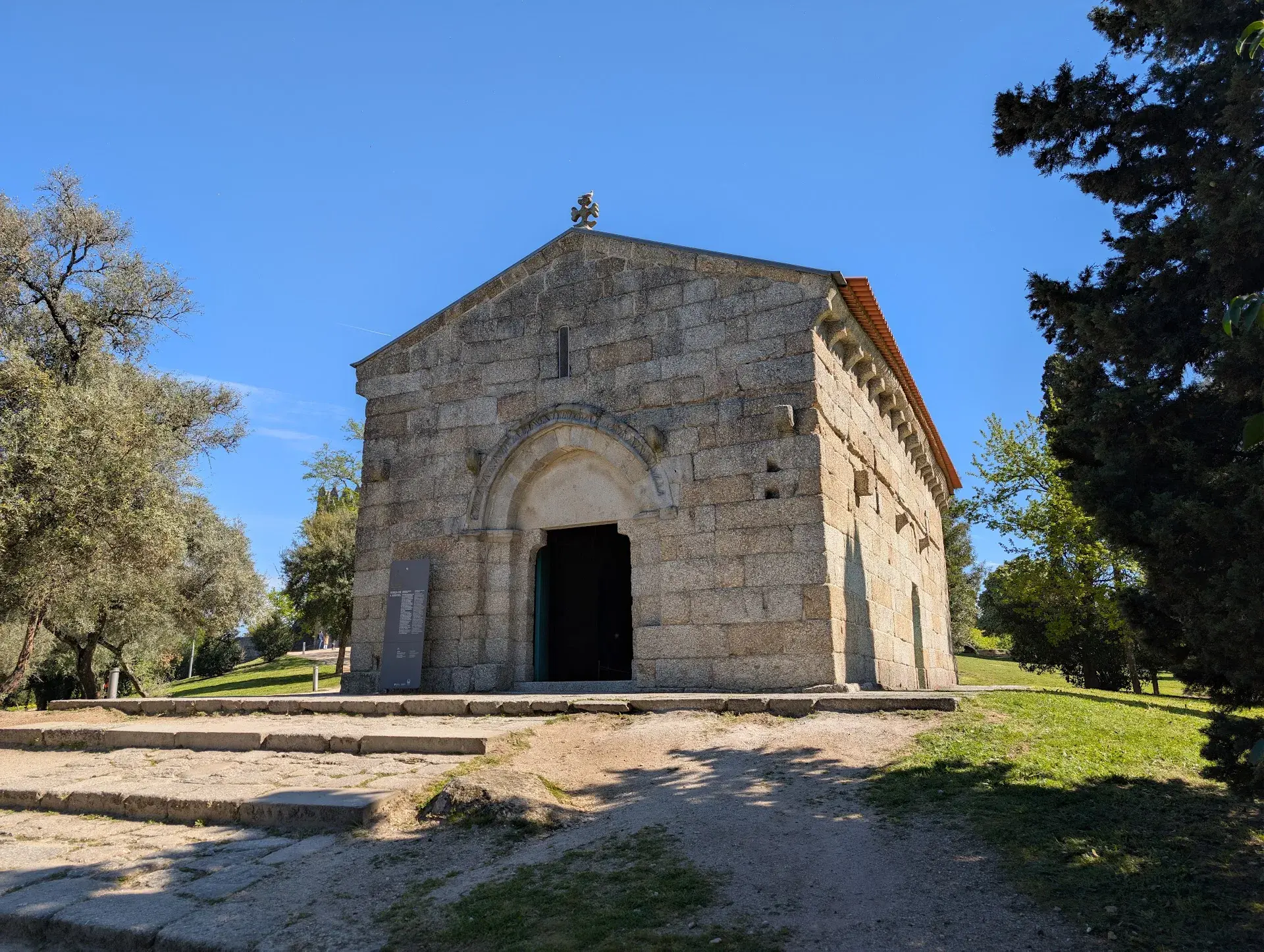
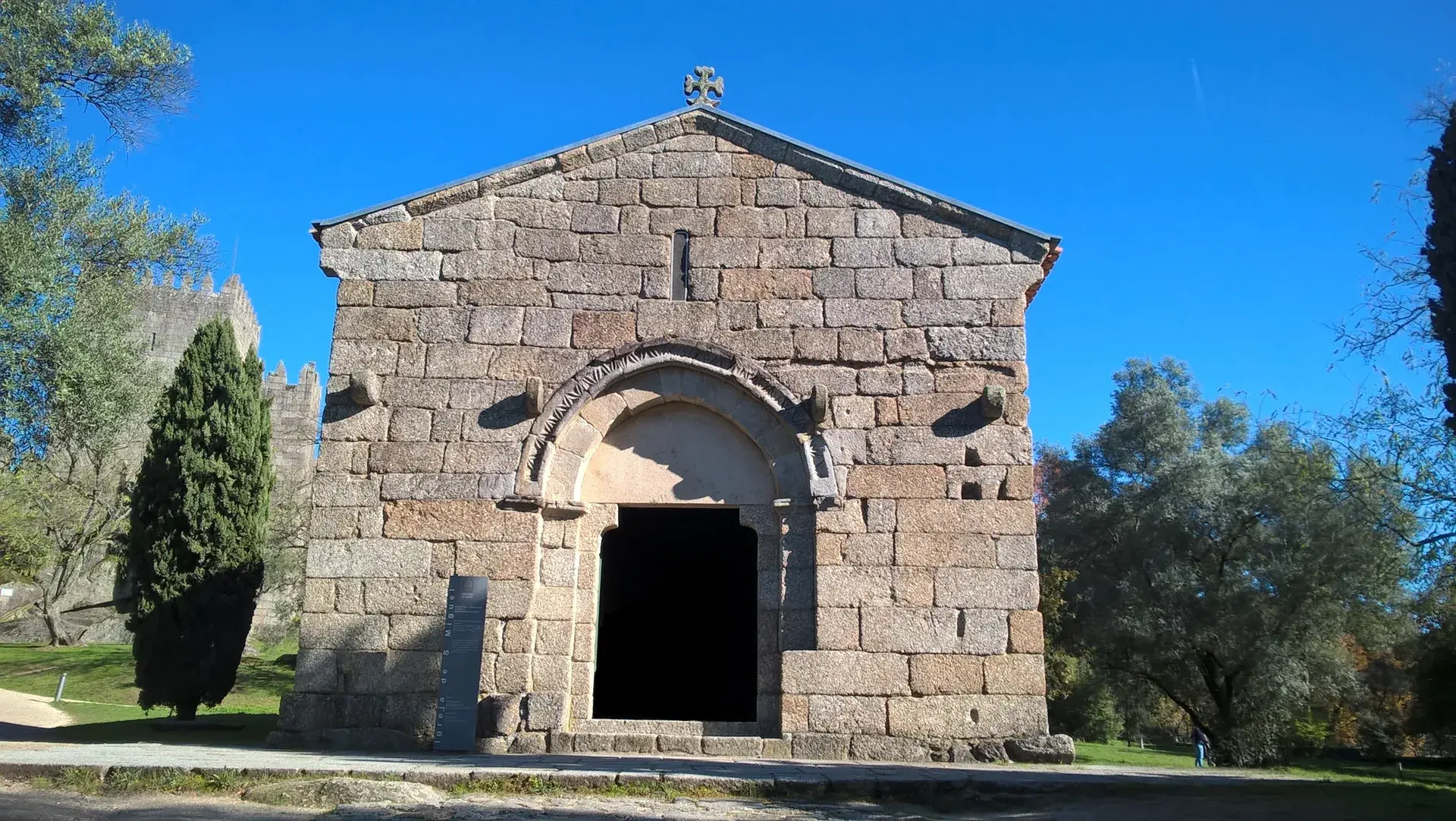
Examine the modest granite facade of the medieval Romanesque Igreja de São Miguel do Castelo as it stands surrounded by historic grounds. Situated on Monte Latito—often referred to as the Sacred Hill—this chapel serves as the spiritual third pillar of Guimarães's monumental complex, bridging the military stronghold of Guimarães Castle and the civic power of the Palace of the Dukes of Bragança.
The Legend of the King's Baptism
A strong local tradition insists that Portugal's first king, Afonso Henriques, was baptized in the chapel's plain round granite font. For years, 19th-century romantic historiography reinforced this narrative, incorrectly dating the building to the 10th or 11th century.
However, architectural and archival evidence proves the structure was built over a century after the king's birth. Despite this chronological contradiction, the chapel remains a vital symbolic anchor for Guimarães's identity as the Cradle of the Nation, or the Berço da Nação.
Medieval Origins and Architecture
Historical records indicate the chapel was actually constructed in the early 13th century, with its first documented reference appearing in 1216. It was built by the Collegiate of Guimarães during a jurisdictional dispute with the Archbishop of Braga, making its initial construction an unauthorized endeavor. The Archbishop of Braga, Silvestre Godinho, eventually formally consecrated the building in 1239.
Constructed from local granite ashlars, the Late Romanesque building features an austere, compact single nave and a juxtaposed rectangular chancel. Royal inquiries from King Afonso III note the involvement of a stonemason named Garcia Petrarius, believed to be of Moorish origin.
Very little daylight penetrates the thick stone masonry. The minimal, narrow slit windows create a cool, shadowed, and austere atmosphere that emphasizes the structure's medieval simplicity. After falling into severe ruin in the 19th century, a restoration commission affiliated with the Sociedade Martins Sarmento stripped away later baroque additions to reinstate this original character.
A Floor of Warrior Tombs
The interior floor of the Igreja de São Miguel do Castelo serves as a necropolis for figures of the early Portuguese royal court. The ground is paved with worn granite ledgerstones, deeply engraved with medieval crosses and inscriptions. These sepulchral slabs mark the final resting places of noblemen and knights who participated in the military campaigns of Portugal's foundation era.
Monument Preservation
Classified as a National Monument since 1910, the Igreja de São Miguel do Castelo is an integral part of the Monte Latito heritage complex managed by the national museum and monuments network. The chapel is open to the public daily and operates with free admission.
FAQ
Was Portugal's first king baptized at the Igreja de São Miguel do Castelo?
According to local tradition, King Afonso Henriques was baptized in the chapel's font. However, historical and architectural evidence shows the chapel was built in the 13th century, over a hundred years after his birth.
Who is buried inside the Igreja de São Miguel do Castelo?
The chapel floor functions as a necropolis for early medieval knights and nobles. The ground is covered in granite ledgerstones marked with crosses and inscriptions identifying members of the early Portuguese royal court.
Is there an admission fee to enter the chapel?
No, admission to the Igreja de São Miguel do Castelo is free. The monument is open to the public daily from 10:00 AM to 6:00 PM.
Gallery